The police will continuously be testing drivers for alcohol until January 2027 as part of a nationwide campaign to crack down on drink and driving.
The law enforcement officials say the main cause of the high number of road accidents in the country is caused by motorists who drive under the influence (DUI) of alcohol.
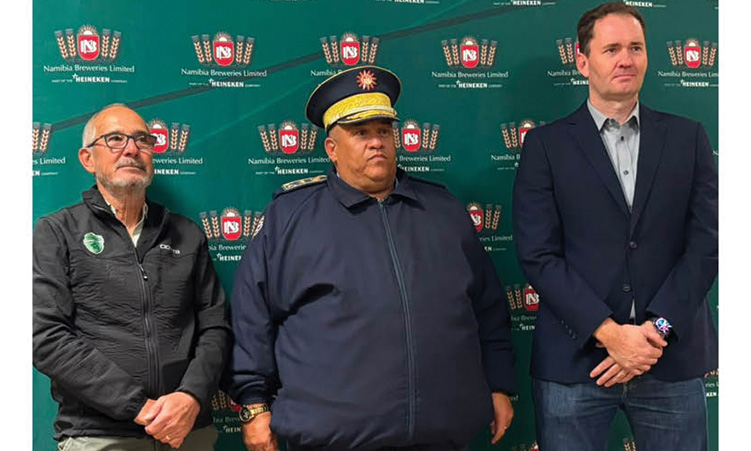
The campaign, which also includes an enforcement programme, was launched in Windhoek yesterday in partnership with the Namibia Breweries Limited (NBL), the Namibian Police Traffic Law Enforcement department, and the Namibian Road Safety Forum.
The initiative aims to establish how many motorists are driving under the influence of alcohol and to paint a clearer picture of alcohol’s impact on road safety.
The N$200 000 programme will run from July to January 2027, and will be conducted at nine traffic checkpoints where officers will inspect vehicle and driver compliance, including licences, seatbelts and tyres, and conduct driver breathalyser testing, with a target of more than 300 drivers at every roadblock.
A report will be published once every three months.
Namibia Road Safety Forum chief executive Horst Heimstädt says the country has recorded 220 deaths, 2 189 injuries, and 1 287 crashes since January, citing driving under the influence as a contributing factor.
The country’s road death toll remains high because there is no reliable data accurately measuring the extent of drink-driving and its contribution to crashes, he reveals.
Citing the World Health Organisation world health statistics report, Heimstädt says more than 30% of road crashes involve alcohol.
“This translates to approximately seven crashes, twelve injuries, and 1:2 fatalities every single day … If the 30% is correct, we are talking about hundreds of lives unnecessarily changed every year. The risk of getting into a car every morning is higher than what you think,” he says.
He says the situation is preventable, urging drivers not to drive under the influence.
Heimstädt says the DUI programme will provide information that will assist policymakers, law enforcement agencies, and road safety stakeholders in making informed decisions.
He notes that anyone who gets into a car knowing a driver has been drinking is equally guilty as the driver, noting that they are risking their lives.
According to him, there is a growing concern among the public about the country suddenly experiencing more crashes than before.
While every crash and every fatality is one too many, he says, the facts tell a ‘slightly’ different story, noting that through collective efforts, stakeholders have reduced road fatalities from 778 in 2017 to 511 in 2025, with a low of 423 fatalities achieved in 2023.
Police head of traffic law enforcement commissioner Petrus Swartz warns that anyone found driving under the influence will face the full consequences of the law.
He says road crashes remain one of the most persistent public safety challenges facing the country.
“As law enforcement officers, we witness first hand and devastating consequences of reckless driving, and impaired driving on our roads,” he says, adding that enforcement influences driving behaviour.
Swartz says officers will conduct extensive vehicle, and driver compliance inspections, including verification of driving licences, vehicle fitness, tyre conditions, seatbelt compliance, and alcohol testing.
The intervention, he says, will enable the police to establish a reliable assessment of trends, risks, and geographical hotspots associated with alcohol-related driving behaviour.
Additionally, the programme will strengthen deterrence.
“Drink-driving offences will be detected, and acted upon.
This will help improve compliance with road traffic legislation,” he says, noting that a driver under the influence has reduced reaction time, impaired judgement, diminished concentration, and a decreased ability to respond appropriately to changing road conditions.
“The result is often tragic, and entirely preventable. If you drink, do not drive. If you drive, do not drink.”
He says awareness, and the availability of credible, specific data are critical in taking effective, evidence-based action.