





Windhoek is the kind of place where you regularly see the country’s biggest film stars in the grocery store. Award-winning filmmakers pore over scripts at local coffee shops and some of the activists who marched in the historic ShutItAllDown (2020) protests gaze up at Shili Munyama’s ‘Wrong Generation’ (2026), hoping to find some fidelity.
While ‘Wrong Generation’ is inspired by executive producer Ndiilokelwa Nthengwe’s book ‘‘You F…. With the Wrong Generation! – An Ode to Modern Day Activism in Namibia’ (2022), which reflects on the 2020 demonstrations, Munyama’s film is fiction.
If you attended the protests and plan on seeing the film, which is showing at local cinemas from 19 to 26 June, you’ll need to keep that firmly in mind. Despite documentary footage from the ShutItAllDown protests interspersed throughout the runtime and a marketing drive that highlights the marches, ‘Wrong Generation’ is more approximation than faithful and detailed retelling.
Written and directed by Munyama and starring Gloria del Mar, Hazel Conchata and Ngunde Faroeka, the film follows a group of estranged best friends who reunite to stage a protest after their childhood companion, played by Ndayola Ulenga, is killed during a slew of brutal murders.
“When Ndiilo approached me to write this film it was a no-brainer. It was an opportunity to translate the call to action of ShutItAllDown to mainstream discourse and felt like a duty to my fellow Namibians,” says Munyama, who attended and photographed the protests in 2020. “It felt like an opportunity to affect some real change through a story that was so polarised and important.”
For activists in the audience, watching ‘Wrong Generation’ may invite some cognitive dissonance. Drawing on the real-life protests both in film and in its promotion, the film foregoes much of the context, collective fury, bleakness, desperation and social media fuelled community building of the time to present something far more hopeful yet considerably reductive.
While ‘Wrong Generation’ is set within the context of pivotal protests against rampant femicide and sexual and gender-based violence, for the most part, Munyama zooms out and focuses on the relationships, conversations and attitudes surrounding scenes that reimagine and pare down the actual demonstrations.
For people who were there, the tone may seem a little off and while the mood within the film may not scream “our friend was just killed during a string of murders”, ‘Wrong Generation’ does speak to some of the central tensions of the 2020 protests.
These include instances of victim-blaming, excessive force by the police and generational conflict, especially with regard to elders, parents and government officials.
The film also sheds light on some of the demands of the 2020 protests such as the resignation of the gender equality minister, an operational and enforced sexual offenders’ registry and the reinstatement of comprehensive sex education in the national curriculum.
‘Wrong Generation’ also echoes the queerness of some of the 2020 protests’ most recognisable leaders. To an extent, this inclusion highlights the diversity within the protests which inspired people from all walks of life to take to the street, sourcing taxi fares, setting rendezvous points and shutting it all down.
For their portrayals of the central activist trio leading the charge, Del Mar, Conchata and Faroeka are top-notch and elevate a story that sometimes feels hasty and somewhat underdeveloped. Much of the supporting cast is also praiseworthy, particulary Dice (Edo Lutete), who humanises the police cohort who were routinely lambasted during the 2020 protests thanks to the teargas, the manhandling, the activist arrests and detention of the press.
While you see some of this in the documentary footage within the film, ‘Wrong Generation’ could have benefitted from fictionalising a few more iconic moments and characters from the actual protests. But again, despite parallels and the film’s referencing of real life, including that notorious closed-door meeting with the president, this is fiction.
Remember that and you’ll probably find ‘Wrong Generation’ to be an ambitious, well-intentioned and watchable film that earned resounding applause at the premiere, putting Munyama squarely on the map as a promising young filmmaker. Forget it and you may deem the film somewhat lacking and perhaps jarringly at odds with your own experience.
“I think it’s important that we remember that the role of the artist, of filmmakers, is to reveal the unrevealed. Not for confrontation but for consideration,” says Munyama.
Reflecting on the importance of distilling and archiving the ShutItAllDown movement, Munyama sees film as a way to encourage viewers to consciously reflect on the time and on the status quo.
“As much as it is entertainment, letting it sit with people and their emotions allows people to consistently reflect and make really important topics mainstream discourse.”
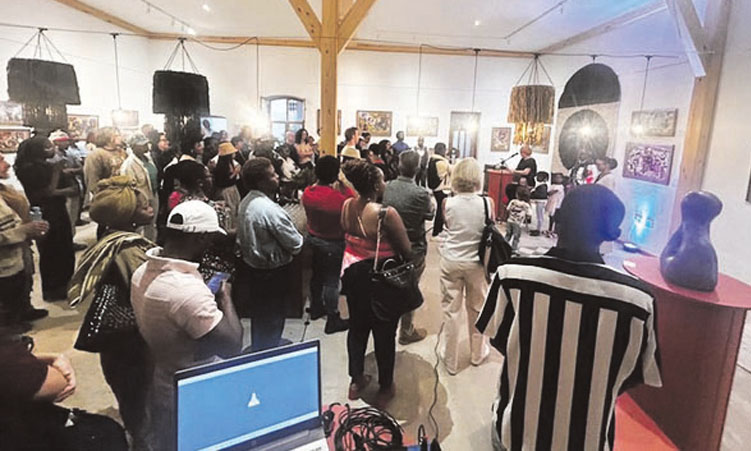
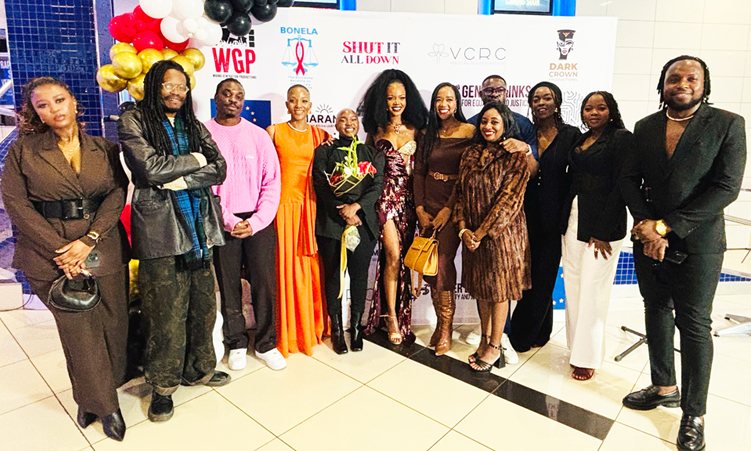
In this, Munyama succeeds. People are certainly talking. Both at the premiere, hosted by local star Odile Gertze and South African entertainer Taki Muthige, and beyond.
“The reception was great! I was a rolling ball. It was a mix between good and bad,” says Munyama. “I welcome all the reviews. I think it’s part of sharing art. Everyone will always have something to say, so I like the idea of a variation of feedback.”
At the film’s premiere, which drew such esteemed guests as former minister of justice Yvonne Dausab and deputy minister of information and communication technology Wenzel Kavaka, ‘Wrong Generation’ stood tall as a form of activism in its own right and as a credit to independent making.
“ ‘Wrong Generation’ is a reminder that young people are not only subjects of policy, they are authors and archivists of our time. To the activists and survivors whose experience informed this story, your pain, your advocacy and your organising have shaped the debates that make a film like this possible,” says Kavaka in a pre-screening address.
“This production is a landmark for independent filmmaking in Namibia. It shows that we have the talent, the story and the technical expertise to produce work that is both deeply local and globally relevant,” he says.
“We must continue across government and society to match your courage with concrete action against gender-based violence. As we celebrate this premiere, let us also see it as a call to action,” Kavaka says.
“A call to fund and professionalise the film and entertainment industry. A call to protect and support those who speak out against injustice, and a call to ensure that when we say “you messed with the wrong generation”, it is not only a slogan. But a commendable reality of change.”
‘Wrong Generation’ (2026) is now showing at Ster-Kinekor Maerua Mall and Grove Mall and will be on screen until 26 June.
– martha@namibian.com.na; Martha Mukaiwa on Twitter and Instagram; marthamukaiwa.com