



A Russian-Owned mining company is on a mission to extract uranium using a method that is known to contaminate and poison underground water.
The promise of short-term jobs puts at risk the long-term health of local communities and thousands of jobs in other sectors in Namibia as well as potential risk to health and jobs in neighbouring countries.
It could also damage the entire economy of the Kalahari as well as that of many sectors across Namibia.
Any government that cares about its people would not allow this mining operation to go ahead.
Namibia already produces uranium through conventional mining methods.
The proposed mining operation near Leonardville in the Omaheke region presents a totally different scenario.
Instead of blasting rock to create an open-cast mine, the proposed new mine will use a method known as in-situ leach mining.
What is in-situ leach uranium mining?
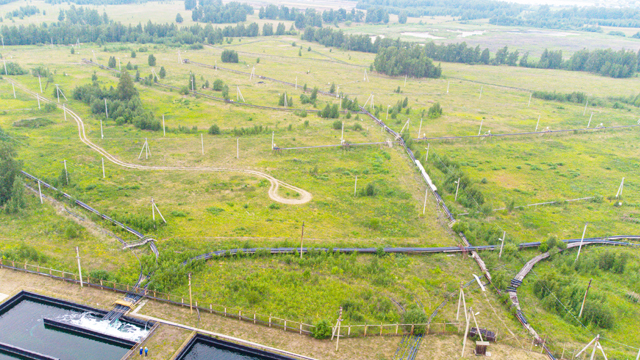
In-situ leaching involves pumping a solution of corrosive chemicals into a sandstone aquifer that will dissolve uranium and other metals into the underground water body.
This mine solution is then pumped from deep underground out of the aquifer using boreholes that are linked to an above-ground processing facility.
Once the uranium is extracted, the water is recycled again and again, each time with more chemicals added.
Over the life of an in-situ leach mine, thousands of injection and recovery boreholes are drilled at an average spacing of 20m to 30m apart.
The chemicals dissolve radioactively unstable uranium particles (known as radionuclides) and heavy metals such as arsenic, cadmium and others.
The fluids that are not pumped back into the aquifer are stored in lined dams to allow the water to evaporate, leaving radioactive waste.
While in-situ leach mining disturbs the surface of the earth less than conventional mining, generates less radioactive dust that poses a threat to mineworkers and people living nearby, and is cheaper than open-cast mining, there is one huge concern – contamination of groundwater in the mined aquifer.
It all happens far underground where the situation cannot be adequately controlled.
Boreholes leak, equipment breaks down and mine solution escapes out of the mine area.
Although monitoring boreholes are placed around the mining area to detect changes in underground water quality, little can be done about contaminated water that leaves the mining zone.
Uranium and other heavy metals are toxic to humans and animals.
When they are present in high concentrations, as they are in the leach mining solution, underground water is rendered undrinkable and unusable for irrigating crops.
If the water is used anyway, those drinking it are likely to suffer high rates of cancer, liver and kidney damage, among other health problems.
Once an aquifer is polluted it may never be restored enough to provide drinkable water, even after decades of expensive treatment.
Key concerns for Namibia
The situation in Namibia differs from the above examples in a number of critical respects.
First, the aquifer that is being targeted – the Stampriet Artesian Basin – contains high-quality underground drinking water that is currently being used by local people, tourists, livestock, wildlife and for irrigation of both vegetables and fruit orchards.
In this dry Kalahari ecosystem, no other sources of water are available for these purposes.
It has duly been declared a water protection area as per Section 85 read together with Section 132 (deeming provision) of the Water Resources Management Act of 2013.
Consequently, any form of pollution of the underground water is prohibited.
If the groundwater in this area is contaminated it is highly likely that such water quality deterioration will be long term – lasting decades to centuries.
The loss of such a valuable freshwater resource in a semi-desert is to be avoided at all cost, since the people and livestock will either have to move out or suffer severe health problems.
Besides health concerns, the region and Namibia will suffer economic damages.
Irrigation schemes on farms would have to halt, since the toxins in the water would be transferred into the crops and harm consumers.
Tourism would stop, and the collateral damage would extend to concerns about water safely across the whole country, harming meat and crop exports and tourism.
The commercial activities in support of farming, tourism and urban settlement would be severely impacted, and the value of the land, both agricultural and urban, would collapse.
The economic impacts of this, and the number of jobs lost, would be hundreds of times greater than any benefits to Namibia from the in-situ uranium mining.