



Poisoning can strike without warning. Around the world, it remains a serious public health problem, yet many cases can be prevented or better managed when expert help is available quickly.
The World Health Organisation (WHO) estimates poisoning mortality using deaths from unintentional poisoning per 100 000 people, an indicator of hazardous chemical exposure and the effectiveness of health system responses.
For Namibia, the warning is real. In 2021, the estimated mortality from unintentional poisoning was 1.38 deaths per 100 000 people, up from 1.34 in 2020. The rate has fluctuated over the years, reaching a high of 1.43 in 2015 and a low of 1.10 in 2008.
The rate measures deaths from unintentional poisoning, not all poisoning events, hospital admissions or suspected poisonings.
Therefore, the unintentional poisoning statistic does represent the total national poisoning burden.
Behind every number is a person, a family and a potentially preventable tragedy. The WHO says poison centres provide expert advice, help doctors manage poisoning emergencies, track toxic exposures and identify emerging hazards. Yet, as of 2023, only 47% of WHO member states had a poisons centre.
The question for Namibia is simple: when poison strikes at 02h00, who will answer?
POISON, TOXIN, TOXICANT
Poison is any substance that can cause harm, illness or death when introduced into the body in sufficient quantity, regardless of whether it is natural or synthetic.
A toxin is a specific type of poison of biological origin, produced naturally by living organisms, while a toxicant refers to a man-made or synthetic poisonous substance arising from human activities such as industry or agriculture.
Venom is a subset of toxins that is actively injected into a victim through bites or stings, distinguishing it from poisons that act when swallowed, inhaled, or absorbed through the skin.
Toxicity or poisoning describes the degree of harm and the clinical condition resulting from exposure to these substances. In essence, all toxins and toxicants are considered poisons.
“Poison” is the broadest, often colloquial term for any substance causing harm, while “toxin” and “toxicant” are narrower, more specific scientific terms based on the substance’s source. Understanding these distinctions is essential in forensic investigations, clinical toxicology, environmental health and legal proceedings, where precise terminology can determine cause of death, liability and policy response.
TYPES AND CATEGORIES OF POISONING
Poisoning may occur accidentally, intentionally (including self-harm or criminal acts) or occupationally, and can produce effects ranging from mild symptoms to sudden death. Poisoning is broadly categorised by duration of exposure into acute poisoning, resulting from a single or short-term high-dose exposure, and chronic poisoning, arising from repeated or long-term low-dose exposure with cumulative effects.
It is also classified by source or agent, including chemical poisons (such as pesticides, pharmaceuticals, heavy metals, and industrial chemicals), biological toxins (venoms, toxic plants, and microorganisms), food- and beverage-related toxins, toxic gases, and unknown or emerging substances.
UNDERSTANDING POISONING AND FORENSIC TOXICOLOGY
At its core, forensic toxicology is the discipline that applies scientific principles to detect and interpret the effects of toxic substances on the human body, especially in medicolegal contexts. Forensic specialists draw on the clinical presentation of symptoms, knowledge of toxic agents, and laboratory analyses to determine whether a death was caused by poisoning. The process begins long before an autopsy; it often starts at the crime scene or emergency department with detailed history taking, victim symptomatology, and contextual investigation.
Forensic toxicologists then analyse biological samples – blood, urine, hair, nails, tissues, etc. – to identify and quantify toxic substances. The goal is to distinguish death by poisoning from natural causes or other forms of injury, providing evidence that can stand up in court or inform public health interventions.
In many poisoning cases, the signs are subtle and nonspecific – such as headache, nausea, dizziness – yet they portend deeper biochemical disruption in the victim’s body. A poison can mimic natural disease processes, striking without visible trauma and challenging clinicians and investigators alike to recognise the true cause of death. This is where toxicology intersects profoundly with forensic investigation: through scientific detection and interpretation, the invisible becomes evident.
AFRICA HAS LESSONS FOR NAMIBIA
Across Africa, several countries have established poison centres to support the prevention, diagnosis and management of poisoning. South Africa has multiple poison information centres, including Tygerberg and Red Cross Children’s Hospital. Ghana operates a poison control centre providing clinical advice, training, public education and surveillance. Nigeria has developed national guidelines for poison information control and management centres. Morocco operates the Centre Anti Poison et de Pharmacovigilance du Maroc, with 24-hour toxicological information and laboratory services. Egypt has the Ain Shams University Poison Control Centre, integrating treatment, toxicological analysis, training and research.
The WHO has also documented poison centres in Algeria, Kenya, Senegal, Tunisia and Zimbabwe.
Therefore, establishment of a Namibian poison control centre would, therefore, be more than the creation of another institution. It would be an investment in rapid clinical decision making, public safety, scientific evidence, toxicological surveillance and justice.
CONCLUSION
Namibia’s poisoning statistics may not place the country at the top of Africa’s mortality table, but 1.38 deaths per 100 000 people in 2021 is not a statistic that should disappear into an annual report. Behind every rate is a human life, a clinical uncertainty, a family and potentially a preventable death. The data, therefore, makes a compelling case for Namibia to strengthen toxicological surveillance and consider a coordinated national poison control centre capable of turning scattered poisoning events into actionable national health intelligence. When poison strikes, Namibia should not have to ask: Who knows what to do? It should already know the answer: a Namibian poison control centre.
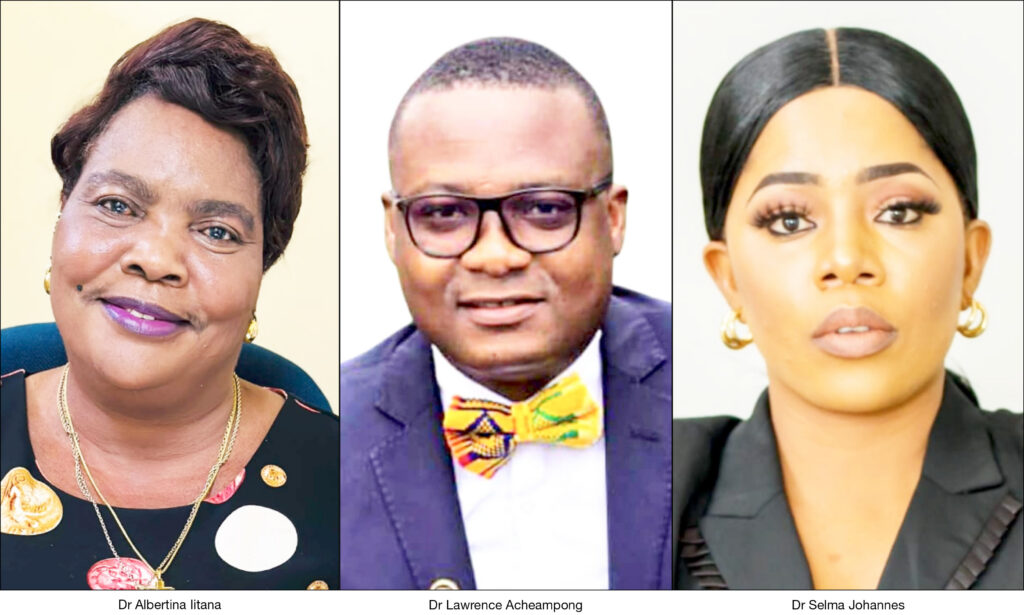
– Dr Lawrence Acheampong is a forensic physician scientist/medico-legal expert from Ghana, Dr Albertina Iitana is a senior consultant of anatomical pathology at the Northern Pathology Services in Namibia, while Dr Selma Johannes is a senior forensic medical officer at Onandjokwe Intermediate Hospital.