



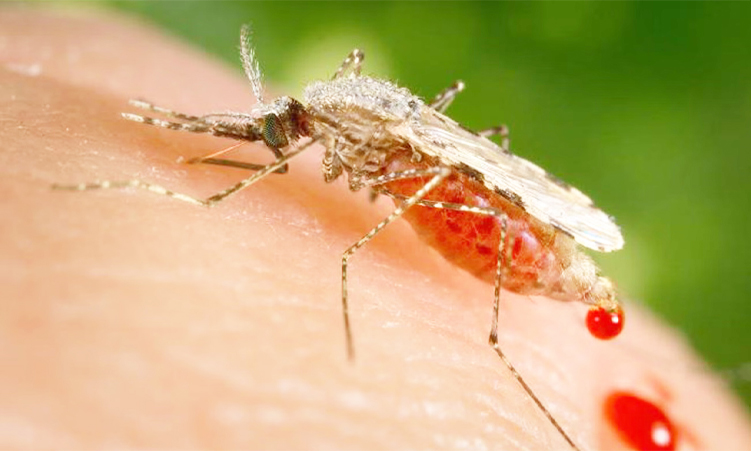
Karibib residents face a severe mosquito infestation driven by leaking sewage pipes, prompting town council and health officials to launch urgent intervention measures.
Resident Erastus Ndeunyema says the number of mosquitoes has increased rapidly over the past five months.
He says the situation is worse from around 17h00 daily, making it difficult for residents to carry out their normal activities.
“It disturbs our daily lives because you can’t even concentrate. They are everywhere. You cannot wear a short-sleeved T-shirt or shorts because you have to remain covered up,” he says.
Ndeunyema says residents are forced to keep their homes closed to prevent mosquitoes from entering.
“You cannot leave the house door open. At night, they even come in under the doors,” he says.
The Karibib Town Council last week said it was aware of complaints about an increase in mosquitoes and is working with health authorities to address the problem.
The council issued a public notice saying it was treating the complaints as urgent.
Karibib chief executive Tangeni Enkono said the council has started putting measures in place.
“The council wishes to assure all residents that the matter is being attended to as a matter of urgency and necessary measures are being implemented to address the situation,” he said.
A Karibib Town Council official last week said this is the first year the town has experienced such a noticeable increase in mosquitoes.
“It’s normal to have mosquitoes. It’s only this year there was an increase,” the official said.
The official said the council started investigating the cause of the increase after receiving complaints from residents.
“At the moment, we have not received reports of malaria cases yet. If there were cases, the hospital would have informed us, because we’re working with the hospital,” the official said.
Karibib is in the Erongo region, which is considered a malaria-free zone.
The Ministry of Health and Social Services has since identified leaking sewage pipes and sewage ponds as possible mosquito breeding sites at the town.
Yesterday, health ministry spokesperson Walters Kamaya told The Namibian the ministry get involved after the council asked for help following complaints from residents.
“Officials from the council and environmental health practitioners from the Usakos health district then investigated the situation to identify possible causes of the increase. The investigation found several sewage ponds around Karibib caused by leaking sewage pipes. These are possible breeding sites for mosquitoes,” he said.
Kamaya said following the investigation, the council agreed to remove sewage from the ponds and repair the leaking pipes.
He said the council also asked the health ministry for help with mosquito prevention and control measures, including larviciding and spraying.
The council has requested the ministry’s advice on suitable chemicals, Kamaya said, while Navachab Gold Mine plans to provide funding assistance.
Environmental health officials consulted regional authorities and other health districts conducting indoor residual spraying programmes to determine suitable measures for Karibib.
He said a final report on the investigation is expected to be completed and shared with the relevant authorities.