Hey there, quick question: Who in Judas’ name sets the traffic light timers in Namibia?
How did they decide that pedestrians are faster than cars and only need two to three seconds to cross the road?
Think about it. You’ve been there before. You know you pray before stepping onto the road, because that green light with the little walking man turns red while you are right in the middle of it all.
How many seconds do we, the humble pedestrians of Namibia, actually get to cross? Three? Four if we skip breakfast?
Does anybody realise how ridiculous this is? Our traffic lights, which are supposedly there to keep everyone safe, are treating pedestrians like a design flaw in the system.
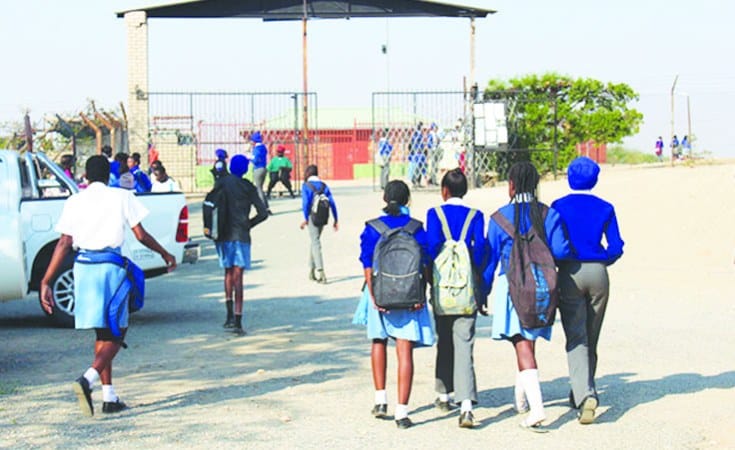
Then, in the next breath, we have national debates on how it’s unsafe for children to walk to school. No kidding! At this point, even ‘Sonic the Hedgehog’ wouldn’t make it across Independence Avenue in time.
WHEN TWO AUNTIES ESCAPE RUSH HOUR DEATH
Two aunties in domestic worker uniforms stand at the junction, clutching plastic bags and hope. They watch the traffic lights like gamblers at a slot machine – red, red, still red – eyes fixed on the little glowing man who decides the fate of pedestrians.
Then, suddenly, green!
All hell breaks loose.
They charge forward, handbags bouncing, plastic bags swinging like weapons of war. I start counting: one … two … three … four, and before I can say “five”, the light is red again.
The aunties freeze in panic mid-road, but it’s too late. A plastic bag tears at the handle, a jar of mayonnaise explodes on the tar, and a few heroic oranges roll into traffic like they’re fleeing the scene.
Two taxis, eager to prove that empathy doesn’t pay the bills, start hooting like they’re driving cattle. One yellow Nissan March driver flips a finger and shouts something in Oshiwambo that I’m quite sure isn’t “take your time, ladies”.
No one stops. Not one car. These drivers all have a collective appointment with impatience. The aunties abandon the remains of their groceries and dash for the other side, barely dodging the rush-hour stampede.
They stand there – breathless, defeated – staring back at the battlefield of broken glass, mayo and oranges. I want to stay and see if they make a daring rescue mission for their groceries, but the traffic moves.
WHO THE FUDGE SETS THE TIMER?
Now tell me, who sets these traffic light timers?
Is there a department somewhere where city planners sit in a meeting and say “Yes, four seconds sounds humane”?
Do they ever have to cross the road themselves, or do they all travel by drone?
You’d think at least once, someone would have said: “Maybe we should test these things on actual people before installing them.”
But no, logic was declared an optional extra at procurement stage.
Apparently, in the rest of the civilised world, traffic lights have evolved.
THE REST OF THE WORLD LOVES PEDESTRIANS
So, the global best practice changed over 20 years ago, mind you, to include something called enhanced pedestrian protection.
Fancy phrase.
It basically means: Give the humans a few seconds’ head start before the cars go full ‘Fast & Furious’. Just two to five seconds, enough time for a person to actually step into the road and be seen before drivers launch themselves across the intersection.
It’s meant to prevent situations where poles, fences or flower beds hide pedestrians until it’s too late. Simple logic, right?
Now, somewhere between ‘best practice’ and ‘Namibian adaptation’, logic got lost at customs. Because here, the Traffic Light Timer Adjusters, whoever they are, clearly didn’t have logic listed anywhere on their CVs.
Not even under ‘other skills’. You can see it on their faces too. These are people who probably failed ‘common sense’ as a subject alongside Bible studies and still got promoted.
Instead of a two to five-second head start for pedestrians, Namibian lights give you two seconds to reconsider your life choices.
The moment you step off the curb, the light flips red again, as if mocking your optimism. The drivers, blessed by the gods of impatience, are already revving up, ready to prove that road safety is just a rumour.
I must admit that I have seen some good practices in Namibia, especially in uptown, top-ranking neighbourhoods, but there is just no consistency.
DO WE EVEN HAVE A STANDARD IN NAMIBIA?
And where is the Namibian Standards Institution in all this? Do they even have a standard for pedestrian timing? Because I swear, at Oshakati, pedestrians get exactly one and a half seconds.
They get two if they’ve just come from church. Cars get two full minutes, and donkeys get a leisurely five.
At Swakopmund, on the other hand, the lights take so long that both cars and pedestrians fall asleep at the junction, and everyone wakes up when the mist rolls in.
Meanwhile, at Omaruru, they have one traffic light, yes just one, and nobody stops or yields for anything. It’s more of a decorative piece than an actual control system.
There has to be a national standard for this madness.
A Ministry of Common Sense, perhaps, under Sankwasa?
Because right now, crossing the road in Namibia feels less like a safety feature and more like an extreme sport, and pedestrians are always the ones without helmets.