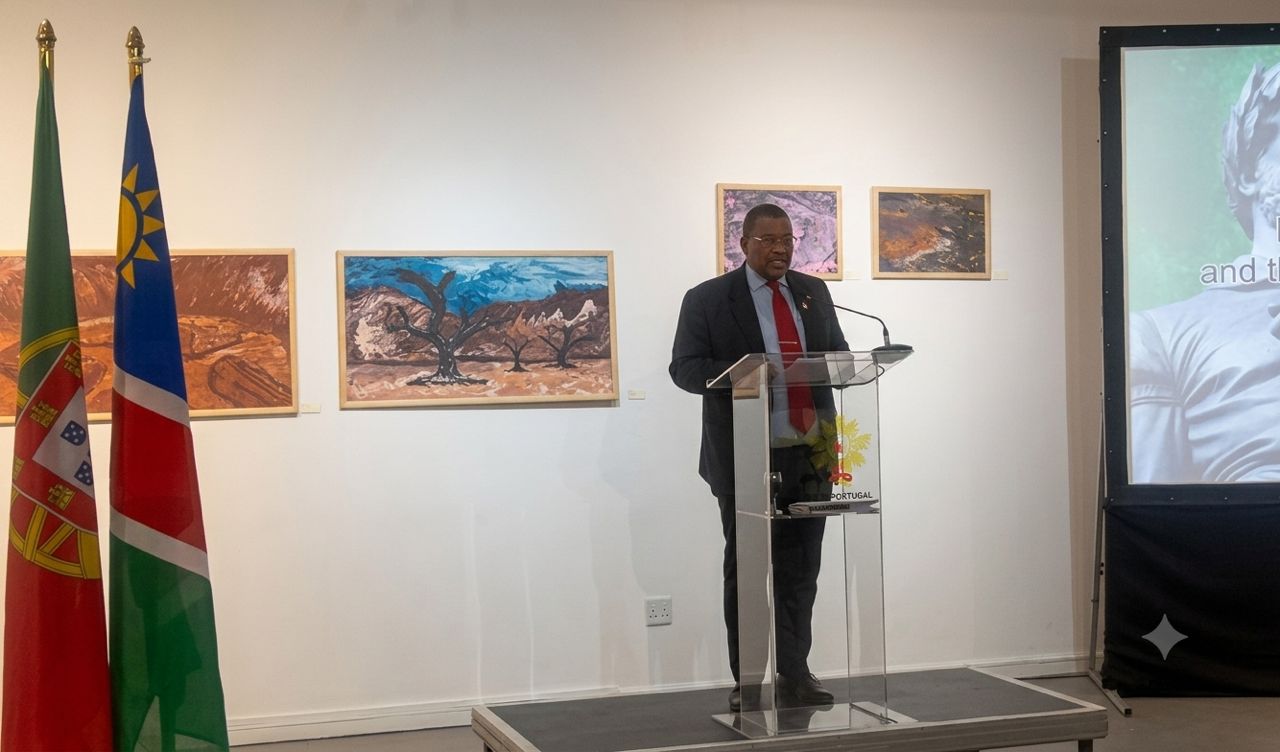







THE Ministry of Regional and Local Government, Housing and Rural Development tabled a White Paper on local and regional economic development (LRED) in Parliament last week.
The LRED concept proposes a strong public-private partnership and community involvement in development initiatives that can gainfully ‘plug in’ to a globalised marketplace. The White Paper, said Minister Jerry Ekandjo, is firmly based on the understanding that while national efforts are geared towards the enhancement of greater global competitiveness, it is at local and regional levels that opportunities are identified and harnessed. LRED, in short, is defined in the White Paper as a process by which urban and rural areas work collectively with public, business and non-governmental sectors to create economic growth, employment creation and community wealth. It is lodged within the overarching national development planning phases and Vision 2030 frameworks that pursue healthy market competition, increased individual self-reliance, and the creation of an enabling environment for people to achieve prosperity. The Namibian Government, the paper declares, acknowledges the need for a reorientation of economic and social policy away from a ‘top-down’ sectoral approach to a ‘bottom-up’ local development thrust in a public-private-partnership arrangement. This would be through the support for entrepreneurship, the development of human capital, spreading innovation and building local institutions and firm networks. Government sees its responsibility in this as allocating development budgets, drafting proposals, initiating employment and income generation opportunities, identifying opportunities for capacity building, improving communications among stakeholders, harnessing comparative and competitive advantages and marketing of localities alongside national investment attraction initiatives, and improving the standard of sub-national Government with funding from lending agencies. Because the private sector is growingly acknowledged as the ‘engine’ of economic growth, the paper notes that Government should create an environment in which its needs and demands are properly integrated in all planning. The overall aim of LRED, states the paper, is to provide economic opportunities for job creation. At local and regional levels, it means understanding the particular and peculiar characteristics of each locality and figuring out appropriate marketing of advantages; investment attraction, business expansion and retention; the support to small and medium enterprises and informal sectors; and the attraction of tourism. The paper further suggests the building of ‘liveable’ regions and urban centres, while improving the quality of the environment to avoid adverse impacts through spacial considerations and amenities to rural and urban populations. It also involves town land utilisation, with particular reference made of the situation in northern Namibia where subsistence small-scale farmers have been swallowed up into town-land areas, and in essence continue ‘farming’ in urbanising environments that lead to conflict and contestation of land and land use.