The ‘White Lady’ is one of Namibia’s most iconic rock paintings.
Nestled in the Brandberg mountains, the painting, which is estimated to be at least 2 000 years old, is slowly starting to fade away, but the story of its ‘discovery’ and the expeditions that made it famous live on.
An exhibition titled ‘White Lady – Black Lady: Rock Art Research and Photography’ was curated by the Basler Afrika Bibliographien (BAB), which is the largest literary resource centre housing Namibian literature outside Namibia and is also known as a publisher on a series of books about Namibia.
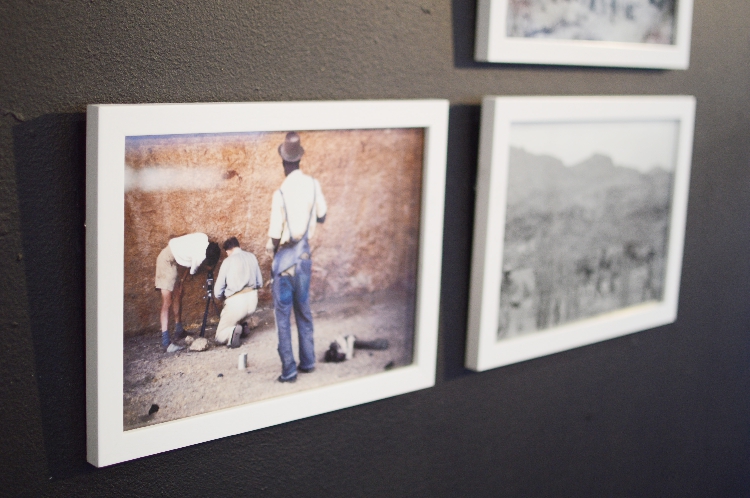
The series of black and white photographs exhibit the works of Annelies and Ernst Rudolf Scherz on their expedition with French archeologist Abbé Henri Breuil and his ‘collaborator’ Mary Boyle (a respected archaeologist in her own right). The expedition took place in Namibia during 1947 to 1950, and the images allow visitors to peer into a time when rock paintings where being discovered by scientists and were for the first time able to be photographed in colour, despite the majority of them being in black an white.
In the digital world we live in today, it is hard to imagine a world where colour photography was considered a big deal, but at the time of the expeditions, colour photography had only recently become readily available, thanks to Kodak’s Kodachrome.
Covering everyday aspects of the expeditions, the photographs also depict the black Namibian workers who were part of the expeditions.
The exhibition also poses the question why the ‘Africans’ were not regarded as collaborators by the researchers. Why weren’t their thoughts and insights on the paintings listened to?
Even in the naming of the image, why was it called the ‘White Lady’ when the figure was most likely a black shaman?
The excitement of wanting to create a closeness to the researchers led to a re-enactment and visual juxtoposition of turning Boyle into the ‘Black Lady’.
This exhibition not only provides insight into the world of rock art discoveries but also into the colonial context of the time and how it affected the research styles and photography.
‘White Lady – Black Lady: Rock Art Research and Photography’ will be on display at the FNCC’s main gallery until 16 February.