



It is a bitter irony that a government that has the power to dish out fishing quotas, oil blocks and mineral rights to a select few struggles to maintain an effective justice system.
For years, top judicial officers have raised concerns about a lack of resources.
Last week, chief justice Peter Shivute revealed that the High Court’s civil bench managed 4 295 cases during 2025, which is an average workload of 614 cases per judge.
That compares to a workload of 4 987 cases for 13 judges on the civil bench during 2024, which translated into an average workload of 384 cases per judge.
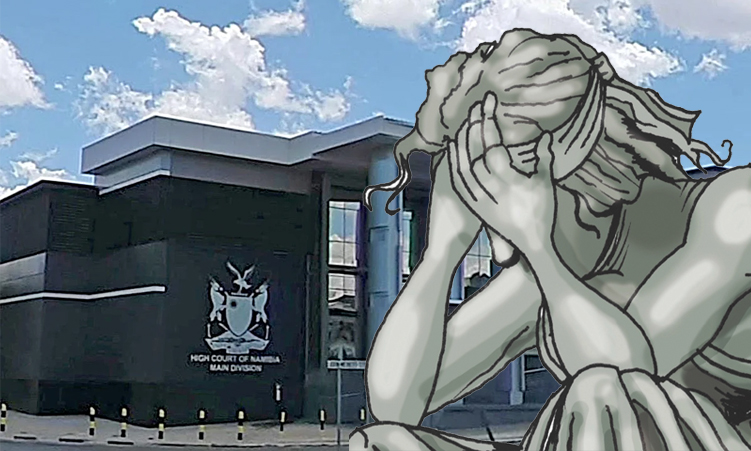
In the same week, High Court judge Beatrix de Jager declared in a public court order that she would not sacrifice her health for an impossible workload.
“A day has 24 hours. I am a human,” she pleaded.
This extraordinary alarm sounded should force the government to take emergency action or risk watching a crucial arm of the state collapse.
Whether De Jager was right or wrong to air her frustration in a court document, instead of following internal procedures is debatable.
But the fact remains that her approach has given Namibians a glimpse of how dire things have become in the justice system. De Jager’s court order can only be interpreted to mean that the system is on life support.
We agree with lawyer Norman Tjombe that the judiciary is a key institution with the vital function of dispensing justice. Treating it as an unwanted cousin can only cause our constitutional democracy to fail.
The lack of support for the judicial service goes back years. Shivute has repeatedly used legal year openings and workshops to warn about inadequate resources.
However, questions must be asked about what he is going to do to reverse a perilous decline.
The government can rightly claim that there is no money to deal with all the problems, but we believe some remedies are straightforward.
For example, stop giving away fishing quotas, oil blocks and mineral rights for a pittance under the policy of so-called black economic empowerment.
Though the system resulted in the Fishrot corruption scandal, Namibian beneficiaries of licences have paid as little as N$50 million a year in levies to the government’s tax coffers.
By contrast, a small portion of the fishing quotas the government has auctioned since 2020 have raised more than N$1.2 billion by 2024.
A transparent annual bidding system for all fishing quotas would generate billions more – enough to fund a functioning justice system many times over.
The government knows this. It chooses to act otherwise.
Its misplaced priorities extend beyond natural resources.
In the space of a year, the government has recruited 1 500 soldiers and 400 correctional officers.
In an age of information overload, Sunrise is The Namibian’s morning briefing, delivered at 6h00 from Monday to Friday. It offers a curated rundown of the most important stories from the past 24 hours – occasionally with a light, witty touch. It’s an essential way to stay informed. Subscribe and join our newsletter community.

The Namibian uses AI tools to assist with improved quality, accuracy and efficiency, while maintaining editorial oversight and journalistic integrity.
Stay informed with The Namibian – your source for credible journalism. Get in-depth reporting and opinions for
only N$85 a month. Invest in journalism, invest in democracy –
Subscribe Now!