



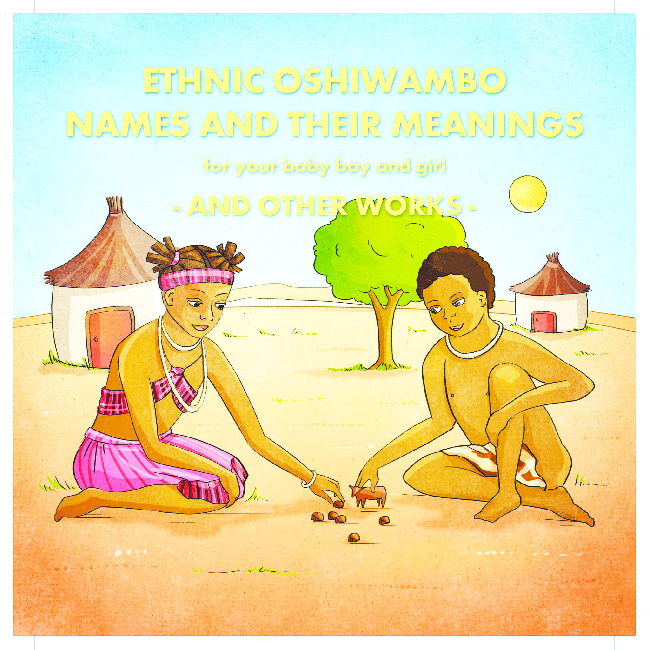
IF you grew up in Namibia, there’s no doubt you’ve met or personally know a Nangula (a name given to a baby girl born in the morning), Twapewa (we have been given) or Tuhafeni (let’s be happy together).
The co-author of ‘Ethnic Oshiwambo and Totem Names and their Meanings’, Panduleni Hamunyela Nakapunda, explains an old saying – “Edhina Ekogidho”, which means you become your name.
“So it is imperative that we give children names with meanings that we understand, personal joyful names, and names that would foster positive attributes and characteristics,” he says.
Inspired by the fact that many Africans are slowly losing their rich cultural heritage, Nakapunda and his mother Meme Mwahalondjila Eunice Lineekela Nakapunda, set out to write the culturally important book, originally published in 2012 and now in its third edition.
“It was such a special project for both of us, bringing us closer together. My mother was a teacher so imparting knowledge was something that she particularly enjoyed doing,” Nakapunda says.
In Oshiwambo culture, the father usually gives a newborn its name, on the day the child is born. If the couple is not married, the father’s father names the child, explains Nakapunda.
“Before the missionaries came to Namibia, especially in Owamboland, the people only used traditional names, which relayed specific messages indicating the conditions under which the child was born.”
Increasingly nowadays this is not the case any more. Many Africans are losing their languages, culture and names over time, through a process of westernisation, religious and economic colonisation and the deaths of elders, says Nakapunda.
“I believe this book will go a long way in instilling pride in an African on his identity and blackness. Africans have been shamed for their ethnic names, surnames and languages through various systems and they are probably the only people who use their African name at home and a different one in school/work/professional setting”.
Nakapunda is a well-established author of several novels, including ‘Clipping Katherine’s Wings’ and ‘Chad and the Magical Rains’.
He began research for ‘Ethnic Oshiwambo and Totem Names and their Meanings’ by sourcing names around him – on social media, in the telephone directory, church registers and newspapers, working with his mother who would decipher the Oshiwambo meanings through her own knowledge, and by calling on trusted elders to assist.
The fact that the book focused on mostly Oshikwanyama names was also a point of contention for some.
“We then went about rectifying this by looking exclusively for non-Oshikwanyama names, we broadened the definitions of existing names by further researching the etymology and including various possible translations.”
In addition, the duo included a list of Finnish and Hebrew names which are very prevalent among the Aawambo – such as Simon, Johannes, Usko, Maria, Suoma and Saima.
“This section was devoted to explaining the history behind why such names exist among Aawambo and in such high volumes,” says Nakapunda. “We have worked on close to 1 000 Oshiwambo names by now.”
He focused on the names of young people, while his mother focused on the older generation – Oshiwambo names she believed had been forgotten for too long.
Nakapunda points to countries like Angola and Mozambique that have lost the majority of their indigenous names to colonial names.
“They have taken up Portuguese names and surnames and discarded their own. In northern Nigeria and central Sudan, through religious colonisation, these countries have taken up Muslim names. And in Namibia through religious and economic colonisation, Namibians have taken up Hebrew, Finnish, Afrikaans and German names,” says Nakapunda.
Westernisation has played a role, with many Namibian names being inspired by popular culture.
Nakapunda also realised through movements such as decolonisation, black consciousness, and Maslow’s hierarchy of needs (self-actualisation), that more Africans were getting back in touch with their roots but sometimes didn’t know how to go about it.
“Our vision is to have the book as a source for them to turn to whenever they want to give their newborn children African names. The dream is that Oshiwambo-speaking people will discover and be in awe of the beauty and appreciate the ingenuity of their own names,” Nakapunda says.
He advises other Namibians to create their own books reflecting their individual cultures when it comes to events like weddings, funerals, cultural wear and food.
“Time is running out. Our elders are dying. We have to preserve indigenous knowledge. I would like to see books on Damara, Herero, Kavango, Masubia and Mafwe as well as Tswana names,” he says.
“Our names tell our history, they relay messages to the nation, they foster healthy relationships between people.”
The perfect gift for expectant parents, visiting friends, Pan-Africanists and culturalists, find ‘Ethnic Oshiwambo and Totem Names and their Meanings’ at local bookstores.
In an age of information overload, Sunrise is The Namibian’s morning briefing, delivered at 6h00 from Monday to Friday. It offers a curated rundown of the most important stories from the past 24 hours – occasionally with a light, witty touch. It’s an essential way to stay informed. Subscribe and join our newsletter community.

The Namibian uses AI tools to assist with improved quality, accuracy and efficiency, while maintaining editorial oversight and journalistic integrity.
Stay informed with The Namibian – your source for credible journalism. Get in-depth reporting and opinions for
only N$85 a month. Invest in journalism, invest in democracy –
Subscribe Now!