In Namibia, we manufacture heroes at gravesides. We wait until our great men and women can no longer hear us, then suddenly discover the vocabulary of greatness.
They become pioneers, legends, giants and national treasures.
Institutions that had decades to recognise them issue glowing tributes. Flowers arrive in abundance. Unfortunately, the person being honoured can no longer smell them.
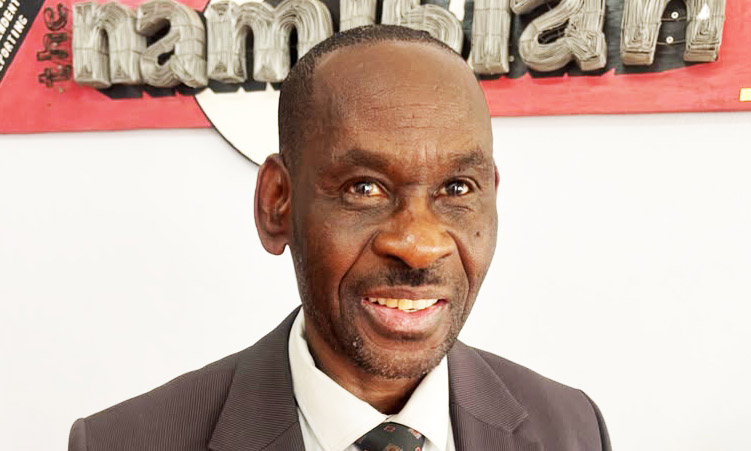
I fear Namibia may one day do exactly this to Paavo Hasheela.
There is something troubling about a country that can use a man’s intellectual work for decades, teach generations through it, cite him in academic research – and still fail to honour him accordingly.
I can find no public record of a Namibian university awarding Hasheela an honorary doctorate. If one exists, I will gladly stand corrected. If not, what more must this man possibly do?
Hasheela is not simply an ‘author’. His career reaches back to 1957, when he began teaching in northern Namibia. He later worked in broadcasting before entering indigenous-language development.
His life’s work became intertwined with the teaching, documentation and preservation of Oshikwanyama.
Perhaps nowhere is that legacy more evident than in ‘Oshikwanyamenena’, arguably his magnum opus. Yet it hardly stands alone.
Academic research credits Hasheela with producing the majority of texts used by Oshikwanyama pupils from primary through secondary school, with some extending into tertiary use.
He helped preserve more than 1 000 proverbs in ‘Omishe Di Dule Eyovi’, documented indigenous folktales and, with Wolfgang Zimmermann, produced ‘Oshikwanyama Grammar’.
Researchers have even sought him out personally for his linguistic and historical knowledge.
His work did not merely describe Oshikwanyama; it helped Oshikwanyama function as a language of education.
That is intellectual labour. That is scholarship. Yet where is the recognition? Perhaps he should have become a politician.
The joke conceals an uncomfortable truth.
Namibian institutions have little difficulty recognising political eminence.
Presidents and prime ministers have received honorary doctorates.
This is not to suggest politicians are undeserving. But if governing a nation may constitute distinguished service, surely preserving the intellectual apparatus of one of its languages may constitute distinguished scholarship.
Perhaps Namibia does not honour too many politicians. Perhaps Namibia honours too few intellectuals.
Fairness requires acknowledging that the University of Namibia has recognised indigenous literary achievement. In 2022, it conferred an honorary doctorate in Language Studies on Angula Ndjembo for his contribution to cultural literature.
That precedent does not weaken Hasheela’s case. It makes his omission more puzzling.
Meanwhile, our institutions speak endlessly about indigenous knowledge and decolonising education. Yet Hasheela did not merely speak about preserving an indigenous language; he preserved it.
He was documenting language, proverbs and oral traditions decades before ‘indigenous knowledge’ became fashionable academic vocabulary. That contradiction should embarrass us.
Perhaps, most pathetically, we comfort ourselves by calling him Tatekulu.
Yes, it is a term of profound cultural respect. But cultural reverence is no substitute for institutional recognition.
After a lifetime of scholarship and language development, if the highest recognition we can muster is Tatekulu, that is pathetic.
Respect for his age is not recognition of his mind.
Hasheela’s story raises a harsher question: Would Namibia recognise him differently if his life’s work had been conducted in English rather than Oshikwanyama?
We still carry inherited hierarchies in which European-language work more readily appears intellectually sophisticated, while indigenous-language scholarship is relegated to ‘culture’ or ‘tradition’.
Colonialism did not merely seize territory; it ranked knowledge. Independence can remove a flag. It does not automatically remove a hierarchy from the mind.
Our institutions speak confidently about decolonisation. Excellent. But decolonisation is remarkably easy when it requires a conference hall, a keynote address and a PowerPoint presentation.
The real examination begins when indigenous knowledge walks into the room without a PhD.
Consider the irony. A young Namibian could research Oshikwanyama, cite Hasheela, analyse knowledge he helped preserve, write a dissertation and become doctor.
Hasheela remains Tatekulu. The researcher becomes doctor; the source remains Tatekulu.
The scholar receives the gown; the intellectual ancestor becomes a footnote.
An honorary doctorate, at its noblest, recognises that extraordinary intellectual contribution exists beyond conventional academic pathways.
The university does not create greatness; it demonstrates that it was capable of recognising greatness.
Hasheela does not need an honorary doctorate to legitimise his contribution. His work already did that.
‘Oshikwanyamenena’ exists. The grammar exists. The proverbs were preserved. The classrooms happened.
The doctorate would instead say something about us: that Namibia recognises scholarship expressed in an African language as scholarship.
So what are we waiting for? Another book? Another generation of pupils? Another decade? Or, God forbid, an obituary?
We must stop manufacturing heroes at gravesides and congratulating ourselves for remembering them.
Let us not wait until Hasheela is gone and suddenly discover he was a ‘national treasure’. Let us not console ourselves by saying “But we respected him. We called him Tatekulu.”
Give Paavo Hasheela his flowers while he can still smell them.
After a lifetime spent teaching, writing, documenting and preserving one of Namibia’s major indigenous languages, the question is not whether Paavo Hasheela is worthy of our institutions. It is whether our institutions have shown themselves worthy of Paavo Hasheela.
– Tulonga Nakale is a teacher. He is passionate about education reform and social justice. mail: nakaletn@hotmail.com