




DAVID MAKONISPECIAL ADVISER TO the president Alfredo Hengari struggles to understand why the media “speaks truth to power”.
To him it is either arrogance or intolerance that drives the media. Maybe he is right on arrogance, although I feel it is a quality needed to succeed at most things.
I will, however, try to help him understand “as a student of the media” our role in society by drawing parallels between Zimbabwe and Namibia.
When Hopewell Chin’ono was arrested in Zimbabwe in July, it confirmed what we already knew: How long we can question the old men and women in power, and how long we can expose their dealings and retain freedom.
The answer remains the same as for the last four decades: Not too long.
The truth, as Hopewell showed, is that there is a Japanese knotweed at the heart of Zimbabwe’s governance – corruption.
And his arrest has laid bare just how deeply rooted this knotweed is.
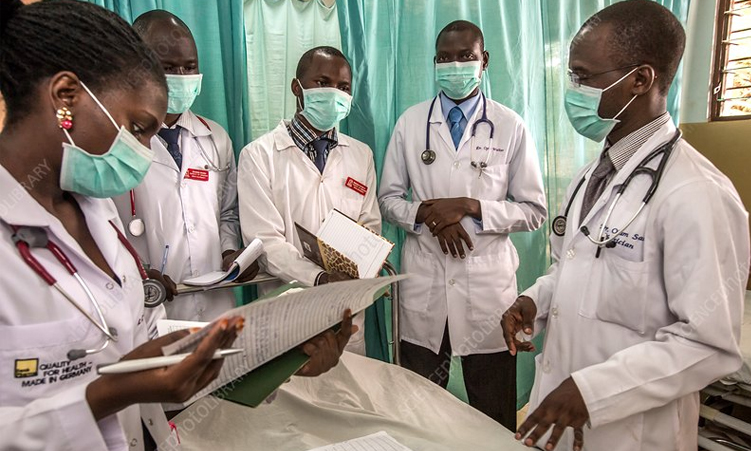
Compare the treatment Hopewell received after being arrested ahead of protests on 31 July to that of the former health minister, Obadiah Moyo.
Moyo was never put in chains and was granted bail as soon as he set foot in court. This goes a long way in showing who the government protects – the corrupt.
Now, Hopewell is ‘seriously ill’ inside a maximum security prison. The irony is that the corrupt former health minister, the same one Hopewell worked tirelessly to bring to justice for his deeds, is free, while Hopewell is behind bars and in need of medical treatment. He has also been denied the right to a lawyer of his choice.
In the same vein, Tawanda Muchehiwa, a nephew of the editor of online media house ZimLive, was abducted, allegedly by state agents, tortured and, for a while, found himself battling for his life. All because of his relationship to ZimLive editor Mdududzi Mathuthu, who is also credited for exposing the corruption scandal.
The message is clear: Be critical of power and risk prosecution or brutal persecution, whichever gets to you first.
Journalists and media houses have a duty to expose and question the criminal abuse of office. Their obligation is to lay bare the facts, and to provide educated opinions, to allow people to make their own decisions and not be dictated to.
Those in power will always want to have us believe they have our best interests at heart. It may be true. After all we elected them to represent our communal and national interests.
However, situations where there is a conflict of interest, especially in positions of power, will always arise. When the custodians of power succumb to self-interest, they will never let go of what they feel entitled to.
It is a thing with power: It corrupts and breeds a litter of other evils, including lying. This is why the media will continue to struggle with power or, rather, why power will continue to struggle with the media.
So you can’t expect a press secretary for the president, for example, to tell the nation a leader has failed to deliver on set targets. It would not make sense for multiple reasons. Chief among them being that it could make an official susceptible to being replaced.
The custodians of truth, Hengari, step in at this point. These are not the voices of a secret band hushing in a fancy government office, they are the voices of ordinary people having conversations on issues that matter to them, issues they are interested in, and issues they must know about.
These issues are placed on a figurative table, the media, for everyone to dissect.
If a president says he’ll give you three bags of beans in two years, and he gives you none in five, but then proclaims what a success he is, you should rightfully call him out: He has failed.
One man or woman alone cannot be the custodian of truth.
All of us are when the facts are laid out.
And that is what we expect from the media: The story as it is so that we can decide for ourselves.
Alfredo Hengari, media are the custodians of truth and our last frontier when in need of ears and answers.
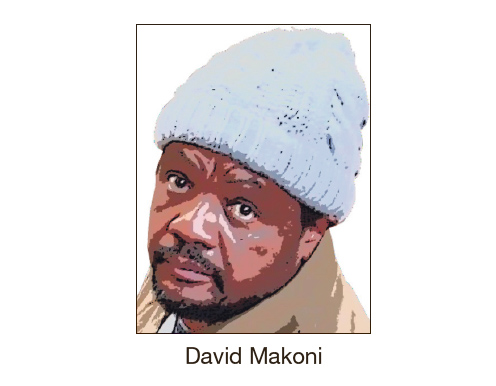
* David Makoni is a press freedom supporter.