


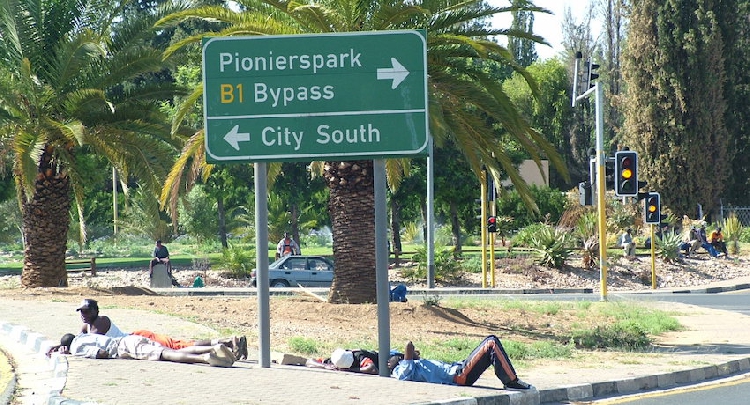
A SIGNIFICANT number of Namibia’s unemployed have turned to the ministry of labour’s employment website as they search for placement either in the government service or the private sector.
The ministry indicated that by 31 October, there were 101 899 job-seekers registered on the Namibia Integrated Employment Information System (Nieis).
According to last year’s national statistics by the Namibia Statistics Agency, the country has more than 1,09 million active people who are ready to work, of whom 364 411 (33,4%) could not find jobs at that time.
The statistics were obtained from a sample of 10 296 households around the country, but most experts believe the pool is bigger than the 33,4% indicated by the agency.
According to the statistics provided by the labour ministry, joblessness continues to increase, as only a few jobs are being created.
For the last six months, 5 583 job-seekers were registered on Nieis, while 857 vacancies were recorded at the Employment Services Bureau (ESB) during the period.
The ministry’s match-making platform managed to place 265 of the 5 583 job-seekers in the six months.
The labour ministry registered about 2 641 job-seekers (1 506 males and 1 135 females) during the second quarter of the year.
The Khomas region registered the majority of job-seekers (1 051), followed by the Erongo region (535). The lowest number of job-seekers registered was in Ohangwena (44), and the Kavango West and Hardap regions (45), respectively.
During the three months, a total of 666 vacancies were reported to the Employment Services Bureau (ESB).
The majority of vacancies were in the Khomas region (364), followed by the Erongo region (217).
Most of the vacancies were in the manufacturing sector (101), fishing (93), wholesale (85), and mining and quarrying (84).
Only 195 job-seekers were placed during this quarter. Out of this number, 134 are females and 61 males, with the Erongo region having the highest number of job-seekers placed (122).
A total of 2 924 job-seekers were registered during the third quarter, of which 1 641 are males. The Khomas region registered the majority of job-seekers (1 680), followed by the Erongo region (346). The Kavango West (6), Otjozondjupa (34), and Oshikoto regions (43) recorded the lowest numbers of job-seekers.
During this quarter, the economy only managed to create 191 vacancies which were reported either online, or through manual notification on the prescribed form.
The majority of vacancies reported were in the Khomas region (99), and Erongo region (38).
The classification of the jobs shows that most of the vacancies reported were in wholesale, retail, repair of motor-vehicles and motorcycles (30), as well as mining and quarrying (25) and other services 31.
From the 2 924 job-seekers, only 70 were placed during this quarter. Of this number, 22 are females and 48 are males.
The construction industry placed more job-seekers (34), followed by public administration, defence and social security (17), and education and wholesale, retail as well as the repair of motor-vehicles with five placements each.
The ministry of labour’s spokesperson, Maria Hedimbi, indicated that a new employment policy will be developed which specifies possible programmes and projects for employment-creation, which, if positively implemented, is expected to yield improved results in employment-creation.