




For more than two decades, the Ombetja Yehinga Organisation (OYO) has been a driving force for change in Namibia, using the arts as a tool to educate and empower young people.
What began in 2001 in the Kunene region as a small, localised project quickly proved to be an innovative and powerful model for raising awareness on critical social issues. The demand for OYO’s work grew rapidly, leading to its official registration as a welfare organisation in 2002 and its expansion into new regions the following year.
Since then, OYO has operated in regions across Namibia, but never all at once – it is simply not feasible. Instead, the organisation moves strategically, bringing its impactful programmes to different parts of the country over time. Through dance, film, theatre and visual storytelling, OYO has influenced positive change in the lives of young people in the different communities it has worked in.
Despite its success, OYO now faces one of its biggest challenges yet – a sudden freeze in donor funding that threatens to halt its work. With 60% of its budget gone overnight, the organisation is calling on the public to help ensure that its powerful message continues to reach the young people who need it most.
UNIQUE APPROACH TO SOCIAL CHANGE
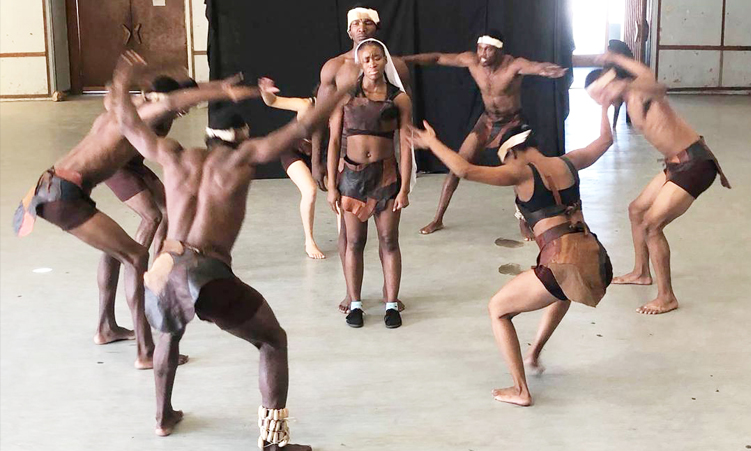
At the heart of OYO’s mission is the belief that art has the power to inspire action. The organisation uses dance, film, comic books, photography and theatre to address critical issues affecting Namibian youth, including HIV-AIDS, gender-based violence, human rights and teenage pregnancy.
“OYO is unique because we use professional art to engage young people,” says OYO founder and director Philippe Talavera.
“Art appeals to emotions, and when you feel something, you are more likely to react and integrate the information.”
Instead of relying on traditional educational methods, OYO delivers its messages through multiple artistic mediums, ensuring that learning is engaging and impactful. A student might watch a powerful dance performance one day, then see a thought-provoking film the next, followed by an art competition reinforcing the same themes. This layered approach ensures that key messages resonate deeply.
REAL IMPACT ON YOUNG LIVES
OYO’s success is not just theoretical – it is measurable in the lives it has changed. Over the years, the organisation has helped countless young people stay in school, overcome trauma and discover their talents.
“When we go to schools, we don’t just present a performance and leave. We facilitate discussions and offer direct psychosocial support through youth counsellors,” Talavera says. “Some students feel safe enough to share personal experiences, and when that happens, we make sure they get the help they need.”
One such success story is Alejandro Cooper, a young actor who started his journey with OYO. In 2023, he won the Strategic Award for best young African actor — an achievement that showcases how OYO nurtures young talent while addressing social issues.
“OYO has helped young people realise their potential, and it has kept many from dropping out of school. We’ve even helped students who had already left school to return,” Talavera adds.
Over the years, OYO has not only made an impact locally but also gained international recognition. The OYO Dance Troupe has represented Namibia on prestigious global stages, performing in countries such as the United Kingdom, Germany and the United States, using dance to spark critical conversations about social issues.
In addition to live performances, OYO has also ventured into filmmaking, producing award-winning films that tackle pressing topics such as HIV-AIDS, gender-based violence and LGBTQI+ rights. Notably, films like ‘Kukuri’ and ‘Kapana’ have received international nominations and won accolades.
DEVASTATING FUNDING CUTS
Despite its impact, OYO now faces a critical funding crisis. The organisation has never been a direct recipient of United States Agency for International Development (USAID) funding, but it has worked under contracts with institutions that rely on such support. When the Trump administration froze foreign aid, those contracts were suddenly cancelled, leaving OYO without a major source of funding.

“This came as a complete shock,” says Talavera. “There was no warning. We were not given time to plan. One day the funds were there, and the next day they were gone.”
The cuts have forced OYO to halt essential programmes, particularly those focusing on HIV-AIDS education – a topic that remains urgent, especially since Covid-19 diverted attention away from HIV awareness in recent years.
Beyond programme disruptions, the funding loss threatens the livelihoods of OYO’s artists, educators and counsellors, many of whom have dedicated their careers to serving Namibian youth.
OYO NEEDS SUPPORT
Like many non-governmental organisations (NGOs), OYO is donor-dependent. It provides free services to schools and communities, meaning it does not generate income the way a business would. This financial model makes it vulnerable to shifts in donor priorities.
“The discussion on how NGOs can become self-sustainable has been ongoing for years,” Talavera notes. “But the reality is, we are not selling a service – we are providing one. Expecting schools to pay for our work is unrealistic. Without donor support, it is difficult for organisations like OYO to survive.”
To weather the current crisis, OYO has launched a crowdfunding campaign, calling on its supporters – individuals, businesses, and institutions – to contribute whatever they can. Support can also be shown via PayToday or EFT, with more information on the verified social media pages of OYO and that of the director, Talavera.
“We are asking those who believe in our work to help us get through the next few months while we wait for new funding proposals to be approved,” Talavera says. “We have spent the last 20 years making a difference, and now we need our community to help us continue.”
CIVIL SOCIETY’S ROLE IN NAMIBIA
Beyond OYO’s immediate struggle, its situation reflects a broader issue facing civil society in Namibia.
“NGOs play a critical role,” says Talavera.
“We bring voices from the ground to policymakers, advocating for those who might not otherwise be heard. Without strong civil society organisations, many pressing social issues would go unaddressed.”
The loss of organisations like OYO would not just impact the young people who rely on their programmes – it would also weaken Namibia’s social fabric.
In an age of information overload, Sunrise is The Namibian’s morning briefing, delivered at 6h00 from Monday to Friday. It offers a curated rundown of the most important stories from the past 24 hours – occasionally with a light, witty touch. It’s an essential way to stay informed. Subscribe and join our newsletter community.

The Namibian uses AI tools to assist with improved quality, accuracy and efficiency, while maintaining editorial oversight and journalistic integrity.
Stay informed with The Namibian – your source for credible journalism. Get in-depth reporting and opinions for
only N$85 a month. Invest in journalism, invest in democracy –
Subscribe Now!