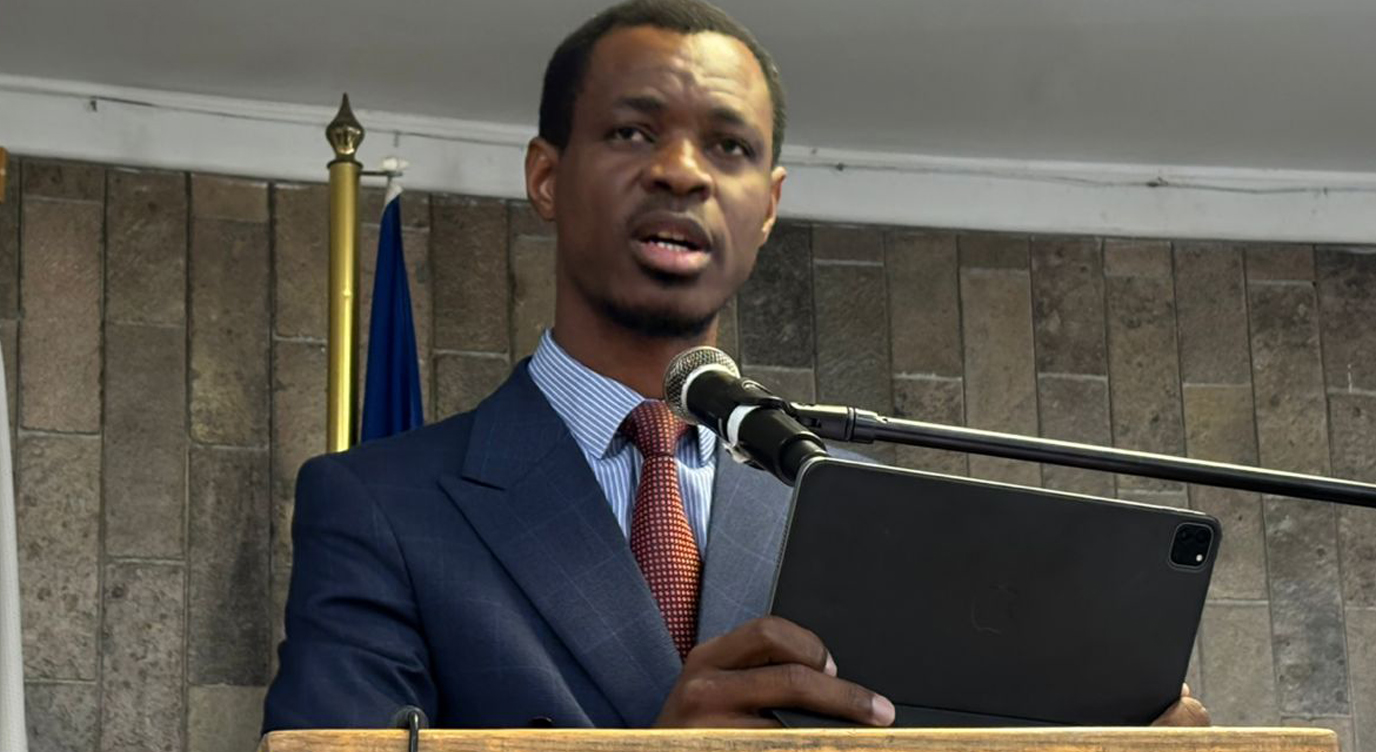




AT the beginning of this week, February 1 to be exact, a group of prominent Europeans, Africans and Asians paid a visit to the Nazi concentration camp Auschwitz in Germany.
The group was composed of prominent Europeans such as the former German Chancellor, Gerhard Schroeder, the Mayor of Paris, Bertrand Delanoe, including prominent Africans such as the President of Senegal, Abdoulaye Wade (who couldn’t make it!), and the French Ambassador to Unesco, Rama Yade (who is of Senegalese origin). In front of the famous monument to the dead, the Archbishop of Paris, the Rabbi of Israel and the Mufti of Bosnia-Herzegovina all expressed themselves by saying that the genocide of the Jewish people is a historical reality and not fiction. While comparison is not reason, the media-campaign and the prominence given to Auschwitz, including the persecution of the Jews has meant that other genocides, (albeit not of the same scale) have paled into insignificance and have been relegated to fiction, historical non-events and anecdotes. The relegation of other genocides, including that of the Tutsis in Rwanda and Burundi, and to a large extent that of the Ovaherero people between 1904-07 does not only speak of hegemonic dynamics and Africa’s neglect by dominant European discourses of guilt, but importantly it is also telling of Africa’s neglect of its own historical narrative. In light of the latter, I am not sure if the Namibian Government requested representation during this week’s trek to Auschwitz in order to tell and widely share the narrative of the first genocide of the 20th century – whose modus operandi served by and large as the model for Auschwitz. Admittedly, the forgotten nature of the Ovaherero Genocide is the result of the Ovaherero people’s own inability to mobilise effectively and ensure that the story is told. However, it is largely the result of the Namibian government’s indifference and lack of interest in this historical saga. This unjustifiable indifference speaks in part of the mindlessness with which the ruling party deals with the history of this country. By and large, Swapo’s vision and telling of our history is devoid of any compassionate and intellectual perspective vis-à -vis primary resistance. This has meant that there is a short-term reading of ‘patriotic’ history commencing primarily with the formation of the Owambo People’s Organisation and Swapo. The earlier phases of resistance culminating in the Ovaherero Genocide and the annihilation of the Namas are not given their own separate and dominant historical identities, but merely serve as anecdotes and annexes reinforcing the hegemonic ‘patriotic’ history of the liberation movement, Swapo. In light of this shocking reasoning, there is an ongoing political engagement and commitment to a history of resistance that is told in terms of Swapo’s patriotic history. This decidedly patriotic, but unscrupulous form of history telling has turned the struggle for independence and revolutionary violence into a Swapo only myth – without any substantive recognition for the historical antecedents reaching a deadly zenith with the Ovaherero genocide and countless deaths of the Namas during the wars of resistance in 1904-07. Such an argument casting aspersions on the selective storytelling of Namibia’s patriotic history by Swapo, leading to the authoritarian exclusion of the Ovaherero Genocide from the mainstream wouldn’t have gained traction, had it not been carried out in such a blatant fashion. The Ovaherero Genocide is forgotten because the Namibian government is indifferent about it. Since the Namibian government does not care much about it as a foreign-policy issue, Germany treats the Genocide with the same ambivalence as that of our government. How do we explain the fact that there is a Genocide Memorial in Germany, and not one in Namibia? Had our government cared about the Genocide, the memory of this forgotten Genocide would have gained prominence before we had erected monuments to celebrate the recent liberation history of Swapo. Had government cared about this Genocide, it would have done more to honour the events meant to commemorate them. Similarly, had our government cared about the Ovaherero Genocide, it would have done what is necessary to ensure that the Ovaherero people are given the necessary assistance to keep the memory of this Genocide alive, both at home and abroad. After all, the Ovaherero Genocide is not about the Ovaherero – it is about Namibia’s important historical narrative to the world. * Alfredo Tjiurimo Hengari is a PhD-fellow in political science and researcher at the Center for Political Research at the University of Paris I Panthéon-Sorbonne, France. He is currently a scholar-in-residence at the Dag Hammarskjold Foundation in Uppsala, Sweden.
In an age of information overload, Sunrise is The Namibian’s morning briefing, delivered at 6h00 from Monday to Friday. It offers a curated rundown of the most important stories from the past 24 hours – occasionally with a light, witty touch. It’s an essential way to stay informed. Subscribe and join our newsletter community.

The Namibian uses AI tools to assist with improved quality, accuracy and efficiency, while maintaining editorial oversight and journalistic integrity.
Stay informed with The Namibian – your source for credible journalism. Get in-depth reporting and opinions for
only N$85 a month. Invest in journalism, invest in democracy –
Subscribe Now!