



One of my earliest childhood memories is of swimming in a small gully near my grandmother’s home in Yaaq Bari Wayne, a dusty collection of tin-roofed adobe build- ings huddled together in the plains of southern Somalia’s Bay region.
• MOHAMED ALO
After the Gu rains, the gully be- came a deep triangular cleft cut into the ground, filled with muddy water. Children gathered like ants to spilled sugar,jumpingoffledgesanddiving into its murky depths with screams and whoops of excitement.
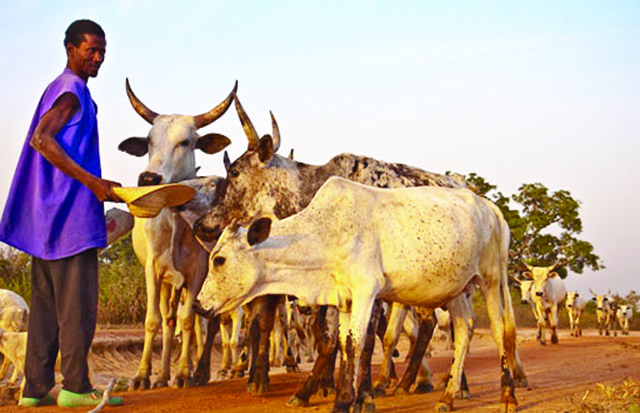
Many were children of nomadic herders, who moved south in May and June in search of better pastures. When they arrived, brown domes made of criss-crossed branches and layers of multicoloured mats would appear like crowds of dappled beetles on the outskirts of town.
New Horizons
For me, the nomad was a romantic figure, akin to the American cowboy of the Wild West. In the world’s harshest environment, they trekked hundreds of kilometres, surviving on camel milk and dried meat, with all of their possessions strapped to a camel’s back.
But, in the last two decades, the story of the Somali nomad has become far less romantic – and far more complex.
Nomads have been victims of famine, violent conflict, and circum-
stance, accounting for a significant share of the deaths – as many as one million – caused by 22 years of civil war, and of the 260 000 Somalis who died of starvation in 2010-2012. At the same time, nomads have been per- petrators of violence and terrorism.
And yet there is another way to view nomads: as survivors, entrepre- neurs, providers, and agents of trans- formation. With global problems like food insecurity and climate change threatening livelihoods around the world, nomadic and pastoral life- styles have the potential to protect and sustain millions of people.
In fact, it was cataclysmic climate change – which transformed a lush, green Sahara into a harsh desert – that triggered the emergence of such lifestyles in East Africa 5 000 years ago. Cattle herding allowed nomads to create livelihoods in an increas- ingly unpredictable and challenging environment, characterised by an arid climate and scarce resources.
Today, there are some 50 million nomadic herders in Sub-Saharan Africa, and as many as 150 million agro-pastoralists, who combine tra- ditional nomadic animal-rearing with some form of agriculture.
Policymakers often view nomadic pastoralism as an archaic and un- productive way of life, with little economic benefit. But the opposite is true.
Pastoralist systems are 20 per cent more productive than traditional ranching methods. And pastoralists
are more market-savvy than many believe; the Horn of Africa’s pastoral livestock and meat trade is estimated to be worth US$1 billion.
Sustaining Millions
Using land that cannot support conventional ag- riculture, pastoralists and agro-pastoralists produce meat, milk, and livestock productsthatsustainmil- lions.
Indeed, according to an OECD study, they are responsible for 10 per cent of the world’s meat production; in some regions, they supply as much as 60 per cent of the beef and 70 per cent of the milk consumed.
Pastoralism is thus an essential livelihood system, with the potential to help overcome food insecurity – particularly in Somalia, where more than 50 per cent of the population are nomadic herders. In order to unleash this potential, a strong sup- port system that improves pastoral- ists’ access to capital and markets, while bolstering human-resource development and capacity-building, is needed.
Following the example of Mongo- lia, where pastoralists can purchase private insurance to protect against the loss of herds from drought, micro credit programmes could be estab-
lished to insure pastoralists against similar risks and thus provide funds for restocking after a disaster. In order to enhance their livelihoods’ stability and profitability further, pastoralists need to be integrated into the formal economy. Effective trade networks and access to live- stock markets would enable them to increase sales substantially.
The Tech Factor
Increased access to technology is also crucial to improving nomads’ economic prospects.
In Niger, pastoralists use mobile phones to keep abreast of com- modity prices in regional markets, which enables them to sell their camels where prices are highest and purchase grains where prices
are lowest. In Kenya, veterinarians send text-message alerts to warn pastoralists of disease outbreaks and provide vaccination information.
Providing such support systems for pastoralists could prove to be an effective strategy for advancing economic development, enhancing food security, and reducing depend- ence on food aid in Somalia and elsewhere. Indeed, for many coun- tries, nomads – recast as intrepid entrepreneurs – could be the key to securing a prosperous future. – Project Syndicate
In an age of information overload, Sunrise is The Namibian’s morning briefing, delivered at 6h00 from Monday to Friday. It offers a curated rundown of the most important stories from the past 24 hours – occasionally with a light, witty touch. It’s an essential way to stay informed. Subscribe and join our newsletter community.

The Namibian uses AI tools to assist with improved quality, accuracy and efficiency, while maintaining editorial oversight and journalistic integrity.
Stay informed with The Namibian – your source for credible journalism. Get in-depth reporting and opinions for
only N$85 a month. Invest in journalism, invest in democracy –
Subscribe Now!