






Young Namibians recruited to pretend to be rich, using fake social media accounts and scamming older men online
IN JUNE 2023, a young Namibian man spent two weeks in Windhoek learning how to pretend to be a rich woman so he could scam men over the age of 50 on the internet.
The man, which the state has identified as Kambonde Nashitope, was recruited by a close corporation that is now accused of using Namibia as its base to scam people as part of an international scheme in which victims have lost more than N$8 billion.
The close corporation is also linked to criminal networks in countries such as Myanmar and Thailand.
Nashitope was one of the 50 young Namibians who were used to run a fraud scheme, a romantic scam known as ‘pig butchering’, in which scammers pose as wealthy individuals, attracting strangers and building their targets’ trust online over weeks before steering them into fake cryptocurrency investments.
The scheme was based in Windhoek near the police headquarters.
Nashitope, who was 27 years old at the time he worked for the close corporation, used fake names such as ‘Heidi’ and ‘Jane’ on social media as part of a fraud scheme that eventually led to the arrest of 14 people in Namibia’s capital.
Although the case has been ongoing for the past three years, unreported court documents show how these schemes entangled young Namibians aged between 20 and 35 who thought they had found jobs in Windhoek.
Namibian Police deputy inspector general Elia Mutota says the group defrauded people outside Namibia of more than N$8 billion between December 2022 and October 2023.
He calls it a ‘pig butchering’ scam – a romance scam likened to pigs being fattened for slaughter due to the fraudsters’ clever social engineering.
“The estimated total amount on pig butchering is N$8 billion, which mounted from December 2022 when they started operating, to October 2023. The police had initially received the information in September before the suspects were arrested,” Mutota says.
He says the police have so far recovered more than N$5 million in Seychelles.
This amount belongs to some of the victims based in countries including Canada, Britain and the United States (US).
Figures provided to The Namibian show how one of the victims from the US was scammed out of US$111 000 (N$1.8 million).
Newspapers
Another victim was scammed out of 74 000 euro (N$1.4 million). A Canadian victim was scammed out of US$10 000 (N$117 000 at the time).
‘HEIDI’ FROM CALIFORNIA
Nashitope’s account is contained in an application for a forfeiture of property order in terms of the Prevention of Organised Crime Act (Poca) which prosecutor general Martha Imalwa brought before the High Court in January 2025.
According to the state, the scam was run through a Windhoek close corporation called Raylon Investment CC from December 2022 to October 2023.
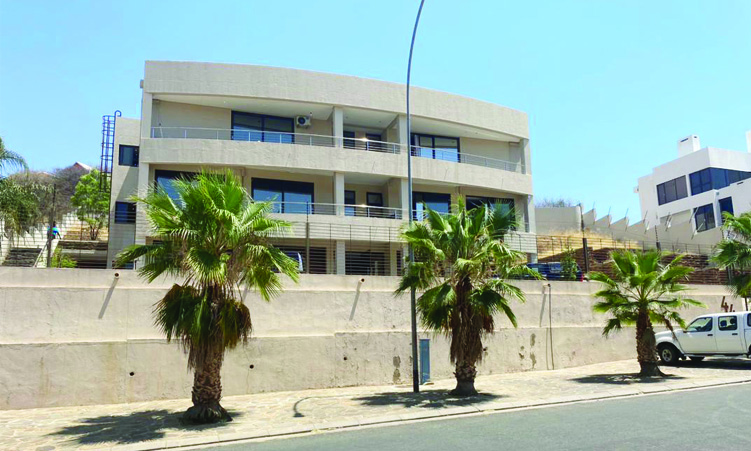
Raylon Investment ran its offices from Shapumba Towers, a short walk from the police headquarters. The state says the location was chosen to make the operation look legitimate.
It says second premises, rented near State House in Windhoek’s Auasblick area, were presented to employees as a benefit but served to control them and conceal what the entity was doing.
Courts & Judiciary
Some 88 employees, men and women between the ages of 20 and 35, were allocated five cellphones each which enabled them to scam different people at the same time.
The recruits were trained to send 450 messages per shift.
They were allowed to leave the residence where they were accommodated for three hours per week only.
According to police investigators, their salaries were N$3 000 per month, and they were subjected to hefty fines ranging from N$500 and N$12 000 if they broke ‘the rules’.
Nashitope has told the police trainees during the June 2023 training were “instructed to primarily target men aged 50 and above, although this wasn’t a strict limitation”.
After the training, Nashitope was given an iPhone 8 and a desktop computer to operate with.
He then created various social media accounts and received a Facebook response from a man with the username of ‘Peter-Pilot’ from Canada.
They chatted for about two days before he asked for the man’s WhatsApp number. Nashitope then continued chatting with ‘Peter-Pilot’ before introducing him to investing, all the while pretending to be a woman called ‘Heidi’ from California.
Around August 2023, ‘Peter-Pilot’ invested more than US$5 000 (N$81 500 at the time) with ‘Heidi’.
BECOMING ‘JANE’
While Nashitope was chatting with ‘Peter-Pilot’, ‘Noah’ from California contacted him via Discord – an instant messaging and social media platform.
On Discord, Nashitope was known as ‘Jane’.
‘Noah’ told Nashitope he was trading on another platform. However, Nashitope asked ‘Noah’ if he was willing to join their trading platform, and ‘Noah’ agreed.
Nashitope’s bosses then took over his phone, pretending to be ‘Jane’ and guiding Noah to join the platform.
Noah pumped US$980 into the ‘investment’ at first, and then more than US$3 000.
In total, it was the equivalent of around N$65 000 at the time.
The syndicate continued chatting to ‘Noah’ for a month to convince him to invest more, but he was not willing to do so.
It was at this point that Nashitope’s bosses, of which one is identified as ‘Moira’, suggested that he ‘archive’ Noah and not respond to his messages any more.
Nashitope was paid a N$1 000 bonus for facilitating the investment scam.
Scam call centres have been a scourge for years, conning ordinary people around the world out of hundreds of billions of dollars.
THE GARDENER
The alleged syndicate is also accused of using a Namibian citizen as a front to register the close corporation Raylon Investment with the Business and Intellectual Property Authority (Bipa).
According to Imalwa’s affidavit, the company was registered in the name of one Petrus Paulus, a gardener employed at a residence of one of the suspects, after he was allegedly deceived into handing over his identity document (ID).
Imalwa says Paulus has told investigators that one of the suspects, identified as ‘Dickson’ only, approached him in June 2022, claiming the company needed his ID card because they were unable to open a bank account due to visa issues.
They then kept his ID for a month.
After the company returned his ID card, Paulus was told he needed to go to the bank to collect a bank card.
A few weeks later, the company asked for his ID again in connection with the same account.
At this point Paulus realised there was something suspicious about the account but was afraid of the consequences if he refused to provide his ID card.
He says he was told not to mention anything to the police.
The police eventually told Paulus that Raylon Investment was registered under his name and was involved in illegal activities, scamming people through cryptocurrency investments.
Paulus told the police he did not know Raylon Investment, did not register any business under that name, and did not give anyone consent to open or register a business in his name.
THE TRAINER
Zimbabwean national Wishes Makoni arrived at Hosea Kutako International Airport on 8 December 2022, where he was collected in a black seven-seater Nissan and dropped at a house in Windhoek belonging to one of the men he had met in Myanmar. He was told a work visa would be put in his passport. He never saw the passport again.
Makoni had come from a compound on the Myanmar border, guarded by rebels, where he had been sent after answering an advertisement for a job selling clothing and shoes online.
His team leader there told him the job was not online sales, but to scam people.
When Makoni asked to return to Zimbabwe, the affidavit says his team leader threatened his life, saying he could only leave “in spirit”.
Makoni was fired for generating too little money, so he asked to be sent to Namibia instead.
It was the only route home available.
He was then put to work building the Namibian operation.
Raylon Investment at the time recruited ‘employees’ from an office building in Klein Windhoek called Harvest Financial Group, and the operation was to start on 3 January 2023.
Training ran the whole of January at Heritage Square.
Makoni had to train recruits on how to approach a client, what to say about the product, and how to use the platform. Recruits were told they would be selling cryptocurrency.
The affidavit states that the company built a hierarchy with job titles “meant to shield the suspects”.
Shifts ran from 20h00 to 06h00, timed to American and Canadian markets. Salaries were N$3 000 a month plus a N$1 000 bonus, and N$4 000 for team leaders.
Around February or March 2023, the company rented the house in Auasblick, and Makoni moved in, still trying to get his passport back.
After asking for it several times. Nothing came of it, and without his passport, he could not leave the country.
Going to the police would be a risk.
The affidavit says the Chinese nationals who were part of the syndicate had many connections in Namibia, which made reporting the scam to the police even more risky.
Makoni then saw a gun in the Auasblick house.
He had previously seen in Myanmar what happened to recruits who tried to escape, and believed if the syndicate discovered he contacted the police, he would disappear without a trace.
Makoni instead emailed the Federal Bureau of Investigation and the American embassy about his passport. There was little response. He deleted the emails after sending them.
By this time, Raylon Investment was setting up operations at Okahandja.
The affidavit says the involved property was meant to hold about 500 foreigners doing the same job, “creating a compound similar to the one in Thailand”.
CAUGHT IN THE ACT
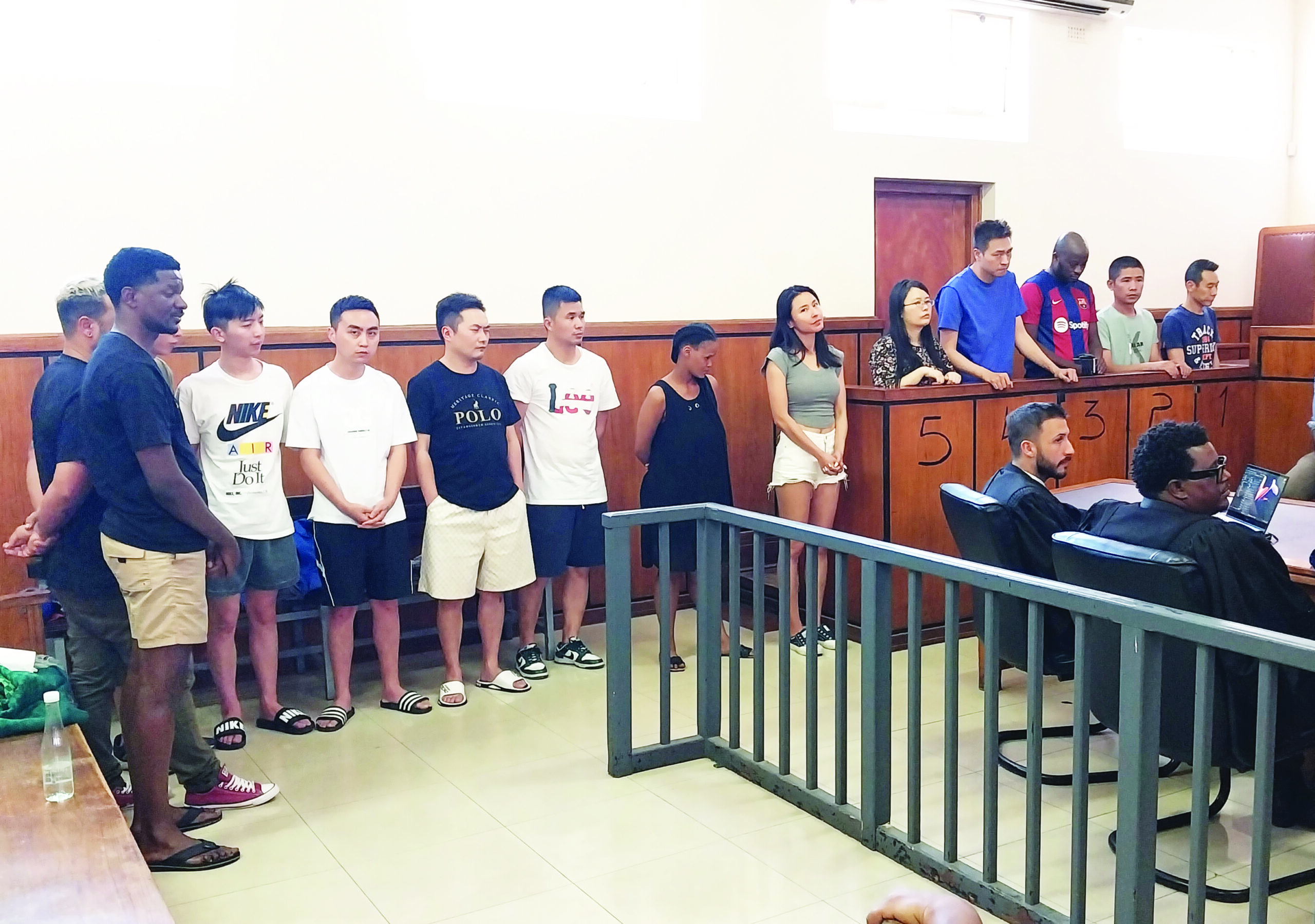
The police investigation details how the syndicate was caught in the act on 3 October 2023.
Detective chief inspector Amalia Mulokoshi in court documents says the police on 19 September 2023 received information that Raylon Investment was defrauding people through online investments.
An investigation into Rayion Investment was then conducted at Shapumba Towers at Ausspannplatz, and it was established that more than 150 people were employed by the company, operating at night only.
Two office spaces were filled with more than 200 desktop computers and more than 300 smartphones and SIM cards from TN Mobile, the documents state.
Recruits’ freedom of movement was restricted and employees signed non-disclosure agreements that restricted them from divulging information to third parties after their employment ended.
The police say Special Reserve Force members raided the one office on 3 October 2023.
Some officers discovered Chinese individuals in the building, of which most resisted following orders, documents state.
Throughout the night of 3 October, the police consulted with the suspects, searching and seizing items, documenting, tagging, and bagging all computers and cellphones, as well as SIM cards and cash found.
This process took time as some of the Chinese nationals refused to acknowledge ownership of simple items such as money or cellphones, the police say.
The operation lasted until 08h00 the next morning, and the suspects were taken to the Special Reserve Force head office’s boardroom.
Over 52 employees provided statements detailing the fraudulent scheme.
Some of their statements mention amounts defrauded from investors, victims, clients exceeding US$665 830, equivalent to N$12 million.

THE ESCAPE
The Namibian previously reported that the accused were arrested and charged with 65 serious offences, including human trafficking, racketeering, money laundering and fraud, in charges now pending in the Windhoek High Court.
Newspapers
Top lawyers such as Sisa Namandje, Kadhila Amoomo, Gilroy Kasper, Roberto Avila and Julian Comalie came to the defence of the suspects.
Several of the foreign nationals were granted bail between February and September 2024 after paying amounts ranging from N$30 000 to N$100 000.
However, when the matter was scheduled for pretrial proceedings in the Windhoek High Court in April, eight of the accused failed to appear.
The state later established that six of the missing Chinese nationals had fled Namibia and returned to China.
The accused in the matter are Chinese nationals Fan Jia, Guo Linjie, Zheng Haifeng, Shi Zi Jun, Lin Shu Lin, Chen Wuyu, Neng Jun Wu, Wu Weiyang and Chen You Yi, Cuban citizen Carlos Valdes, Singapore citizen Ghim Ang, and Namibian citizens Tango Muulyau, Mclanda Domingo and Toivo Herman, all of whom were arrested and granted bail.
Raylon Investment is also charged in the matter.
Imalwa on Wednesday told The Namibian she is not concerned about the suspects who have absconded, saying Namibia and China recently signed extradition and mutual legal assistance treaties that would facilitate their return to face justice.
Courts & Judiciary
“If they are in China, we can just follow the process, the treaty, and get them. Countries normally including Namibia do not extradite their nationals, however, some are willing to waver that and extradite their nationals.”
‘GET RICH QUICK’
Imalwa said many Namibians fall victim to scams because they want to get rich quickly, and unemployed young people often accept any job opportunity that comes their way without verifying it.
“Namibians have a tendency of reacting too quickly, even putting your money in fake accounts which include cryptocurrency. There is nothing like getting rich quick,” she said.
Imalwa said it is difficult to investigate scams.
“I know it is not good to be unemployed, but just go slow and your time will come. Don’t throw yourself into the fire, otherwise you will be burned. These things of cryptocurrency scams are real.”
Imalwa said many people do not understand how criminals are weaponising artificial intelligence.
“These criminal companies are operating through social media and outside Namibia. They are using tools to change their voices and appearance to look like someone else. Then it becomes identity theft, where your information is stolen and used by someone else,” she said.
According to Imalwa, Namibia does not have laws on identity theft.
“The law relating to cybercrime is still in bill form. We do not have a mechanism to control when the money is stored on cryptocurrency or goes via the cloud and goes to other jurisdictions. That is how crime is being committed currently.”
Imalwa said young people are desperate for job opportunities.
“It is very difficult for Namibia currently. Our young people are anxious to get employment. They read in the newspaper and see adverts that require them to pay and click on a link where these criminals are taking your details and use them to commit crime. Call and find out if these jobs really exist before you submit your documents,” she said.
Imalwa said TikTok has also emerged to be one of the tools being used by criminals to scam people through identity theft.
POLICE WARNING
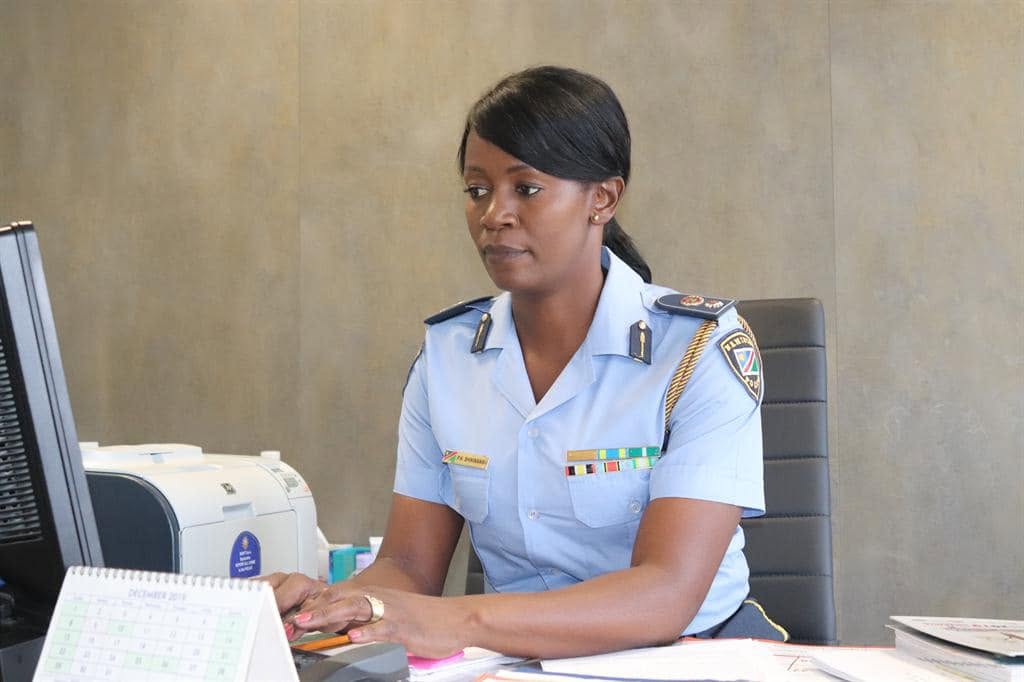
National police spokesperson deputy commissioner Kauna Shikwambi yesterday said the police conduct regular public awareness and educational campaigns on scams.
She said the police have collaborated with commercial banks to raise public awareness.
The public should beware what they post online, she said.
“Assess the credibility of investment opportunities, avoid engaging in unverified online trading platforms, and seek clarification from trusted public or private institutions before making financial decisions,” she said.
Shikwambi said people should not be pressured to act immediately or invest before conducting proper verification.
The recovery of any portion of the N$8 billion victims were scammed out of through Raylon Investment is a significant achievement, she said.
“The recovery demonstrates the effectiveness of collaborative investigations. As the investigation continues, further developments may arise that could lead to the identification, tracing, and recovery of additional assets,” she said.
*This article was produced by The Namibian’s Investigative Unit. If you know of wrongdoing that should be exposed, securely write to us at: investigations@namibian.com.na