



Advances in technology have given the youth more ways to access an increasing amount of information. Local and international news can be read in the newspaper, listened to on radio, watched on television and found on cellphones or online.
For those with access to these options, a wealth of information and entertainment is always readily available. In areas where access to technology is expensive, radio continues to play an important role in information sharing.
Radio broadcasts can provide information and entertainment broadcasted 24 hours a day to provide the most recent updates about news or something entertainment related to listeners.
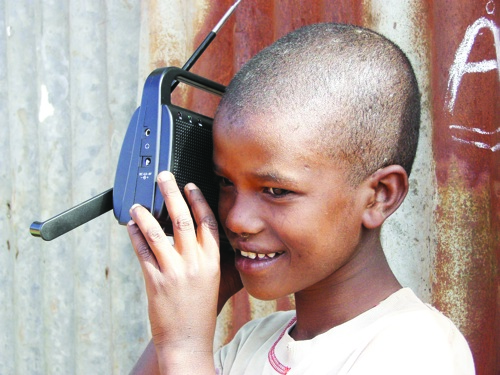
When there is no access to the internet, young people can still search the airwaves for trustworthy sources. Even electricity is not a necessity for battery operated and hand-cranked radios.
Sometimes a young person in the rural part of Namibia would like to attend a soccer game, but they can’t because they are far from the action, and radio is able to bring these events to life for such a person, as a radio presenter can excellently guide him or her through the game.
With a radio by their side, people in villages or small towns are able to enjoy music and stay informed about ordinary events such as a street robbery or traffic congestion to more serious issues such as the change of governments, the tug of war among political rivals and the death of members of the community.
In Namibia, radio is considered as one of the key mass communication mediums which reaches all areas of the country and has great potential to broadcast different kinds of information to almost the entire population.
Dozens of radio stations are available in various languages to ensure that everyone receives news wherever they might be.
On 13 February, World Radio Day was celebrated in the capital for the second time and a few radio stations, along with various bodies that represent media organisations, gathered to inform listeners about the power of radio.
The Youthpaper explores the importance of radio for the youth.
There to Serve
Radio has its advantages over other mass media outlets like the television, in terms of being handy, easily accessible and cheap. Nobody wants to carry their television around, so having a radio is the perfect source of portable information and it is accessible at home, in the office or in the car.
Basically, radio is virtually everywhere at any time of the day.
Radio is effective in not only informing the youth, but also in creating awareness regarding many social issues and needs for social reformation, developing interest and initiating action, for example, introducing a new policy, development projects or creative ideas to the public. Having a radio around helps to create a positive climate for growth and development.
The Role of Radio Presenters
“Radio presenters have a great influence on everyone,” Tafanji Nyirenda from Energy 100 FM says.
“Whatever presenters say has a great impact on young people who relate to the issue at hand. They look up to and trust radio presenters very much. Thus, our radio station provides training to our presenters in order to create the best out there.”
“I’ve been on the radio for about 13 years,” says Tafanji. “And personally, I’ve been involved in community programmes, which we lack, HIV-AIDS campaigns and even I have pushed gender-based violence (GBV) issues more so that the public can be aware of what is happening.”
More Reasons to Love Radio
As far as audience is concerned, radio does not hamper person’s mobility. As a vehicle of information for masses, it is still the fastest. Radio is capable of informing young voters, for example, on where to go register and has also opened the possibilities of obtaining a job or even a place to live.
Radio Skills are Life Skills
Youth involvement in radio is not simply about training a new generation of broadcasters. Experience in radio reporting and broadcasting translates to a useable skill set with a wide range of real life applications.
Learning to research, interview and broadcast boosts confidence in young people and builds their communication and critical thinking skills.
Radio has shaped our history and remains a powerful force for creating a more peaceful, more sustainable and more inclusive future for all.
Why World Radio Day?
On 18 December 2012, the United Nations General Assembly endorsed the 2011 resolution adopted by the UNESCO General Conference, proclaiming 13 February as World Radio Day, the day United Nations Radio was established in 1946.
Facts about Radio
• Guglielmo Marconi (1874-1937) of Bologna, Italy, was the first to prove that radio signals could be sent over long distances and is known as the ‘father of radio’.
• Consumers aged 12 or older spend an average of 17 hours per week listening to the radio.
In an age of information overload, Sunrise is The Namibian’s morning briefing, delivered at 6h00 from Monday to Friday. It offers a curated rundown of the most important stories from the past 24 hours – occasionally with a light, witty touch. It’s an essential way to stay informed. Subscribe and join our newsletter community.

The Namibian uses AI tools to assist with improved quality, accuracy and efficiency, while maintaining editorial oversight and journalistic integrity.
Stay informed with The Namibian – your source for credible journalism. Get in-depth reporting and opinions for
only N$85 a month. Invest in journalism, invest in democracy –
Subscribe Now!