



EK sê kuume, the Road Fund Administration (RFA) wants to double its fuel tax to N$4.46 to build and maintain Namibia’s Rolls-Royce-level road network.
Announcing the RFA’s five-year business plan this week, chief executive Ali Iipinge said they need an extra N$5 billion as the cost of construction and maintenance has outstripped revenue. If approved, motorists will have to pay N$2.06 extra for every litre of fuel.
On face value, the request for more funding is understandable. The deeper issue is how did the country fall so far behind with the upkeep of what is among Africa’s best quality and longest road infrastructure.
To blame it all on under-funding, as Iipinge wants us to believe, is to ignore lessons from the past couple of decades since the RFA, Roads Constructor Companies (RCC) and Roads Authority (RA) were established to ensure that there was adequate money and skills for the construction and maintenance of roads.
We posit that mismanagement of the income from road users (fuel levy) and government tax coffers is largely to blame.
The RA, RCC and RFA have, for decades, failed to use the money prudently amid reports of kickbacks, self-absorbed egos and the neglect of skills among Namibians.
The collapse of RCC, where managers hijacked road contracts to enrich themselves, is well documented.
Similarly, the RA and RFA have, without justification, chosen autobahn-type roads with money borrowed from the same Germans who have often advised that Namibian vehicles are not at the same volume that warrants four-way lanes, bridges, undercarriages and overpasses.
The RA, with the support of the RFA, has rushed to construct new roads that cost N$50 million per kilometre instead of upgrading existing ones with decent overtaking lanes and paving alternative roads at a cost of N$15 million a kilometre.
We need only refer to the double- and triple-lane highways between Windhoek and Okahandja, Walvis Bay to Henties Bay, and Windhoek and the international airport.
Return on ego has been the focus rather than a return on investment. Bureaucrats fed their egos and pockets through self-enrichment and media attention-grabbing events with politicians ‘launching’ roads as the order of infrastructure management.
The return on ego of parastatal managers is costly. It has come at the expense of getting the basics right: first maintain what’s existing before splurging on luxuries. To maintain Rolls-Royce-type infrastructure entails Rolls-Royce-type expenses.
The only aspect of their decisions that makes sense is the satisfaction they get when cruising in their taxpayer-funded luxury vehicles on luxury roads that the elite have come to define as “development”.
No wonder the highway between Windhoek and Okahandja has started developing potholes less than 15 years after construction of the first phase began.
How can the RA and RFA justify a N$70-million roadblock between Okahandja and Windhoek as if Namibia was a police state?
That kind of wasteful spending makes no economic or practical sense, especially when roads used by tourists are often neglected.
Politicians and bureaucrats tout Namibia as a logistics hub. Yet the railway network has collapsed because of incompetent managers being installed.
Politicians want Namibia at ‘developed nation’ status by 2030. Yet we can’t even speak of an information superhighway to handle drone deliveries of basic medicines to rural and overcrowded urban communities.
Namibian leaders must wake up. Rolls-Royce roads are an unnecessary luxury that we’ll soon be unable to keep up with, leading to yet more collapse of the infrastructure.
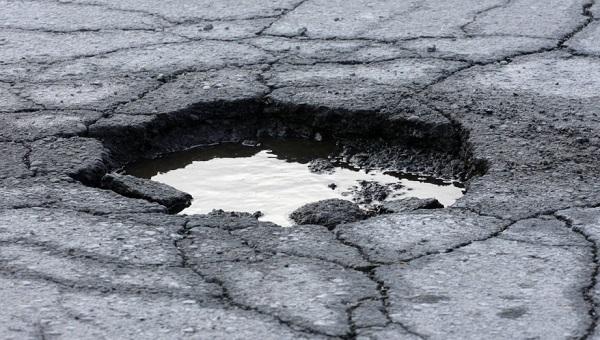
The thousands of potholes and deformed roads all over Namibia are testimony to the folly of chasing nice-to-have luxuries.
Soon we will no longer be able to boast about Namibia’s top quality network, just as Windhoek lost its status of being the cleanest city in Africa.
Increasing the fuel levy and other sources will drive taxpayers into a dead-end of unaffordability.
- Ek sê kuume means “did you hear?” with the direct translation being “I tell you, my friend”.
In an age of information overload, Sunrise is The Namibian’s morning briefing, delivered at 6h00 from Monday to Friday. It offers a curated rundown of the most important stories from the past 24 hours – occasionally with a light, witty touch. It’s an essential way to stay informed. Subscribe and join our newsletter community.

The Namibian uses AI tools to assist with improved quality, accuracy and efficiency, while maintaining editorial oversight and journalistic integrity.
Stay informed with The Namibian – your source for credible journalism. Get in-depth reporting and opinions for
only N$85 a month. Invest in journalism, invest in democracy –
Subscribe Now!