





NAMIBIAN ENTREPRENEURS FACE significant challenges that demand resilience and strategic planning.
These include complex regulatory and compliance requirements, limited access to finance in a collateral-driven lending environment, skills shortages, a small domestic market and high operating costs.
The regulatory landscape is particularly intricate, encompassing business registration, licensing and permit requirements, comparably higher taxation and ongoing compliance obligations.
Access to start-up and growth capital remains severely constrained, as banks and other traditional financial institutions rarely extend funding without collateral.
This continues to limit enterprise development, particularly for emerging entrepreneurs with their only funding recourse often being to borrow at excessively high interest rates from cash loan entities.
Although regional markets with higher populations than Namibia’s present a logical avenue for expansion, the challenge is that tariff and non-tariff barriers significantly restrict cross-border trade, reducing opportunities for scale.
This country’s persistent skills shortage further weakens business productivity and competitiveness, with limited progress made in addressing these gaps.
High operational costs – including electricity, water and other utilities, communication services, and transport – combined with inflation and broader economic volatility, create an increasingly challenging business environment for micro, small and medium enterprises (MSMEs).
These constraints are even more pronounced for MSMEs operating in townships, informal settlements, villages and remote communities.
Infrastructure deficits and limited access to essential services continue to compound the challenges facing entrepreneurs.
This is particularly evident in informal settlements in Windhoek and other major urban areas, where business owners demonstrate remarkable resilience.
Despite their wealth and job creation efforts in their local communities, many factors work against them.
The challenges faced by MSMEs are even more obvious in underserved areas.
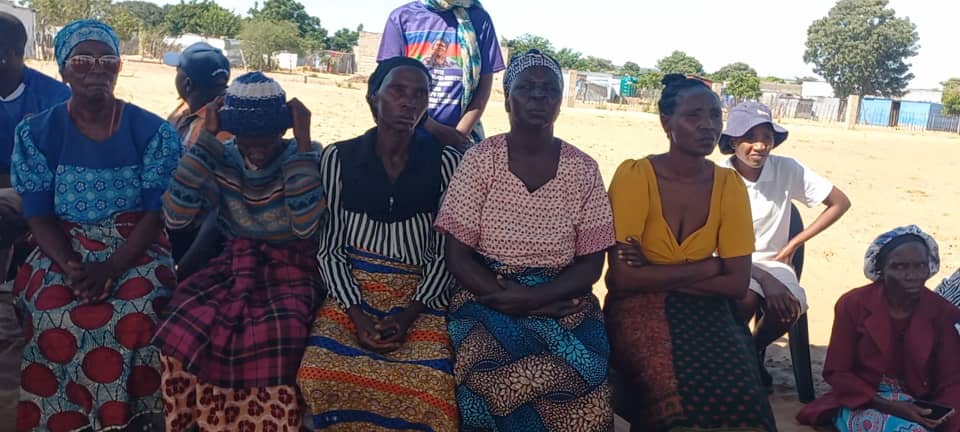
During recent engagements with entrepreneurs in the Kavango East, Kavango West and Zambezi regions, these obstacles were clear.
Divundu – a village located about 200km east of Rundu along the Kavango River and near Popa Falls – illustrates this reality.
Although the village serves as a gateway to the internationally recognised Okavango Delta ecosystem and hosts several supermarket branches and retailers, most of its more than 6 000 residents continue to rely on informal, micro and small enterprises for essential goods and services.
Entrepreneurs at Divundu face challenges like those operating in informal settlements and in townships in larger urban areas, including inadequate workspace, outdated or insufficient infrastructure, high transport-related business costs, and limited access to banking and support services.
Unlike other areas, however, there appears to be no plan to repurpose the disused open market to support local enterprise activity.
As a result, many entrepreneurs have been forced to construct makeshift shelters and corrugated iron structures to create functional – though suboptimal – workspace from which to operate.
One entrepreneur engaged in tin-smithing – producing metal pots, basins, tap covers and storage boxes, and providing welding services – has been compelled to convert a disused public toilet into a storage facility for business documents, tools and equipment.
This example illustrates the extent of infrastructure deficits and the absence of adequate, fit-for-purpose workspaces for micro-enterprises operating in underserved areas.
These conditions underscore the urgent need for targeted policy interventions to strengthen the enabling environment for MSMEs in remote and marginalised communities.
A central policy question arises: To what extent does the Divundu Village Council possess the institutional capacity to do so?
– Danny Meyer is reachable at danny@smecompete.com
In an age of information overload, Sunrise is The Namibian’s morning briefing, delivered at 6h00 from Monday to Friday. It offers a curated rundown of the most important stories from the past 24 hours – occasionally with a light, witty touch. It’s an essential way to stay informed. Subscribe and join our newsletter community.

The Namibian uses AI tools to assist with improved quality, accuracy and efficiency, while maintaining editorial oversight and journalistic integrity.
Stay informed with The Namibian – your source for credible journalism. Get in-depth reporting and opinions for
only N$85 a month. Invest in journalism, invest in democracy –
Subscribe Now!