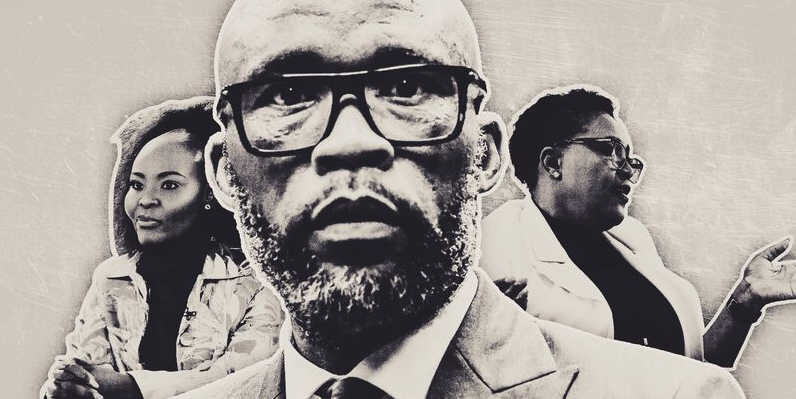




In an era where news travels at the speed of a tweet and public outrage can mobilise within hours, we find ourselves increasingly governed not by courts of law, but by the court of public opinion.
While the democratisation of information represents genuine progress, we must consider a troubling trend: The erosion of our most fundamental legal principle, innocent until proven guilty.
The digital age has transformed how accusations are made and acted upon.
A single allegation can reach millions within minutes, accompanied by demands for immediate consequences.
Employers terminate staff, institutions withdraw honours, and careers collapse, all before any formal investigation has concluded.
This represents a profound shift from due process to mob justice, wrapped in the seemingly righteous banner of swift accountability.
THE DANGERS OF MOB JUSTICE
The appeal of immediate action is understandable.
For too long, powerful individuals have escaped consequences for alleged misconduct, protected by wealth, influence, or institutional indifference.
The traditional legal system, with its deliberate pace and high burden of proof, has often failed victims seeking justice.
Public pressure appears to offer a more responsive alternative. Yet it comes at tremendous cost.
When we bypass due process in favour of public sentiment, we abandon the very principles that distinguish justice from vengeance.
The presumption of innocence isn’t merely a legal technicality, it’s recognition of human fallibility and the irreversible nature of wrongful punishment.
History offers sobering reminders of what happens when emotion trumps evidence. From witch trials to moral panics, we repeatedly see how public hysteria can destroy innocent lives.
The digital age has simply accelerated this, creating a 24/7 tribunal where accusation equals conviction.
Consider the mechanics of public shaming. An allegation surfaces on social media, often lacking context or evidence.
It spreads rapidly through echo chambers, amplifying outrage with each share.
Traditional media reports on the “controversy” rather than investigating underlying claims.
Public figures and institutions, fearing association with the accused, distance themselves immediately.
By the time any formal investigation begins, the person’s reputation and career have been destroyed.
This isn’t justice, it’s a popularity contest where truth becomes secondary to narrative.
The most compelling stories spread fastest, regardless of accuracy.
JUSTICE AND INEQUALITY
The court of public opinion operates with biases that formal legal systems are designed to minimise.
Wealthy individuals can hire crisis management firms and legal teams to control the narrative.
Those with powerful allies benefit from vocal defenders. Meanwhile, ordinary people find themselves defenceless against viral accusations.
This is particularly pronounced in societies with extreme wealth inequality.
In Namibia, the gap between those who can afford sophisticated responses and those who cannot is stark.
Wealthy individuals might weather the storm with professional crisis management, while a rural teacher accused of similar misconduct has no such protection.
This inequality extends to which cases capture public attention.
Allegations against public figures generate widespread interest, while similar claims against unknown individuals may spread just as quickly within smaller communities, destroying lives with equal effectiveness but less scrutiny.
INSTITUTIONAL COWARDICE
Perhaps most concerning is how institutions have abdicated their responsibility to uphold due process.
Universities suspend professors based on social media pressure.
Companies dismiss employees to avoid controversy. Professional bodies revoke memberships before investigations conclude.
This institutional cowardice doesn’t serve justice, it serves public relations.
When organisations prioritise avoiding criticism over protecting members’ rights, they create a dangerous precedent.
They signal that due process is negotiable, that fundamental fairness can be sacrificed for temporary peace.
This weakness encourages more aggressive public campaigns, creating a loop where ever-smaller infractions trigger ever-larger responses.
UPHOLDING RIGHTS, NOT WRONGS
Advocating for due process doesn’t mean defending those who have committed genuine wrongdoing.
Rather, it means insisting that we determine guilt through evidence and fair proceedings rather than social media sentiment.
This distinction is crucial but often lost in polarised debates where any call for careful investigation is characterised as complicity.
The presumption of innocence protects everyone, including future victims whose credibility depends on a system that takes allegations seriously while investigating them thoroughly.
When we abandon due process, we ultimately undermine the very accountability we seek to achieve.
A WAY FORWARD
We need not choose between accountability and fairness. Instead, we must strengthen formal institutions while resisting the temptation of instant justice.
This means supporting well-funded, independent investigative bodies that can respond promptly to allegations while maintaining rigorous standards of evidence.
It means encouraging organisations to develop robust, transparent processes for handling accusations rather than reactive policies driven by public pressure.
It also means individual responsibility.
Before sharing accusations on social media, we should ask ourselves: Do we have sufficient evidence?
Are we contributing to justice or mob rule? Would we want to be judged by the same standards we apply to others?
The court of public opinion will always exist in democratic societies, and it serves valuable functions in highlighting injustice and demanding accountability.
But it cannot replace due process without destroying the very justice it claims to serve. In our rush to correct historical wrongs, we must not create new ones.
The principle of innocent until proven guilty isn’t an obstacle to justice, it’s the foundation upon which justice rests.
In defending due process, we defend not just the accused, but the integrity of justice itself. That defence has never been more urgent than today.
– Job Angula is an information security professional and digital transformation advocate.
In an age of information overload, Sunrise is The Namibian’s morning briefing, delivered at 6h00 from Monday to Friday. It offers a curated rundown of the most important stories from the past 24 hours – occasionally with a light, witty touch. It’s an essential way to stay informed. Subscribe and join our newsletter community.

The Namibian uses AI tools to assist with improved quality, accuracy and efficiency, while maintaining editorial oversight and journalistic integrity.
Stay informed with The Namibian – your source for credible journalism. Get in-depth reporting and opinions for
only N$85 a month. Invest in journalism, invest in democracy –
Subscribe Now!