




ALL over Hollywood musicians are known for making millions and being worth millions and millions of dollars. US dollars, that is. Artists like Rihanna have gone beyond just making music and recording, she has ventured into perfume, clothing and cosmetics and continues to grow her brand.
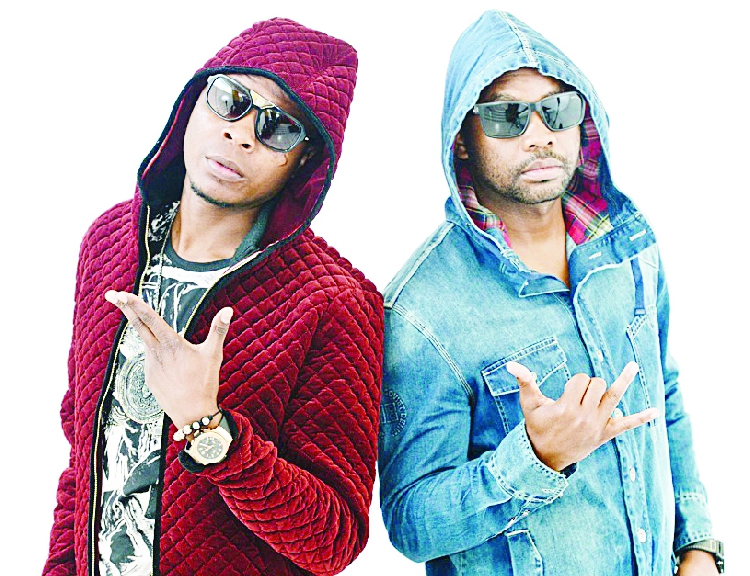
In Namibia, two artists have, in just a decade, managed to come from being just kwaito artists to turning their names into brands and have now arguably become two of the biggest commercial brands in music.
About 10 years ago Gazza introduced Gazza Music Production, popularly known as GMP. When he first got into music he never thought that a GMP brand would exist or that it would reach the heights it has and continues to climb to.
As an upcoming artist back then, he just wanted to record and release his first album. After releasing an album he saw that he wanted to perform more and to see his fans enjoy his performances. After being introduced to the world of endorsements, Gazza saw the importance of being visible not only as a performer but as a name too.
“The first item besides the album I sold was a t-shirt and it was not profit driven but for the GMP brand visibility,” the ‘Koko’ singer said.
Exclusivity was always a top priority and for this reason, he did not look at mass production, but rather produced a limited quantity which he intended for a more classy and exclusive market.
“When you see a brand worn at a classy event, you will associate that brand with class and that is why my target market for my clothing line was people who like class and exclusivity,” he said.
Growing GMP as a brand did not come easy as there were a lot of factors that discouraged him, but the love he had and continues to have for music, kept him in the game.
After leaving his job to pursue a career in music and people telling him he made a mistake to leave full time employment, there was a time the thought of having an 08h00 to 17h00 job again came up, but he could not see himself working for anybody.
Determined to make his brand work, Gazza for eight of the ten years kept on investing in the brand with the belief that it will one day see success and become even greater.
“It took me eight years of reinvesting and I only started to really enjoy the fruits the past two years,” Gazza said.
Determination, will and a lot of hard work without being discouraged easily is what pulled Gazza through the ups and downs to see success now. He said that he would not easily advise any upcoming artists to follow in his footsteps and would rather advise them to get an education first and especially if one is in it for a quick fix, the end may not be favourable.
“It is not easy at all all and it is a very risky business with no guarantee of returns,” he said.
For Gazza separating the art from the business comes easy as he looks at being a performer as being fun and without rules contrary to putting on a business hat which requires him to follow a set of rules and perform within certain guidelines to make sure the business is a success.
While it may seem like the brand GMP has reached its peak, Gazza is just getting started and still has a whole lot more in store. “I have put and continue to put plans in place to ensure that the brand will be around long after I am gone,” the multi-talented artist said.
Although in a million years he would never have thought that his brand Mshasho would become as big, celebrated and commercial as it is now, The Dogg always had hope his name would become big, especially because of the love the people showed the brand.
The Dogg was first inspired to start branding t-shirts in 2005 after the G-Unit line blew up all over the world.
“By that time I knew about P Diddy’s Sean Jean and Jay-Z’s Rocka Wear, but after seeing how big the G-Unit clothing line was, I just thought let me also start with the t-shirts,” The Dogg.
He wore the first Mshasho branded t-shirt to the Sanlam Music Awards in 2005 and immediately the day after, the town was abuzz with people asking where they can get the t-shirts. Ever since he made it a point to always wear Mshasho and The Dogg branded clothes everywhere he goes as a way of making the brand consistently visible.
“There is no way I would wear Gucci to a club or a function, I can just wear my own brand and promote my own brand. I also gave personalities like Brickz some t-shirts so that they can wear it in South Africa to take the brand beyond borders,” the ‘Nuka’ singer said.
Although he had no formal training or business education, The Dogg managed to grow from branded t-shirts to tracksuits, caps, beanies and much more. As the brand grew, he did not give up on the music side of things. He kept on growing as a musician going as far winning international awards.
He advised fellow artists in the industry to also look into growing their names as brands and to start looking at the business side of music in order to sustain themselves for longer.
“Other music genres like jazz have a longer lifespan, but with kwaito, you are lucky if you make it to five years or even ten years in the industry and remain relevant, so as an artist you need to start looking beyond just the music,” The Dogg said.
Growing the business even bigger, The Dogg is currently in the process of opening a shop in Ongwediva where all the Mshasho merchandise will be sold, further plans are to open more shops in all corners of the country.
Plans to keep the brand around for decades more are in place and The Dogg promised that the Mshasho brand, which is now also available in South Africa and Zambia, will not only stay continental, but will go global.
He hopes for the brand is become so big that it employs university graduates as chief executive officers, accountants and managers in various areas. “I want to leave a legacy, I want Mshasho to be around long after I am not,” The Dogg said.