



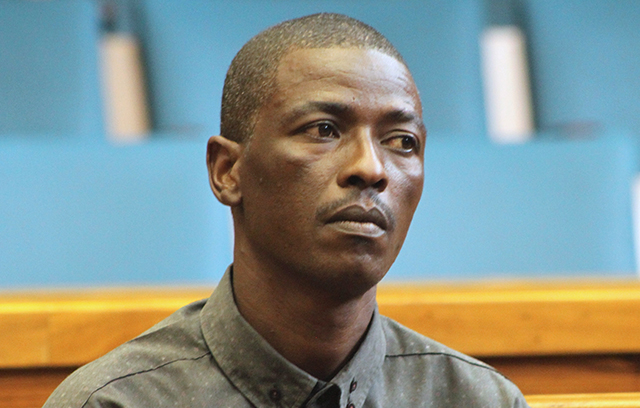
A SWAKOPMUND man who was prosecuted on multiple counts of rape and child trafficking involving five girls under the age of 14 heard in the Windhoek High Court yesterday that he has been acquitted of rape, but is guilty of trafficking and committing sexual acts with children under the age of 16.
“This is a difficult case,” Judge President Petrus Damaseb remarked early in the judgement that he delivered in the trial of Bertus Koch (42).
“The case is difficult because the quality of the evidence led at the trial is very poor,” he remarked, noting there was no physical evidence linking Koch to the alleged crimes of rape that he was accused of, and which required physical contact.
The Judge President added: “It is difficult because the investigation was poorly conducted, as no serious attempt was made after the allegations surfaced to try and garner additional evidence that would add greater weight to the complainants’ allegations.
“In some respects, the statements made by the complainants to the police are hard to reconcile with the versions given at the trial, and the evidence presented at the trial is, at best, sketchy and so generalised that it would be difficult for an accused even with an abundance of resources to offer exculpatory evidence.”
Koch was prosecuted on five counts of child trafficking and five counts of rape, alternatively committing or attempting to commit a sexual act with a child below the age of 16. He denied guilt on all of the charges.
The charges were based on allegations that Koch raped five girls – one aged nine, one 11 years old, two aged 12, and the oldest of them 13 years of age – on several occasions during the period from November 2015 to May 2016.
The prosecution alleged that Koch raped the girls in the room where he lived in the DRC area of Swakopmund after he had locked them up in the room when they returned from a shop where he had sent them to buy cigarettes for him. Koch denied all of those claims when he testified in his defence. He admitted he knew all of the girls, and that they occasionally visited his room, but insisted he did not commit any sexual acts with them.
Judge President Damaseb noted that, in terms of the Prevention of Organised Crime Act, someone could be convicted of trafficking in persons if it was proven they received or harboured persons for sexual exploitation.
In Koch’s case, the versions given by the five children were “most confusing, even to the seasoned judicial mind”, the Judge President commented. There were inconsistencies not only within the versions of the girls, but also between their accounts of events they said had occurred in Koch’s room, he said.
There were also “remarkable inconsistencies” between the reports the girls first made to police officers, and the testimony they ended up giving during the trial, he added.
He continued that he found it “most improbable” that the alleged acts of rape would have happened as described to the court – for instance, that Koch on one occasion raped the five girls one after the other while all of them were in his room, without any of the girls fleeing from the scene before she, too, was to be raped.
The Judge President said the unavoidable conclusion he came to was that it would be unsafe to convict Koch of rape from the testimony given by the children.
However, he also found that other testimony, about Koch having been naked and masturbating in front of the children, had the ring of truth. That evidence showed Koch solicited the girls to commit sexual acts with him, the Judge President found.
He convicted Koch on five counts of child trafficking and five counts of committing or attempting to commit a sexual act with a child below the age of 16.
Koch, who has been kept in custody since his arrest in May 2016, is due to return to court for a pre-sentence hearing on 27 September.
State advocate Innocentia Nyoni is prosecuting. Legal aid lawyer Mpokiseng Dube is representing Koch.