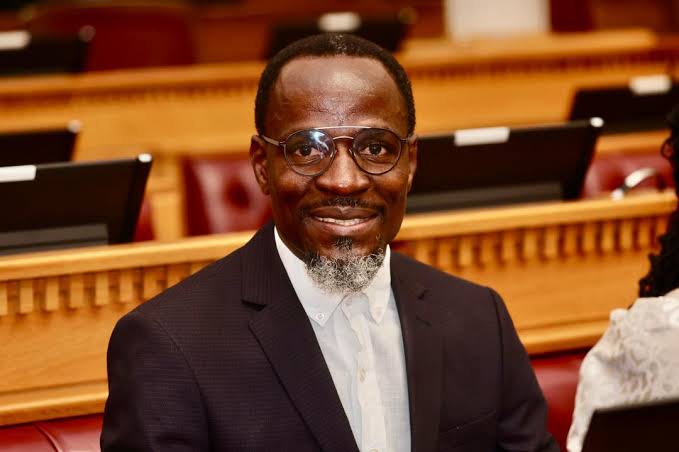
Justice and labour relations minister Wise Immanuel says talks between workers and employers should be the first step in resolving workplace problems before workers resort to strikes or demonstrations.
Immanuel says workers, employers and the government should regularly engage to address labour issues before they turn into disputes.
He made the remarks during Mineworkers Union of Namibia (MUN) roundtable discussions at Oranjemund over the weekend.
Immanuel said social dialogue should not only happen when workers and employers are already in conflict.
“We should not only turn to social dialogue when there is a labour dispute, but must cultivate a culture through which social partners engage openly, identify challenges and work together towards practical solutions,” he said.
He said workers should have a say in workplace policies, laws, plans and strategies that affect them.
He urged the government, employers and workers to stop working separately and use existing platforms to discuss issues that affect them.
Immanuel said regular consultation could help resolve labour problems before they develop into disputes.
He also urged trade unions to continue negotiating for better working conditions and to use the legal options available to them.
Immanuel said workers should know their rights and responsibilities under Namibia’s labour laws.
He also raised concerns about the impact of new technology on jobs.
Immanuel said artificial intelligence and automation are changing the workplace and workers need to continue developing their skills to remain employable.
He called on trade unions and employers to prioritise skills development and prepare workers for changes in the workplace.
Namibia Food and Allied Workers Union (Nafau) deputy secretary general Willem Absalom says workers do not choose to strike without first trying to resolve their concerns with employers.
“There is nobody who wants to strike. Employees do not just go on strike because they want to strike. There are various reasons that prompt a strike, particularly when there is no agreement on wages or salaries,” Absalom told The Namibian yesterday.
Trade Union Congress of Namibia secretary general Mahongora Kavihuha says trade unions already treat strikes as a last resort and first try to resolve disputes through negotiations with employers.
“In our operations as trade unions for a longer period, we have used strikes as a very last resort. That has been happening all along,” Kavihuha says.
He says many companies with good relations between employers and workers have avoided strikes.
“With good employers, many companies haven’t experienced any strikes, only with the bad employers where you see that in some instances there are strikes,” he says.
Kavihuha says unions have also built relationships with employer organisations to encourage such discussions.
However, he says some requirements around union recognition make negotiations difficult.
“The nonsense of 50% – that the union must reach 50 plus percent before you start negotiating, that is frustrating the employees,” he says.
Kavihuha says frustrated workers may eventually consider strikes when negotiations fail.
He also argues that Namibia’s rules governing strikes are too restrictive.
“If you over-regulate someone’s rights they must enjoy through whatever then we equate that to denial,” he says.
He also calls on the government to examine labour relations at state-owned enterprises, saying disputes are more common at some government-linked companies.
“We are encouraging the minister of labour to engage the parastatals when it comes to the issues of labour relations than any other private employer,” he says.