In the past, when South West Africa (now Namibia) sought independence from colonial rule, the southern region experienced severe conflict, mistreatment, and torture from the 1800s until the apartheid era.
Key groups in the south, including the Khai||khaun (Red Nation), |Khowesen, !Gami≠nun (Bondelswarts), and !Aman, and the ||Hawoben (Veldschoendragers), were among the first to resist the oppressive German imperialist and apartheid regime through various means, including warfare and petitions.
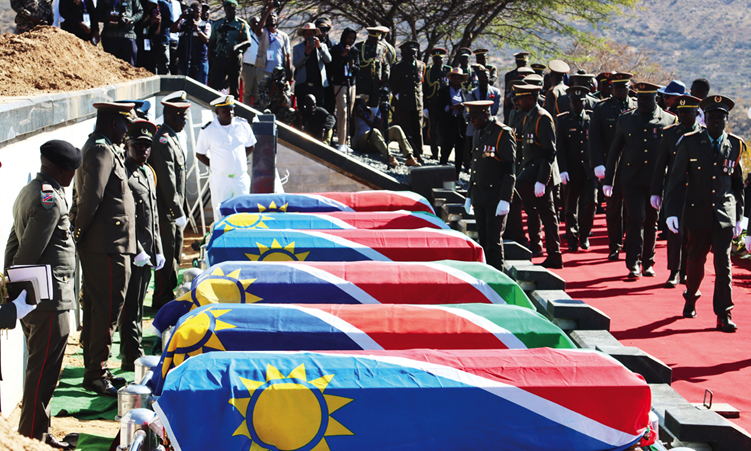
As Namibia prepares to commemorate its 36th Heroes Day tomorrow, southern leaders reflect on the historical events leading to independence, emphasising the contributions of churches and schools from the 1970s onwards.
They assert that the struggle for freedom was a collective effort that resonated throughout the country, with many communities seeking refuge in the south.
Before the modern armed struggle commenced in the north, southern Nama clans initiated significant uprisings against German colonial rule.
Southern leaders were also among the first to petition the United Nations (UN) against South African governance, with figures like Markus Kooper smuggling petitions to New York, laying the foundation for international recognition of Namibia’s right to self-determination.
While the armed wing (People’s Liberation Army of Namibia) focused on engaging South African forces in the north, southern communities provided vital support for internal political resistance.
Prominent figures and Nama clans joined Swapo, countering South Africa’s efforts to fracture the liberation movement along ethnic lines.
During the historic 1989 UN-supervised elections, high voter turnout in southern areas such as Keetmanshoop and Mariental reinforced the democratic mandate that facilitated the drafting of Namibia’s Constitution.
Recently, Nampa visited the Hardap and ||Kharas regions to assess the south’s role in Namibia’s independence, guided by notable leaders such as former Namibian ambassador to Zambia Salomon Witbooi of Gibeon, who shared his experiences.
Witbooi, having witnessed and contributed significantly during that period, noted that long before military actions unfolded in the north, a transformative struggle was occurring in southern classrooms and churches.
He remarked that the colonial education system functioned as a barrier rather than an opportunity, with black children under German Rhenish Mission rule prohibited from advancing beyond Standard 2, often repeating the same grade multiple times, resulting in deliberate intellectual stagnation.
In July 1946, the southern elders resolved to break free from this colonial narrative for good.
“The elders decided that if their demands were not met by the specified time, they would pursue an alternative route. During the Senate of the Rhenish Mission, held from 2 July 1946, various elders from locations such as the Maltahöhe, Gochas, Mariental, Windhoek and Keetmanshoop convened to discuss the matter.
“They raised the issue again with the German missionaries, who were unresponsive. During this senate period, the elders held a separate meeting to draft a letter for the German missionaries of the Rhenish Mission, clearly stating their demands and indicating that failure to address these would result in their defection from the mission,” Witbooi recalled.
Witbooi stated that at a historic church senate at Gibeon, leaders from across the nation united to demand an end to educational segregation.
On 3 July 1946, the elders produced a significant declaration of defiance, which dealt a substantial blow to colonial authority as they withdrew from the Rhenish Mission.
Witbooi said this act of defiance undermined the colonial foundation.
“Children advanced to Standard 6 and beyond, a positive development for education. At Gibeon, there is a notable school that many prominent leaders have attended, although the details of its history are not well documented,” he said.
The 1976 rebellion led to the establishment of liberation schools years later.
Witbooi noted the cyclical nature of history in the south, observing that in 1976, Nama teachers launched a significant uprising against apartheid state schools, demanding equitable pay and quality education.
At the forefront of this movement was the late reverend Hendrik Witbooi, then a school principal near Gibeon, regarded as the leader of the revolution. He was subsequently ordered to transfer to Maltahöhe to suppress the uprising.
“Rather than comply, Witbooi resigned, prompting his teachers to follow suit. His pupils also walked out, leaving local classrooms vacant for two years,” Witbooi recalled.
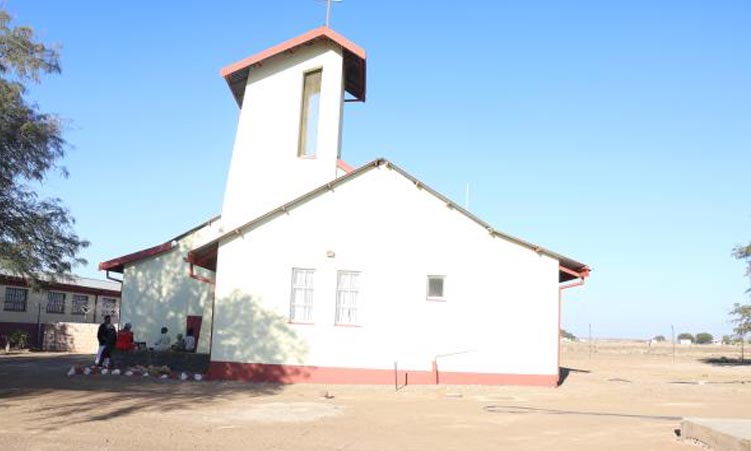
“During this process, the late reverend mobilised the regional elders to unite the Gibeon people. A framework was established for what was then known as the Christian Centre, which later evolved into the Council of Churches. This initiative aimed to provide alternative education for children who had left school, as well as support for willing teachers. Meetings were convened in this very building and the adjacent one, where I was a founding member and the first secretary of the parental meetings,” he added.
Witbooi stated that elders from various regions participated and opted for alternative education. He noted that reverend Witbooi contacted the Council of Churches, which helped secure support from individuals in South Africa to establish the school.
“Initially, the school lacked a name,” he noted. All communication was channelled through the AME Church, facilitating discussions with the Council of Churches, Swapo leaders abroad, and international contacts, Witbooi stated, and after evaluating, the elders chose to name the school AME Private School.
Using the AME Church as a covert conduit, the southerners circumvented colonial censorship, sending messages to the Council of Churches, Swapo leaders in exile, and allies in Britain and the Americas.
By 1979, they established the historic AME Private School at Gibeon, which became a renowned institution nurturing future liberation leaders, demonstrating that true independence begins with mental liberation.
Witbooi noted that the AME Community School at Gibeon evolved into a premier, inclusive institution, offering English-medium instruction and advanced science facilities.
The school attracted pupils nationwide, despite apartheid-era segregation.
Supported by the church and staffed by distinguished individuals, the school produced many of Namibia’s current leaders, serving as a beacon of educational equality.
Elsewhere, in the Vaalgras area of the ||Kharas region lies Khoichas, a small settlement approximately 80 kilometres from Keetmanshoop, where notable leaders like Willem Konjore and Marco Hausiku supported Namibia’s independence.
Khoichas became a crucial hub of educational resistance during the liberation struggle, providing a direct alternative to the apartheid regime’s oppressive schooling system.
Liberation icon Konjore founded the Khoichas Ecumenical Community School to challenge colonial restrictions, adopting English as the medium of instruction to reject the Afrikaans-led Bantu education system.
The local community offered safe shelter and foundational leadership training for young independence activists.
This is corroborated by Jacqueline Rukamba, the school’s former principal and a child raised by Konjore, whose mother also served as principal.
Rukamba confirms to Nampa that prominent educators guided the school through these turbulent decades.
Rukamba recalls cooking large, hearty meals at Khoichas with her five sisters, yet never seeing anyone eat them. She notes that former liberation veterans arrived long after midnight, concealed by the darkness, and departed before dawn.
Her father, Konjore, would guide them along a shortcut through Koës, directly across the border into Botswana and onward into exile.
Rukamba says their home, church, and school were more than mere buildings; they were the underground heartbeat of the Namibian liberation struggle.
According to her, the fire of resistance ignited in 1976 during the historic Nama teachers’ strike at Gibeon, where her parents actively opposed the unequal colonial education system.
For seven years, the classrooms of Khoichas remained empty. Some pupils were sent to Tses, while others could not afford to leave.
“Interestingly enough, there is one woman that we know that is alive till now, almost my age, that has never gone to school ever since that school was closed. And she waited till 19, when in 1983, the new school started,” she says.
The Ecumenical Community School was re-established in 1983.
Rukamba says the elders and the church concluded the colonial regime could no longer dominate their children’s thoughts.
Under the auspices of the Council of Churches in Namibia (CCN), her parents, the Konjores, founded the Khoichas Ecumenical Community School.
Nora Schimming-Chase, a distinguished freedom fighter and diplomat instrumental in dismantling apartheid education and establishing the nation’s post-independence foreign service, worked diligently at CCN to secure international support for the school.
Rukamba says this educational resistance made Khoichas a target, with the notorious Koevoet paramilitary forces frequently raiding the village, instilling fear in families and searching for Konjore and his fellow combatants until independence was achieved, yet they were never apprehended.
She says the community remained active outside, organising, teaching, and nurturing the revolution, demonstrating that the classroom held equal power to any battlefield.
– Nampa