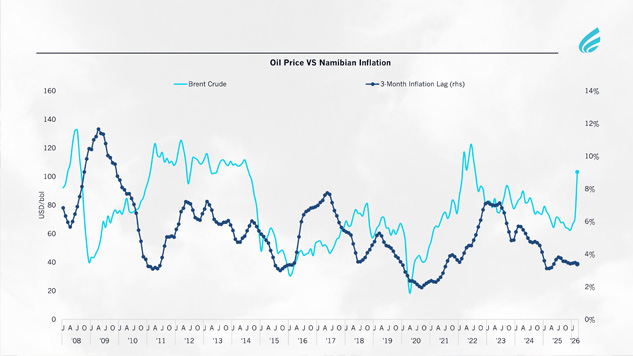
Traditionally, Central Banks focus primarily on maintaining price stability and controlling inflation, however, in the pursuit of long-term economic prosperity, there is a growing consensus that central banks should perhaps adopt a dual mandate, which includes fostering economic growth alongside price stability.
This article aims to outline the advantages of the Bank of Namibia (BoN) embracing a dual mandate approach, considering its unique socio-economic context and development aspirations.
PRICE STABILITY
Maintaining price stability is an essential aspect of economic management that cannot be overlooked.
By ensuring purchasing power remains intact through inflation control measures, the BoN has played a crucial role in fostering predictable economic conditions for Namibians while protecting them from eroding income levels caused by rising prices.
This commitment to price stability also inspires confidence among investors and facilitates long-term planning, which ultimately leads towards sustainable growth within the economy as a whole.
Inflation and economic growth are two critical macroeconomic variables that have a significant impact on the lives of ordinary Namibians. Inflation can erode savings, while growth can create jobs and improve living standards.
By incorporating price stability along with fostering growth into its mandate framework, the central bank could proactively contribute towards achieving these developmental objectives.
ENHANCED POLICY FLEXIBILITY
A dual mandate enables the BoN to adopt a more versatile approach towards policymaking.
By prioritising economic growth, they can leverage various tools and measures that stimulate investment, lending, and consumption activities, thereby boosting aggregate demand during recessions, while also containing inflationary pressures during periods of excessive expansion.
It’s important to note that the BoN’s flexibility is somewhat dependent on the direction of the South Africa Reserve Bank (Sarb), however, in recent times the BoN has demonstrated its ability to be independent with its policy rate decisions.
Therefore, discussing this topic at both regional and common monetary area (CMA) levels may be worthwhile.
SOCIO-ECONOMIC CHALLENGES
Namibia, like many emerging economies, faces unique socio-economic challenges, such as high unemployment rates, income inequality, and poverty.
A dual mandate provides the central bank with a clear mandate to address these challenges directly.
By aligning its policies with growth objectives, the central bank can actively contribute to reducing unemployment, fostering inclusive economic opportunities and promoting social cohesion.
Though the central bank maintains its policy independence, the dual mandate approach adopted by central banks encourages greater coordination between monetary and fiscal policies.
Central bank interventions that support growth objectives can complement fiscal policies aimed at infrastructure development, education, healthcare and social welfare.
This synergy not only promotes sustainable growth, but also ensures long-term stability in my opinion.
INTERNATIONAL BEST PRACTICES
There is a growing body of evidence that suggests that central banks with a dual mandate are more effective at achieving both inflation and growth objectives.
For example, a study by the International Monetary Fund (IMF) found that countries with dual mandate central banks have lower levels of inflation and higher rates of economic growth than countries with single mandate central banks.
Countries such as the United States, Australia and the United Kingdom have long recognised the benefits of incorporating both inflation and growth objectives into their central banks’ mandates.
Namibia stands at a critical juncture, with potentially significant oil and gas discoveries, where recalibrating the role of its central bank could significantly impact its economic trajectory.
Embracing a dual mandate that combines price stability with a focus on growth would empower the central bank to actively foster an environment conducive to job creation, poverty reduction, and inclusive prosperity.
With prudent policy implementation and strong institutional frameworks, Namibia’s central bank can effectively navigate the challenges and opportunities of the future, advancing the nation towards sustainable and robust economic growth.
- Arinze Okafor is a qualified investment professional with expertise in fixed income, equity and investment analysis.
He currently serves as the chief investment officer of Mopane Asset Management. The advice and opinions provided herein are done in his professional capacity and do not constitute investment advice.
In an age of information overload, Sunrise is The Namibian’s morning briefing, delivered at 6h00 from Monday to Friday. It offers a curated rundown of the most important stories from the past 24 hours – occasionally with a light, witty touch. It’s an essential way to stay informed. Subscribe and join our newsletter community.

The Namibian uses AI tools to assist with improved quality, accuracy and efficiency, while maintaining editorial oversight and journalistic integrity.
Stay informed with The Namibian – your source for credible journalism. Get in-depth reporting and opinions for
only N$85 a month. Invest in journalism, invest in democracy –
Subscribe Now!