



FRIEDA Erastus (82) says the Oniipa Town Council has separated her from her family.
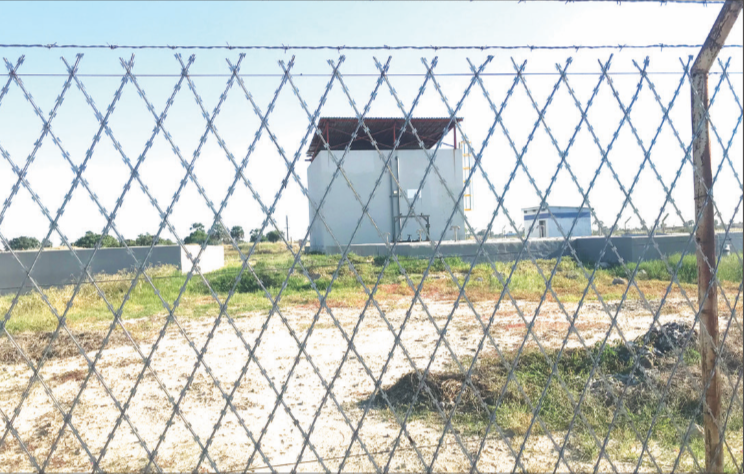
This is because the site where many of her relatives have been buried near her mother’s house at Onamulunga village in the Oshikoto region, has been destroyed to make way for the sewage dam of a nearby sewage plant.
Before the construction of the dam commenced, two officials from the Oshikoto Regional Council allegedly came to her house to discuss the graves in the area.
“I told them the graves are marked with small crosses and aloe trees . . . Now most of them are nowhere to be found. They have separated me from my family,” Erastus says.
Katrina Amutenya, whose younger brother is also buried at the site, claims officials from Oniipa and the Oshikoto Regional Council wanted to relocate her brother’s grave, but she and her siblings objected.
“The spirits of our ancestors are here. They are still protecting us. Even when they were constructing the dam, the excavators and trucks broke down, because our ancestors were not happy with what they were doing,” Amutenya says.
She says the dam is partially built on her mother’s mahangu field, for which they have not been compensated.
“They said they were going to launch a community project that was going to create jobs. They did not say they were planning to build an earthdam,” she says.
Amutenya says when the dam is full, the Oniipa Town Council discharges the sewage water into a nearby oshana, where villagers catch fish.
She says she has nowhere to get water from as the nearby wells are also filled with sewage water.
Amutenya claims the dam was constructed on a historical site.
Kondjeni Fillipus, another resident, says the council did not compensate his family when the dam was built on their mahangu field.
He says the sewage water, which poses a health risk, is surrounding his house.
Onamulunga resident Efraim Namene says the sewage water discharged by the council runs into his fish pond, which renders his fish unfit for human consumption.
He says his animals get sick when they drink the sewage water or eat the grass growing near it.
Oniipa Town Council chief executive officer Jacob Junias says the issue of water being released into the nearby floodplain was only reported to his office on 11 April.
Community members have, however, in 2016 written Junias letters complaining about this.
Junias says he is waiting for a report from officials on the safety of the water.
“I have heard there are graves there, but it’s not us who built the dam. The dam was built in 2014 when the town was still a settlement under the administration of the Oshikoto Regional Council. The community should come to the council to complain before they run to the media,” Jacob said.
Oshikoto’s acting director of planning, Peter Ndawedwa, says he is not aware that the dam has been built on a burial site.
He says residents have not been compensated since most of the officials in his department were not with the council when the dam was built.
The council will, however, look into the matter, Ndawedwa says, adding that a meeting with stakeholders will be held next week.
According to an environmental impact assessment for the planned project, Erastus informed officials of the graves during a site visit.
The report further states: “The final use of the effluent will be the release into the receiving environment and the surrounding system of oshanas. However, the water may be used for any of the following: irrigation of pastures, orchards or vegetables . . . Further, it may be treated to drinking water standards and recirculated as potable water.”