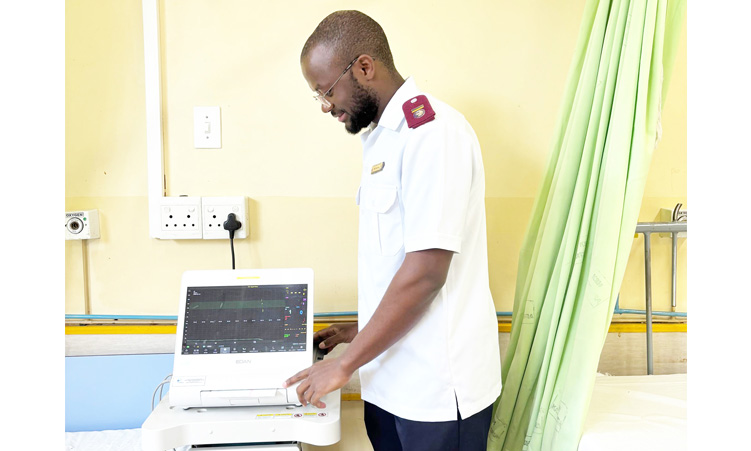
There is no typical day in midwifery.
Each unfolds differently, which requires always expecting the unexpected.
“Nobody really knows exactly when a baby will come,” says registered and advanced midwife Matheus Herman.
Herman began his midwifery journey at Katutura Intermediate Hospital in Windhoek in 2018.
Generally, he attends to more than 30 expectant mothers in the hospital’s antenatal care unit at a time.
On certain days he is required to work in the labour ward, where he delivers an average of seven to eight babies a day.
“We first perform what we call quick checks. The wards can be full, so we prioritise women who are close to delivery or those needing urgent attention,” he says.
On busier days, there is barely time to sit or take a lunch break.
The aim is always to ensure safe and positive outcomes for both mother and child, he says.
“We have to carry out our duties in a satisfactory manner to ensure the best possible care,” Herman says.
ONE OF A KIND
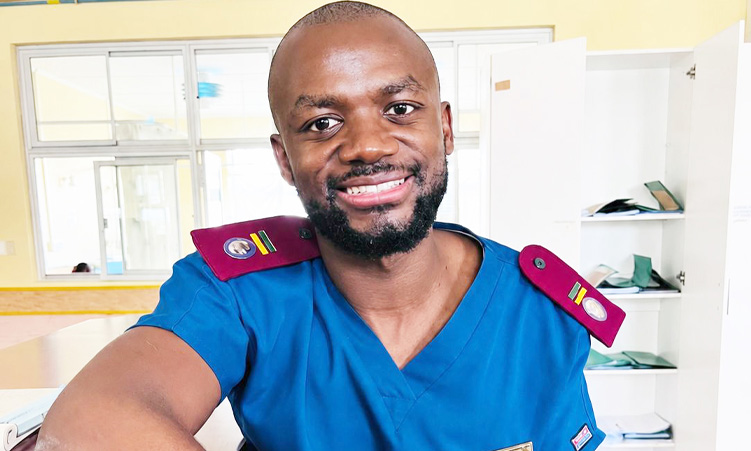
As one of the few men in midwifery in Namibia, Herman says his journey into the profession was inspired by passion.
“I was inspired by the love for the work. It uplifts me and improves my mood,” he says.
This was not the case at the beginning of his career though, he admits. At first he was only working to make a living.
“Sometimes passion follows you, not the other way around,” he adds.
Herman says he appreciates the opportunity to touch many lives.
“I feel blessed and motivated to leave a legacy behind. Pursue what you want to pursue,” he advises.
Herman says midwifery offers broader opportunities, including lecturing and specialised practice.
Despite working in a field mostly associated with women, Herman says he has received strong support from his colleagues.
While some patients have been uncomfortable with him being a man, he says patient rights come first.
“A patient has the right to refuse care or treatment. That right is stronger than forcing treatment on someone who does not prefer a man as a midwife,” he says.
Herman says he is not discouraged by such incidents.
WHAT IS MIDWIFERY?
Midwifery is both a science and a practice focused on caring for women during pregnancy, labour, and after childbirth, Herman says.
He says one of the main challenges in midwifery is keeping up with relevant knowledge.
“We live in a world of evidence-based practice. What we do today may not be relevant tomorrow,” he says.
“When knowledge is lacking, it becomes difficult to provide the level of care required or to respond effectively in critical situations.”
Other challenges include limited resources and infrastructure, he says.
“This affects how effectively we are able to perform our duties.”
A lack of support outside of the workplace from loved ones can also affect one’s performance, he says.
Midwives often lack societal support, Herman believes.
“There are so many negative comments from society about midwives.” Herman believes this comes from a lack of understanding.
“The narrative out there is often negative, based on encounters where interpersonal skills may not have met expectations,” he says.
When it comes to men in the profession, he says perceptions are shifting.
“Some women prefer us, and change is happening. However, it is still difficult to fully determine how the public views us,” he says.
Herman says few men enter and stay in the profession.
‘DON’T DO IT AT HOME’
Deliveries at healthcare facilities and hospitals are strongly advised, he says.
“No woman should give birth outside a healthcare setting or without the care of a midwife.”
He says addressing complications during labour outside a healthcare facility can be hard.
“I will always recommend that women in labour deliver at a clinic or hospital, depending on accessibility,” he adds.
While there is a need for alternatives such as home visits by midwives, which could be safer than unassisted births, Herman says such practices are not formalised in Namibia yet.
“We need more people to join the profession to make such services a reality,” he says.
Herman recalls his early days in the profession as challenging.
“Self-doubt and fear took over, especially being in a space dominated by women – both colleagues and patients,” he says.
He admits he has considered leaving the profession in the past.
“I questioned myself and thought about quitting to pursue something else. But I persevered,” he says.
Through continuous practise and training, he gained confidence and became more independent.
There have been moments when outcomes were not as expected, and the emotional toll of this is heavy, he says.
“On days when my service did not meet the patient’s expectations, I would walk away blaming myself, especially in cases involving the loss of a baby,” he says.
However, Herman has learnt to grow through these experiences.
“Some situations are beyond human control. I always came back stronger. We are human too,” he says.
Tekla Mbidi, a midwife educator and member of Independent Midwives Association of Namibia (Imana), says Herman is the only registered advanced midwife in the country who is a man, and has commended his dedication to midwifery over the years.
Midwifery lecturer and Imana treasurer Annaloice Penduka says most births in Namibia are supported by midwives, and encourages this.
“Midwives are faced with challenges such as better regulations, remuneration, and work areas, mostly at public facilities.
“We still want the hospitals to be upgraded to the level of private hospitals, and we are under scrutiny.”
Penduka says people are likely to remember negative experiences during childbirth.
International Day of the Midwife is observed annually on 5 May.
This year’s theme focuses on attention to the global deficit of midwives and urges governments to hire and train more professionals.