







FIVE of the 40 suspended workers of Salini SpA walked out of a disciplinary hearing after presiding officer Louis le Grange refused to recuse himself yesterday.
The refusal for recusal followed a motion filed by labour consultant Paul Dausab, representing the five workers, who alleged that Le Grange, a lawyer by profession, was biased.
According to Dausab, he requested Le Grange to recuse himself after he had refused to grant a postponement, arguing his clients were not given enough time for consultations and to prepare for the hearing.
He explained that the suspended workers only enlisted his services over the weekend after getting paid on Friday.
Some workers told The Namibian that they were served with notices to appear at the hearing only last week.
In addition, Dausab alleged that the presiding officer also did not grant him an opportunity to respond to case law referred to by lawyer Florian Beukes, who is the disciplinary hearing’s initiator, which the latter cited in supporting his objection to the postponement request.
“The presiding officer, without hearing my counter-argument regarding the postponement objection, ruled in favour of the initiator,” Dausab charged, accusing Le Grange of being “biased” and dancing to the tunes of Beukes.
He claimed that the company denied his clients access to documents, including payslips and attendance registers they had requested, and instead provided them with what he termed “fraudulent documents”.
According to Dausab, he and his clients walked out of the hearing after Le Grange refused to recuse himself.
“The chairperson did not apply himself to the issues of my clients,” he maintained.
The hearing of the remaining 35 workers represented by a lawyer enlisted by the Metal and Allied Namibian Workers’ Union (Manwu) continued yesterday, and is expected to resume today.
The suspended workers represented by Dausab will be tried in their absence, which could possibly lead to their dismissals.
On the possible dismissals of his clients, Dausab said they will seek recourse from the Labour Commissioner’s Office to challenge any unlawful termination of employment.
Notices for the hearing seen by indicated that some workers were charged with attempting to bring, or causing the name of the company to be brought into disrepute, for allegedly posting pictures of the striking workers on their social media pages without the company’s consent.
Other charges levelled against the workers are that they participated in unlawful industrial action in violation of the Project Labour Agreement, or alternatively instigated or incited other workers by posting pictures and status updates on their social media pages regarding the illegal strike.
Commenting on these charges, Dausab described them as “corrupt, repetitive and vague”.
“These charges are not precise in terms of the accepted norms of the law,” he argued.
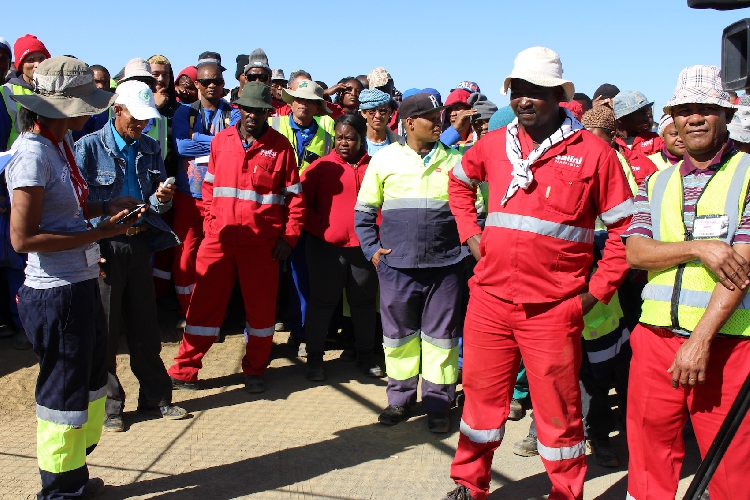
The charges against the workers stem from an illegal strike towards the end of June which crippled construction operations at the Neckartal Dam site.
An alleged host of unfair labour practices triggered the industrial action, in which about 400 workers participated.
The workers called off the strike, which cost the company N$2 million a day, after the High Court ordered them to return to work.
The Italian company is building the N$2,4 billion Neckartal Dam west of Keetmanshoop.
Attempts to get comment from both Beukes and Le Grange were futile as they were locked in the hearings at the time of going to press.