





Rundu State Hospital has run out of essential medical supplies, forcing patients to buy their own medicine, including malaria test kits, amid a regional malaria surge.
This comes after The Namibian last week reported that some operations at Windhoek Central Hospital, Katutura Intermediate Hospital, Keetmanshoop Hospital, and Rundu State Hospital have been put on hold due to a lack of anaesthetics.
Anaesthetics are used to induce a temporary loss of sensation or awareness while a patient is being operated on.
Executive director of health and social services Penda Ithindi yesterday told The Namibian that the ministry is, however, not aware of the situation.
“I will find out on the ground to verify the level of stock and we will give the directive,” he said.
Ithindi said this as the ministry released a press report saying stocks countrywide are sufficient.
The ministry last week blamed the shortage of anaesthetics on poor coordination and monitoring between the its different functional units in the region and the Central Medical Stores.
The ministry in a statement said this has resulted in orders not being delivered and distributed on time.
However, contrary to this statement, patients at Rundu State Hospital last week told The Namibian they are required to buy their own medicine and dressing pads at private pharmacies in addition to the shortage of anaesthetics.
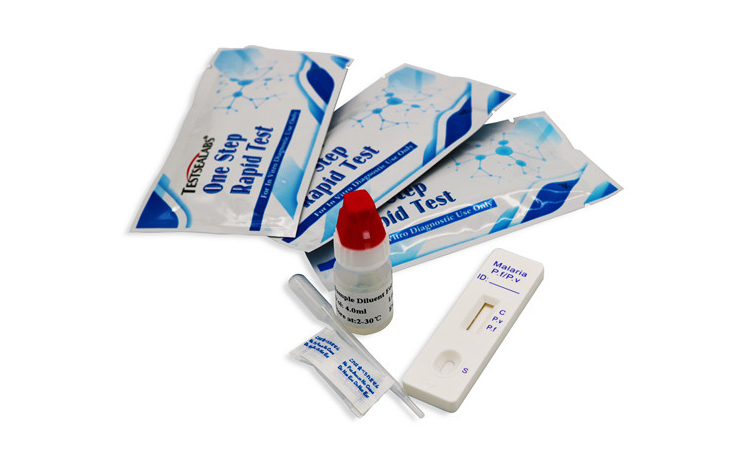
NO MALARIA TEST KITS
One patient yesterday said he was even sent to buy his own malaria testing kit.
The Kavango East region has been hard hit with malaria cases since the country’s outbreak in December.
Kavango East health director Idah Mendai last week said there is a significant increase in malaria cases in the region, with 13 185 cases and 16 deaths reported in the first 16 weeks of this year.
Mendai said this at a World Malaria Day event at Rundu.
“Andara recorded the highest number of cases, with 7 787, Nyangana 2 925 cases, and Rundu 2 461 cases,” she said.
Despite the malaria crisis, Rundu resident Jairus Johannes yesterday said he was sent to buy a malaria kit after taking his daughter to the hospital with symptoms.
“I brought my daughter to the hospital because she was not feeling well. She vomited and I suspected malaria,” he said.
Johannes said his child was attended to, but there was no medicine available for her.
“I was advised to go and buy at the pharmacy, since there was not even a malaria testing kit at the hospital,” Johannes said.
He subsequently bought a kit and took it to the hospital to test his daughter for malaria.
“If I did not have money, the child would die or a major problem would arise due to the lack of medicine,” he said.
Johannes said the government should intervene, since not all patients can afford buying their own medicine or kits.
“We don’t really have money, we were referred to the pharmacy where some medicines are expensive,” he said.
Johannes said upon arrival at the pharmacy he found other patients who were also in the queue at the hospital.
“There are no bandages, patches, or mosquito nets. The Kavango East is the most infected malaria area. How will we fight it?” he asked.
‘NO BANDAGES’
Nurses who spoke to The Namibian on condition of anonymity yesterday confirmed having to refer patients to independent pharmaceutical suppliers, in addition to having to approach neighbouring Grootfontein for medical supplies.
“We don’t have bandages or swabs for theatre, we are asking the patients to buy this. We really don’t have stock and they’re throwing our management under the bus to not take accountability.
“People are now borrowing from Grootfontein – how is that Rundu’s fault? We are out of stock of many things,” one of the nurses said.
Rundu State Hospital is a key referral hospital for three regions, including the Zambezi and Kavango West regions.
Preliminary results from the 2023 Population and Housing Census shed light on the significant service area and potential patient base of the hospital.
Another anonymous patient yesterday said he has had to buy dressing pads and a bandage.
“I came for my follow-up and to dress the wound. I was told dressing materials are out of stock. I decided to go buy a gauze swabs and bandages,” he said.
He was told to return to the hospital for dressing today, he said.
“I cannot wait for tomorrow, because the wound is open and it can be infected. That’s why I bought the dressing pads, which cost me N$31.70,” he said.
The patient said the ongoing shortage of stock is worrying, because patients cannot afford to buy this themselves and some live far from the hospital.
Meanwhile, a woman who took her son to a clinic at Rundu yesterday said a certain crucial medication was out of stock.
“I was told to go and buy it at the pharmacy,” she said.
She said her son has to undergo an operation in July and the medicine is vital.
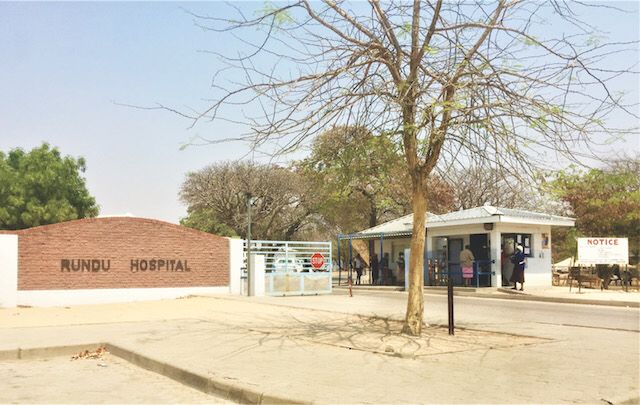
THE FIGURES
According to preliminary data, the combined population of the Kavango East, Kavango West, and Zambezi regions totals 484 060.
The Kavango East region has a population of 218 42 people, the Kavango West 123 266, and the Zambezi region has 142 373 people.
The substantial combined population highlights the crucial role Rundu State Hospital plays in providing healthcare services to a large portion of north-eastern Namibia.
As a referral facility, the hospital also serves patients from surrounding towns and rural areas within these three regions.
ONE NURSE, 30 PATIENTS
Another source at the hospital yesterday estimated that one nurse attends to over 30 patients per day without resting.
“Due to the impact of not having medication to treat them, the number of patients increases, and working conditions become hard,” a nurse said.
She said the staff shortage leads to work overload, exhaustion and poor patient care.
“There’s also a shortage of anaemia medication, and a shortage of malaria medication, with cases increasing daily,” she said.