



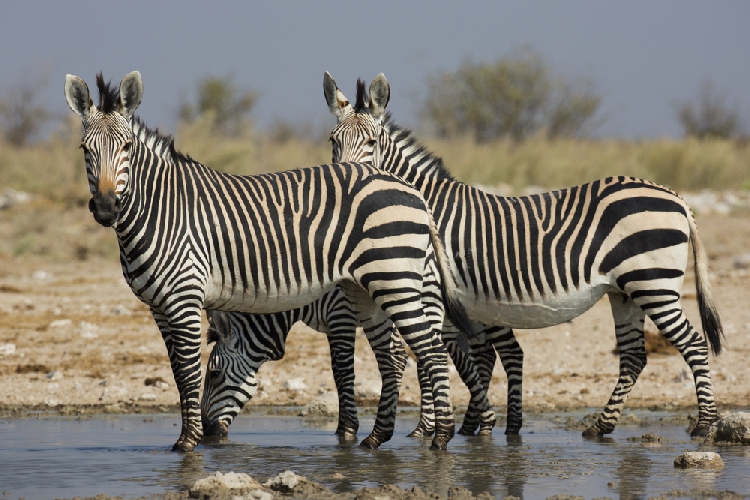
THE Ministry of Environment and Tourism is conducting research on two zebra species in the Etosha National Park with funding from Nedbank Namibia.
According to the head of the project, Kenneth /Uiseb of the ministry’s department of scientific support services, the project involves 16 000 mountain and Hartmann’s zebra species in the park. He said so far about 14 zebras had been collared and had tissue samples collected for analysis.
“However, more sampling work is required. More work still has to be done,” he added.
/Uiseb said cross-breeding between the two species had produced viable hybrid offspring which would ensure the survival of the zebra in the park.
“The offspring are viable and this hybridisation is driven mainly by male mountain zebra,” /Uiseb said at an event to mark World Overshoot Day, which discussed how human activity has impacted on the planet and how this can be corrected.
The Hartmann’s mountain zebra (Equus zebra hartmannae) is a subspecies of the mountain zebra found in far south-western Angola and western Namibia. The two species are quite similar but the mountain zebra may be a bit smaller and prefers mountainous areas as the name implies. The major physical difference between the two zebra species is the lack of shadow stripe. In addition, the mountain zebra has a white belly while the Hartmann stripes go all the way round. Mountain zebra also has a dewlap.
Meanwhile, the Namibia Giraffe Conservation Status (NGCS) project also got funding from the Nedbank Go Green Fund.
Director of conservation Julian Fenessy said although the conservation status of the giraffe is of least concern to wildlife conservation organisations, this was not the same everywhere.
This project is part of the work of the Giraffe Conservation Foundation, which seeks to establish the range, numbers and status of giraffe populations in Africa – working in 14 African countries.
In Namibia, the NGCS project has embarked on countrywide assessment of the conservation status of giraffe.
Fenessy said preliminary findings show that the giraffe population in Namibia is increasing, but most other populations in Africa are decreasing.
In the late 1990s, it was estimated that giraffe numbers exceeded 140 000 throughout Africa but a decade and half later, estimates suggest that the numbers are down to less than 80 000 – a decline of over 40%.
Deputy environment minister Tommy Nambahu told the event that research in wildlife and environmental protection is important to help Namibia to come up with informed policies, programmes and other measures towards conservation and environmental protection.
In an age of information overload, Sunrise is The Namibian’s morning briefing, delivered at 6h00 from Monday to Friday. It offers a curated rundown of the most important stories from the past 24 hours – occasionally with a light, witty touch. It’s an essential way to stay informed. Subscribe and join our newsletter community.

The Namibian uses AI tools to assist with improved quality, accuracy and efficiency, while maintaining editorial oversight and journalistic integrity.
Stay informed with The Namibian – your source for credible journalism. Get in-depth reporting and opinions for
only N$85 a month. Invest in journalism, invest in democracy –
Subscribe Now!