The cost of renting an apartment/house compared to buying the same property has gone up in the first three months of the year.
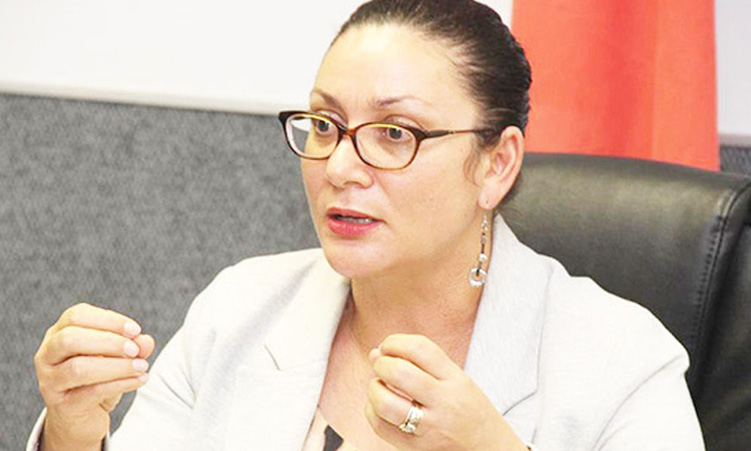
Bank of Namibia (BoN) deputy governor Leonie Dunn says the price-to-rent ratio, which compares the cost of buying a property to the cost of renting it, has gone up.
Residential property sales have remained low as a result of high interest rates, which are caused by slow growth in economic activity.
“The property sales volumes remained low in the residential property market, reflecting tight financing conditions,” Dunn says.
This was discussed during the BoN’s macroprudential oversight committee meeting on 10 July.
FNB Namibia’s rental price index report shows that the average rental price hovered at around N$7 257 last year.
This means that Namibians paid N$90 324 on average for the year.
A three-bedroom apartment had an average rental price of N$11 155.
Meanwhile, one-bedroom, two-bedroom, and more than three-bedroom properties had rental prices of N$3 579, N$5 833, and N$21 294, respectively.
The rental index is based on average advertised prices in the residential property market across the country.
Dunn says the economy is growing, but at a slower rate than during the first quarter of 2023.
“The Namibian economy grew by 4,7% during the first quarter of 2024, compared to a growth rate of 5,3% observed in the corresponding quarter of 2023,” she says.
The largest contributors to the growth last year were electricity, retail, transport and mining.
However, economic growth is expected to slow down to 3,7% for the entire year.
“The projected slowdown in 2024 is ascribed to weaker global demand and slower growth in the domestic primary industry,” Dunn says.
There is an expectation of economic recovery in 2025, with a projected growth rate of 4,1%.
Dunn says after the committee assessed potential risks and vulnerabilities in the Namibian financial system, the commmittee concluded that the financial system remains resilient and stable despite the prevailing macroeconomic conditions.
The committee decided no macroprudential policy intervention is required at this stage.
“The macroprudential oversight committee will continue to closely monitor the economic and financial conditions, as well as the overall risk environment, and when warranted, take the necessary remedial macroprudential action with the tools at its disposal,” Dunn says.
– email:shania@namibian.com.na; Twitter:@ShaniaLazarus
In an age of information overload, Sunrise is The Namibian’s morning briefing, delivered at 6h00 from Monday to Friday. It offers a curated rundown of the most important stories from the past 24 hours – occasionally with a light, witty touch. It’s an essential way to stay informed. Subscribe and join our newsletter community.

The Namibian uses AI tools to assist with improved quality, accuracy and efficiency, while maintaining editorial oversight and journalistic integrity.
Stay informed with The Namibian – your source for credible journalism. Get in-depth reporting and opinions for
only N$85 a month. Invest in journalism, invest in democracy –
Subscribe Now!