





Following the recent regional council election, I was under the impression, perhaps optimistically, that this victory would signal the first definitive step toward fostering unity within our community.
However, I have been proven wrong. True leadership is defined by inclusivity, yet the councillor chose not to celebrate this milestone at the official constituency office, which belongs to all people, but instead held the event at the Popular Democratic Movement offices.
We missed a golden opportunity as this occurred on the same day we commemorate our fallen hero, chief Clemens Kapuuo. Kapuuo’s commemoration should have served as a premier event to unite our people across the political spectrum.
Historically, he was a pivotal figure who transcended narrow interests, being instrumental in the formation of the Swanu of Namibia, the National Unity Democratic Organisation (Nudo), and the Democratic Turnhalle Alliance (DTA). He was truly a leader of the people, and his historical “prophecy” regarding the importance of land and self-determination remains strikingly realistic in today’s political landscape.
“WHO KILLED CLEMENS KAPUUO?”
The scholarly article by Jan-Bart Gewald investigates the life and 1978 assassination of Kapuuo, the paramount chief of the Ovaherero and then-leader of the Nudo/DTA.
Kapuuo was a central figure in Namibian nationalism, having served as the long-time secretary and chosen successor to chief Hosea Kutako. He was deeply rooted in the struggle against South African apartheid rule, famously co-operating with Sam Nujoma to oppose the forced removals from the Old Location to Katutura in 1959.
POLITICAL CAREER AND THE “LAND USE”
Kapuuo’s political trajectory was defined by his refusal to compromise on Namibian self-determination and, most critically, the restoration of ancestral lands. In 1971, he led the National Convention, a broad anti-colonial alliance.
However, his later decision to participate in the 1975-77 Turnhalle Conference, a South African sponsored initiative, surprised many.
Gewald argues that Kapuuo’s participation was a strategic attempt to “ride the tiger” he believed he could use the platform to secure land rights for the Herero people, particularly to prevent the loss of the Aminuis Reserve, which was threatened by the Odendaal Commission’s ethnic fragmentation plans.
THE ASSASSINATION AND ITS AFTERMATH
On Easter Monday, 27 March 1978, Kapuuo was gunned down in Katutura by unidentified assassins. While the South African government immediately blamed Swapi “terrorists,” the party never claimed responsibility.
Gewald’s research into recovered inquest papers suggests a more complex conspiracy. The precision of the hit using specialised ammunition
like “dum-dum” bullets and the subsequent launch of “Operation Reindeer” (the South African attack on Cassinga) suggest that Kapuuo’s death may have been orchestrated by South African “dirty tricks” departments.
His murder served as a convenient pretext for South Africa to escalate its military campaign in Angola while removing a leader who, despite his participation in the Turnhalle talks, remained a stubborn obstacle to their ultimate colonial designs.
CONCLUSION
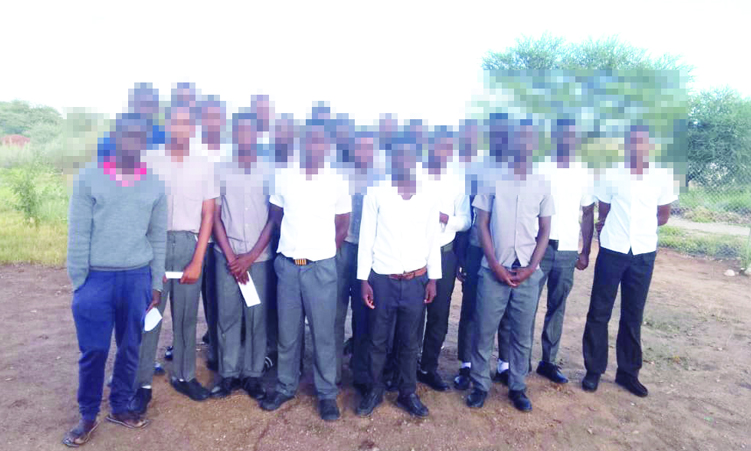
As we reflect on this history, we must remember that in the year 1978 (Ombura yonyondwi), a group of young boys underwent traditional circumcision to transition into manhood. Today, they are honored as “Ovarumendu Otjonjondwi”.
In the spirit of the inclusive leadership exemplified by our ancestors, I urge the constituency councillor’s office to reconsider its approach.
Future events of such magnitude must be organised at and held within the constituency offices to ensure they are inclusive of all community members, regardless of political affiliation. Unity cannot be built in a partisan vacuum; it must be practiced in the very halls of our public institutions.
*Mitiri Mbueza is an educator with 25 years of experience and a bachelor’s of education (honours) in education management, law, and policy from the University of Pretoria.
In an age of information overload, Sunrise is The Namibian’s morning briefing, delivered at 6h00 from Monday to Friday. It offers a curated rundown of the most important stories from the past 24 hours – occasionally with a light, witty touch. It’s an essential way to stay informed. Subscribe and join our newsletter community.

The Namibian uses AI tools to assist with improved quality, accuracy and efficiency, while maintaining editorial oversight and journalistic integrity.
Stay informed with The Namibian – your source for credible journalism. Get in-depth reporting and opinions for
only N$85 a month. Invest in journalism, invest in democracy –
Subscribe Now!