As Namibians commemorated Heroes Day yesterday, countless stories serve as reminders of the sacrifices, blood, and resilience of freedom fighters.
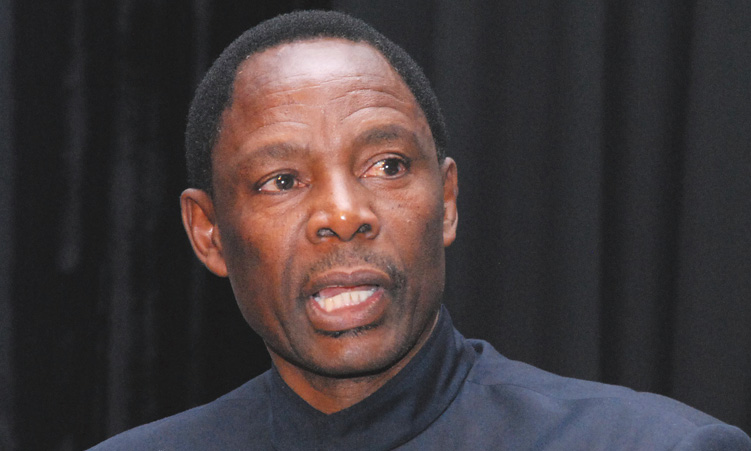
Among them is the harrowing, yet inspiring, journey of Swapo activist Richard Kamwi.
Born at Munga in the Chobe District of Botswana, Kamwi became a Swapo activist in 1974.
His life took a dramatic turn on 28 October 1985 when he was arrested at Katima Mulilo while speaking to fellow activist, the late Aaron Mushimba, at the only telephone booth in town.
“They took me to the charge office where they interrogated me about the things I did, including security-related responses from Sam Nujoma. The following morning, they put me in a sack, tied it and transported me to Kalimbeza, where they tortured me endlessly,” Kamwi recalls.
The brutality was relentless, he says.
“They placed negative wires on my left foot and positive wires on my right foot, counted to 10, and if I refused to answer truthfully, they would press the electric shock and electrocute me.”
Despite the unimaginable pain, Kamwi says he endured it because he had been prepared by brigadier general James Awala and the late Mathew Kamedo.
“At night they untied and handcuffed me. The ropes on my feet were tied to their beds and I would not move the whole night. By the time they took me back to the torture room, I would have blood oozing from my body and I would be crying in pain. I would not eat or drink anything, just endure torture,” he recalls.
For three months, he was subjected to this severe torture – his hands and feet tied and starvation compounding his suffering.
Mocked by his captors, Kamwi was often asked why he did not cry for Nujoma, to which he would reply by denying any connection.
On 29 January 1986, Kamwi was taken on a boat by top security officials. Heavy rains that night provided him with an opportunity.
“I realised the Boers were still sleeping. A bold idea came over me, and I decided to untie my feet. The rope came off, and I went outside while it was still raining and started running towards Kalimbeza.”
For hours, Kamwi ran and hid, seeking help from relatives and acquaintances, but fear of reprisals made many turn him away.
“I would run and stop and listen to hear if anyone was following me,” says Kamwi.
He initially ran towards the road with the aim of crossing into Zambia at Schuckmansburg but realising that security forces would likely arrest him there, he decided to head towards Bukalo instead.
“I decided to go look for my cousin, Mulenamazwe, who was a teacher. I told him I needed transport, but unfortunately his car had been taken by his older brother,” Kamwi recalls.
Desperate, the two then approached the school principal, but he refused to lend them a vehicle.
“Without securing any transport, I decided to walk to Iikumwe School, where I planned to see my neighbour. I told him that I had escaped and that I was headed to Botswana,” says Kamwi.
His neighbour offered him a cold drink and biscuits for strength.
While continuing on foot, Kamwi spotted a vehicle belonging to a man known to collaborate with the occupying forces.
“I dashed into the bushes and kept walking until I was near my village, where Thomas Nulwino saved my life,” he says.
Nulwino, after hearing his story, drove towards Ngoma to survey the road, where he spotted two roadblocks. He armed Kamwi and advised him to proceed on foot towards Iikumwe.
By sunrise, Kamwi reached his family’s field, where he found his relatives weeding.
“They were all shocked to see me. I told my mother to thank the Lord. She accompanied me to the river, but I asked her to return home out of fear that the Boers might catch us. She told me to go with the Lord and to come back for them,” he says.
Just as he entered the bushes again, Kamwi saw a helicopter flying towards his village. He hurried across the river and into Botswana, where his grandmother’s family took him in and cared for him before reporting to the Kasane police, who admitted him to hospital.
“I was swollen and feeling sick,” Kamwi says.
After a week in the intensive care unit in Lusaka, he was sent to Luanda, then to Lubango, where he met deputy army commander Solomon ‘Jesus’ Hawala.
“He met me when I was very weak and he took me to his camp,” Kamwi says.
There, he spent months regaining his strength before resuming training and eventually returning to the frontlines of Namibia’s liberation struggle.
Kamwi still bears scars from the torture. He suffers from lasting effects of electrocution and cannot hold small objects. For him, observance days like Independence Day and Heroes Day are bittersweet.
“It is a reminder that all these good things did not come on a silver platter. Sacrifices were made, people died for this country,” he says.
After Namibia gained independence in 1990, Kamwi went on to serve as minister of health and social services from 2005 to 2015. Today, he is a commercial farmer, but his story remains testament to the resilience, bravery, and sacrifices of Namibia’s freedom fighters.
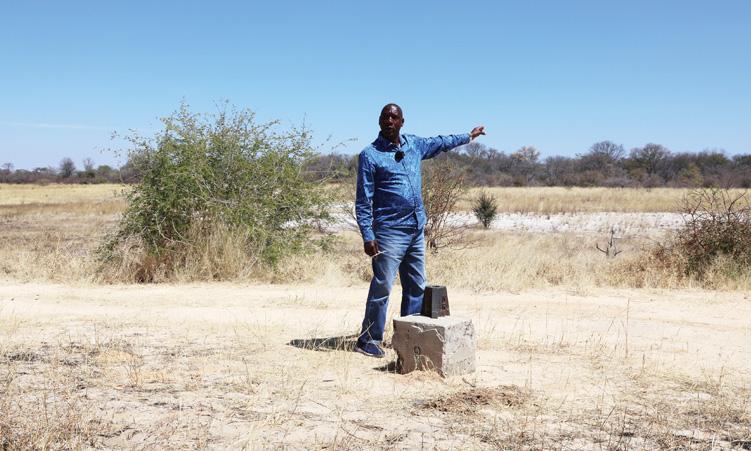
Kamwi’s harrowing experience comes as Namibia commemorated the 35th Heroes Day at Katima Mulilo in the Zambezi region, where the site of the former Kamenga military base stands as a powerful reminder of Namibia’s liberation struggle.
It is located about 121km south of Katima Mulilo.
Once a South African Defence Force installation, Kamenga was a key battleground in the eastern and southern Zambezi, witnessing fierce clashes between the apartheid regime and fighters from the People’s Liberation Army of Namibia (Plan).
As Namibians gathered for Heroes Day, they also reflected on the many lives lost in confrontations around this base, where local villagers were often caught in the crossfire.
Today, while the physical structures have mostly disappeared or are in ruins, the site remains deeply etched in the collective memory of the region.
Retired Namibian Defence Force captain Richard Kopano, who recently toured the former base with a team from Nampa, highlighted the strategic importance of the battles fought there as early as 1968.
Kopano, a recognised war veteran, in an exclusive interview explains that Swapo’s guerrilla warfare tactics were heavily employed at Kamenga. These battles marked a shift in the struggle after the first shots were fired at Omugulugwombashe in the Omusati region on 26 August 1966.
Many war veterans from the Zambezi region, including former governor Lawrence Sampofu and Patrick Mwampole, participated in these engagements.
The remnants of the old base are still visible today – a dilapidated military structure, barracks, a well, military holding cells, and a wire fence. The names of some South African soldiers are even still visible.
“This former base was constantly attacked by our Swapo soldiers who had crossed into Namibia with a plan to attack it and retreat back into Zambia,” Kopano says.
The old base, which is situated in thick bushes about 50 metres from the main Singalamwe-Kamenga road, is still considered dangerous as it has not yet been cleared of landmines.
Another war veteran, Phillemon Nepaya, also known by his combat name ‘Haipinge,’ joined Plan at the age of 20 and later fought on the eastern front.
He participated in many battles across what is now the Zambezi region, specifically highlighting Kamenga and Ofinoti as particularly ‘difficult’ battlefields. He described Kamenga’s terrain – thick bush, sandy soil, and open plains – as a significant challenge for the combatants.
Nepaya is part of a generation of freedom fighters who endured immense hardship to lead the national liberation struggle to a successful conclusion. – Nampa
In an age of information overload, Sunrise is The Namibian’s morning briefing, delivered at 6h00 from Monday to Friday. It offers a curated rundown of the most important stories from the past 24 hours – occasionally with a light, witty touch. It’s an essential way to stay informed. Subscribe and join our newsletter community.

The Namibian uses AI tools to assist with improved quality, accuracy and efficiency, while maintaining editorial oversight and journalistic integrity.
Stay informed with The Namibian – your source for credible journalism. Get in-depth reporting and opinions for
only N$85 a month. Invest in journalism, invest in democracy –
Subscribe Now!