



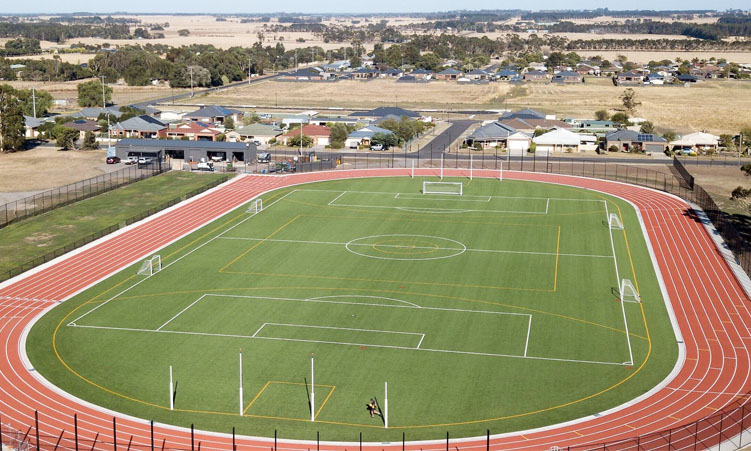
The government has hand-picked the financially troubled Roads Contractor Company (RCC) to oversee a N$140-million project to build basic sport facilities across all 14 regions.
Each of the 14 regions will receive N$10 million for two facilities – 28 in total. Sources familiar with the project say deputy minister of education, innovation, youth, sport, arts and culture Dino Ballotti has been its primary driver within the government.
The project comes after a December 2025 directive from president Netumbo Nandi-Ndaitwah when she directed that regional governors should lead the construction of stadiums and sport facilities.
Nandi-Ndaitwah, who is frustrated by slow procurement processes, has expressed concern over slow progress despite N$1.3 billion being allocated in the 2025/26 national budget for sport, youth, and national service.
A presidential letter dated 30 December called for treasury exemptions to avoid administrative bottlenecks and delays.
While the letter specifically mentions governors, sources at the sport ministry and in the Presidency say Ballotti was also granted an exemption.
His role has allowed him to work directly with the RCC without following standard public procurement rules.
Ballotti yesterday declined to comment, saying: “Unfortunately, I am unable to comment for The Namibian.”
The deputy minister has refused to answer questions from The Namibian since last year.
The appointment has drawn scrutiny over the RCC’s practice of subcontracting government work to traditional authorities such as those of the Ondonga and Oukwanyama, which have in turn hired the actual builders.
Government officials, who have asked not to be named, say it remains unclear what controls are in place to ensure funds for sport fields are spent effectively and transparently.
Executive director of sport Gerard Vries yesterday told The Namibian his ministry has engaged the minister of finance to obtain clarity regarding the applicable procurement framework for this project.
“The project is being implemented within the existing legal framework of the Public Procurement Act. Regions are legally empowered to apply direct procurement or other lawful procurement methods where justified under the act,” he said.
“All procurement processes remain subject to financial controls, documentation requirements, audit oversight and reporting obligations in terms of national public finance management laws,” he said.
RCC CONFIRMS
RCC interim chief executive Dasius Nelumbu yesterday confirmed the company’s involvement in the project, but denied that it was hand-picked for the tender.
“The RCC, being a state company, was not chosen. The RCC expressed its interest to construct sport fields, to which some of the regional leadership responded positively,” he said.
The projects were not publicly advertised and did not follow standard procurement rules.
“We are contracted to do the work. In doing so, we can partner with locals to execute the work. This benefits the region and allows skills transfer,” Nelumbu said.
“We are appointed to do a few sport fields. If at all we get appointed by all regional governors, we will be happy to execute. The projects are being executed following internal policies and procedures to ensure accountability and transparency,” Nelumbu said.
The Namibian asked which companies or contractors the RCC would work with to build the 28 facilities, to which Nelumbu said: “We have been appointed by some regional governors. We are still waiting for responses from the rest of the regional governors, but we will surely work with local and regional contractors in executing the work.”
He added: “We are here to help build local capacity and promote equitable participation by all. You are welcome to visit our sites to acquaint yourself with how we are doing so.”
The Namibian last year reported that the RCC allegedly hand-picked the Ondonga and Oukwanyama traditional authorities for a road maintenance tender worth N$6 million.
The Namibian further reported that the Anti-Corruption Commission (ACC) has about three cases registered involving allegations of corruption against the RCC.
Approached for comment yesterday, Construction Industries Federation of Namibia chief executive Bärbel Kirchner said her organisation consistently supports transparent procurement, as open competition remains the most effective way to ensure fairness, value for money and equal access for Namibian contractors.
“If projects are allocated through direct appointments, it may limit direct access to public work for small and medium enterprises and emerging contractors who rely on open tenders to grow and build capacity. Over time, the concentration of projects among a few entities can affect broader sector development and upward mobility within the industry,” she said.
Kirchner said if procurement exemptions were applied, they must strictly comply with the Public Procurement Act and its regulations.
Vries yesterday said the sport ministry did not direct regions from the national level to engage the RCC, nor has the RCC been granted a blanket appointment to oversee all 28 facilities.
“Implementation responsibility for construction has been formally handed over to the respective offices of regional governors,” he said.
Vries said each region is, therefore, free to undertake independent procurement processes in accordance with the Public Procurement Act.
“Should any region decide to engage the RCC or any other contractor, such engagement must follow lawful procurement procedures at regional level. The decision on contractor selection rests with the implementing authority in each region, subject to compliance with the law,” he said.
WORD FROM STATE HOUSE
The Presidency yesterday preferred not to answer questions regarding the internal letter. However, State House officials said the letter reflects a sense of urgency and a drive to accelerate delivery.
“It underscores the president’s expectation that implementation must move faster, coordination must improve, and that allocated funds must be fully and properly used rather than being lost to delays,” the source said.
THE FACILITIES
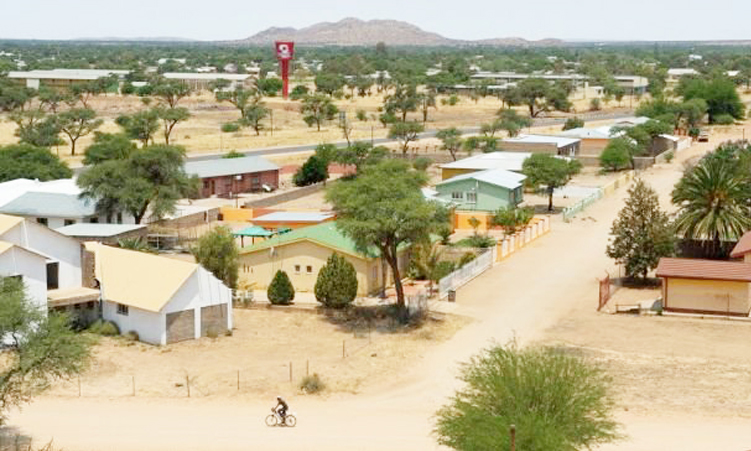
A sports ministry statement issued on 27 February says the construction of basic sport facilities will begin at selected spots in all 14 regions.
In the Zambezi region, work will start at Bukalo in the Katima Rural constituency and Sibbinda in the Sibbinda constituency.
In the Erongo region, sites include Usakos in the Karibib constituency and Uis in the Dâures constituency, while the Kavango East region will build at Divundu in the Mukwe constituency and Mayana in the Rundu Rural constituency.
The ministry says regions should “allocate funds equitably between the two identified constituency sites” while allowing flexibility for technical or site-specific requirements.
It says regions are legally empowered to proceed with procurement under the Public Procurement Act, and that funding has been secured for consultancy services to ensure technical expertise does not burden regional budgets.
The ministry says construction has already begun in the Kunene, Oshana, and Kavango East regions, with other regions to follow, and standardised technical designs will be used while incorporating local conditions.
Governors will host “symbolic ground-breaking ceremonies ahead of 21 March 2026”, signaling the visible start of construction across the country, the statement reads.
Independent Patriots for Change member of parliament and shadow minister of works and transport Nelson Kalangula yesterday said hand-picking does not speak to the “procedure and rule of the laws in place”.
“Any company should follow the bidding process in respect of the laws, however, preference should be looked upon to empower our own Namibian companies over international companies,” he said.
Kalangula said exemptions applying to the deputy minister and governors would cause problems.
“It might bring problems with accountability as the deputy minister and the governors are not accountable as per article 41 of the Namibian Constitution,” he said.
In an age of information overload, Sunrise is The Namibian’s morning briefing, delivered at 6h00 from Monday to Friday. It offers a curated rundown of the most important stories from the past 24 hours – occasionally with a light, witty touch. It’s an essential way to stay informed. Subscribe and join our newsletter community.

The Namibian uses AI tools to assist with improved quality, accuracy and efficiency, while maintaining editorial oversight and journalistic integrity.
Stay informed with The Namibian – your source for credible journalism. Get in-depth reporting and opinions for
only N$85 a month. Invest in journalism, invest in democracy –
Subscribe Now!