





Namibia Critical Metals has secured C$11 million (about N$130 million) to advance processing at its Lofdal rare earth project as part of a wider push to process critical minerals domestically.
The rare earth project is pushing forward plans to produce higher-value rare earth carbonates as Namibia seeks to capture more value from its critical minerals.
The country is actively shifting from exporting raw critical minerals to focus on domestic processing to capture higher industrial value.
The funding was approved by a joint management committee overseeing the project through a partnership between Namibia Critical Metals, the Japan Organisation for Metals and Energy Security, and Toyota Tsusho.
According to a statement from Namibia Critical Metals (NCM), the approval also paves the way for full execution of an expanded feasibility study.
The company has awarded its first major metallurgical and geometallurgical contracts to SGS Canada Inc, a global leader in metallurgical testing and process development, as part of the next phase of the study.
“The approval of approximately C$11 million in additional DFS funding enables a comprehensive metallurgical development programme that will substantially de-risk the processing component of the project while generating the engineering data required for detailed design and project financing,” says NCM president and chief executive Darrin Campbell.
He says a key objective of the expanded study is to demonstrate the production of higher-value rare earth products within Namibia, rather than exporting mineral concentrates for processing abroad.
While the announcement centres on a single mine in north-western Namibia, it reflects a broader trend emerging across Namibia’s critical minerals industry.
For decades, most rare earth projects in the country have focused on producing minerals that are shipped overseas for further processing.
Another Namibian company, Ombo Capital, also secured funding to establish Namibia’s first commercial rare earth elements processing plant in the Kunene region.
This facility is designed to process raw materials into valuable carbonate products locally, aligning with national policies to keep downstream processing within Namibia’s borders.
NCM says the production of light rare earth carbonate and heavy rare earth carbonate would support Namibia’s ambitions to increase domestic mineral beneficiation, develop downstream industries and create long-term economic value.
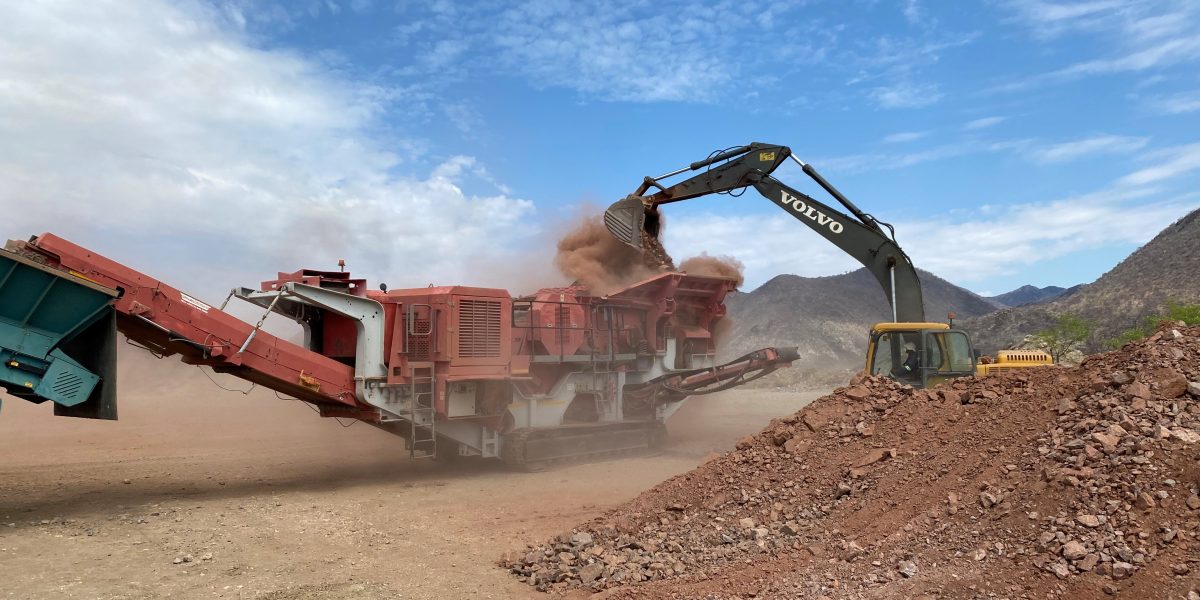
According to miningenergy.com, the newly approved NCM programme includes a pilot-scale flotation campaign using about 30 tonnes of representative ore, laboratory and pilot-scale rare earth separation testing, and an extensive geometallurgical programme involving 98 representative samples from across the deposit.
Lofdal’s latest plan would produce rare earth carbonates, intermediate products that command greater value before they are refined into individual rare earth oxides.
Namibia has also banned the export of unprocessed lithium to drive local value addition and support the domestic energy transition.
Major mining firms, including Andrada Mining at the Uis mine and Lepidico at the Karibib project, are integrating beneficiation circuits to process mined ore into usable lithium concentrates.
Following its 2023 ban on the export of unprocessed lithium, the Namibian government enforces strict regulations requiring mining companies to establish in-country processing facilities to stimulate economic growth and job creation.
– email: matthew@namibian.com.na