



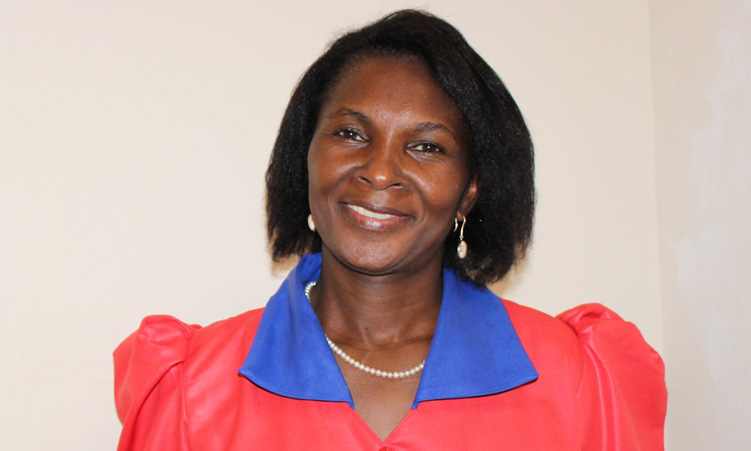
Prominent Namibians, including Swapo Party Women’s Council secretary Fransina Kahungu and lawyer Sisa Namandje, are praising The Namibian for 40 years of fearless journalism, nation-building, and advancing democracy and social awareness.
“I write to congratulate you on your 40th anniversary. Five years before our national independence you, through reporting, contributed massively to the fight against apartheid and colonialism,” Namandje says.
He says after independence, the paper continued contributing to important national public discourse, urging the team to “keep up the good work”.
For Kahungu, The Namibian has sparked her interest in reading.
“The Namibian carries the real meaning of ‘telling like it is’. The Namibian aroused my interest in reading,” she says.
Kahungu says the paper has become more than just a source of news – it is a place where obituaries are shared, where communities rally around health-related donations, and where ideas on social issues find space.
“Even in the era of social media, when you want to confirm or deny news, you browse through The Namibian,” she says.
Kahungu also commends the newspaper’s role in training many Namibians on reporting and writing and its commitment to ethical journalism by presenting both sides of a story – whether good or bad.
“As we celebrate 40 years, my wish to the leadership and employees is to continue telling it like it is,” she says.
She urges the paper to continue creating job opportunities, highlighting the men and women who sell newspapers along the roadside every morning.
“Their work starts as early as 05h00. These are the unsung heroes and heroines of the information industry,” she says.
‘SHAPING THE NATION’
Independent Patriots for Change (IPC) spokesperson Imms Nashinge says The Namibian has played a pivotal role in shaping the country by creating opportunities for employment, career growth, and professional development.
“Beyond its role in the struggle for freedom, The Namibian has helped shape the nation we are today. It has created opportunities for Namibians, employment, career growth, and professional development,” he says.
“The Namibian has remained steadfast in upholding the principles of democracy, freedom of speech, and press freedom,” he says.
As a watchdog, Nashinge says, the paper continues to hold power to account and ensures the voices of the people are never silenced.
He says the paper has contributed to the Windhoek Declaration, now a landmark document for media freedom in Africa, which remains a testament to its enduring legacy in a free Namibia.
“On this momentous occasion, I extend my deepest gratitude to The Namibian for 40 years of service, sacrifice, and unwavering dedication to our nation. May you continue to inform, educate, and illuminate the path toward a more just and equitable Namibia.”
‘FIRST PAPER EVER READ’
The first newspaper former Walvis Bay mayor King Madume Muatunga ever read was a copy of The Namibian bought by his mother, Maria Muatunga, in 1985.
It came with a free T-shirt, he says.
Muatunga, an avid reader of The Namibian, recalls how he began collecting the weekly editions his mother would buy from the local shop.
“She knew I was interested in politics at the time,” he says.
Some of those newspapers he kept over the years are now stored in The Namibian’s archives.
Muatunga says his mother bought the paper to feed his growing interest in the political tensions of pre-independent Namibia.
This would later influence him to join other freedom fighters in exile in Angola and Zambia.
Back then, The Namibian was only a weekly paper, available at selected shops at towns such as Walvis Bay and Windhoek.
“The Namibian played a meaningful role in the liberation struggle. I’m greatly inspired by its courage to tell it like it is,” Muatunga says.
FIRST NEWSPAPER IN EXILE
Former Ohangwena governor Sebastian Ndeitunga says The Namibian was the first newspaper he ever read as a freedom fighter while in exile.
“The Namibian sensitised us to democracy. It was the first Namibian newspaper I read while in exile as a freedom fighter,” he says. According to Ndeitunga, the paper became a source of awareness and an educational tool, informing the nation of the true value of democracy.
He praises former editor and founder Gwen Lister, along with the journalists who worked tirelessly and remained unwavering in their commitment to push the newspaper forward through difficult times.
“I want to salute and take my hat off to Gwen Lister and those who fought for the truth, and their commitment, resilience, bravery and unshakable determination,” he says.
PROPELLING STUDENT UNION
The Namibian propelled students movements into unions standing up against the 1990 nationwide boycott of forced military conscription into the South African military force.
Former deputy minister of information and communication technology Engel Nawatiseb says the paper influenced students to enlist with People’s Liberation Army of Namibia fighters in exile instead of joining the South African army.
“The South African military would force pupils to join the army. Instead of joining, the newspaper gave us information,” he says.
Those who remained also used the newspaper to boycott Bantu education and soldiers teaching pupils with AK-47 rifles in classrooms.
‘SAFEGUARDING TRUTH’
Former prime minister Nahas Angula says The Namibian’s 40th anniversary represents a history of informing, educating and entertaining the nation.
“Happy birthday, The Namibian! Continue to tell the story as it is! Wishing The Namibian more years of educating, informing and entertaining the nation!”
Former ambassador Pius Dunaiski, who has also been a political writer, says he has witnessed the newspaper’s role in safeguarding truth and advancing Namibia’s independence during the implementation of United Nations (UN) Resolution 435 in 1989.
“May it continue to serve Namibia with courage, integrity, and unwavering commitment to more rights and freedoms for all its people,” he says.
Human rights activist Nicodemus ‘Mama Afrika’ Auxumub says The Namibian was the first newspaper black people bought within the communities.
The paper advocated for the liberation of the country and brought changes within the community.
“I’m really proud of The Namibian and its fearless founder, who fought tirelessly and fearlessly and went from strength to strength.”
In an age of information overload, Sunrise is The Namibian’s morning briefing, delivered at 6h00 from Monday to Friday. It offers a curated rundown of the most important stories from the past 24 hours – occasionally with a light, witty touch. It’s an essential way to stay informed. Subscribe and join our newsletter community.

The Namibian uses AI tools to assist with improved quality, accuracy and efficiency, while maintaining editorial oversight and journalistic integrity.
Stay informed with The Namibian – your source for credible journalism. Get in-depth reporting and opinions for
only N$85 a month. Invest in journalism, invest in democracy –
Subscribe Now!