


Windhoek, 8 April 2026.
___________________________________________________________
We could not have foreseen that this address would be preceded by such profound grief. Comrade James Unomasa Uerikua and his son Venturo Uerikua tragically passed on in a car accident on 3 April 2026, leaving their family to bear an unimaginable loss. We wish those still hospitalised a swift and full recovery.
The loss of comrade Uerikua is a loss to his family, the National Assembly, the Swapo Party, and the Namibian nation. He embodied Namibia’s hopes and stood firmly for unity in this chamber. We are deeply pained by his passing and should commit to honouring his legacy in this august house.
A moment of silence was observed in their honour. May their souls rest in eternal peace.
For thirty-five consecutive years, Namibia has honoured the constitutional mandate for the president to deliver the state of the nation address, as enshrined in Article 32(2) of the Constitution.
The state of the nation address requires the head of state to report to parliament on national affairs, outline future policy directions, and account for the government’s actions over the previous year.
I pay tribute to the vision and leadership of our founding president, Sam Shafiishuna Nujoma. I equally acknowledge my predecessors and former members of parliament, whose enduring legacies continue to inspire our nation.
I commend the Namibian people for upholding peace, political stability, and the rule of law since independence on 21 March 1990.
Since 21 March 2025, the people of Namibia have entrusted the 8th administration with addressing socio-economic needs. In my maiden state of the nation address on 24 April 2025, I committed to integrity, accountability, and implementing the Swapo Party manifesto 2025–2030, aligned with the sixth national development plan.
Through implementation of the Sixth National Development lan, we advance towards Vision 2030.
The plan is anchored on four pillars: economic growth, transformation and resilience; human development and community resilience; environmental sustainability; and effective governance and public service delivery.
During 2025/2026, N$106.3 billion was allocated, including a development budget of N$12.8 billion. Of this, N$9.6 billion came from the state revenue fund and N$3.1 billion from development partners. Investments targeted agriculture, education, health, renewable energy, and institutional capacity building.
Seven bills are before the National Assembly, two notices have been issued, and nine cleared by the Cabinet committee on legislation.
Negotiations with Germany on genocide, apology, and reparations for the 1904–1908 Ovaherero and Nama genocide are nearing conclusion, with the joint declaration to be tabled.
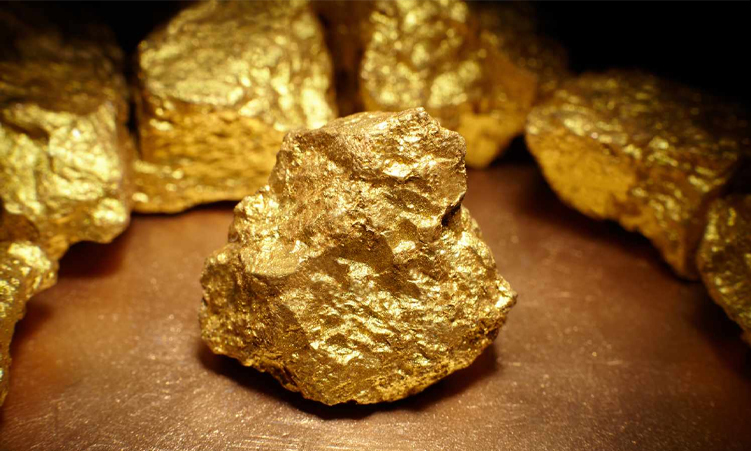
Government repaid the N$14.3 billion Eurobond, boosting credit standing. Foreign reserves stand at N$51.9 billion, covering 3.8 months of imports. Gold acquisition has begun to diversify reserves.
The financial sector remains resilient. The Namibia financial sector transformation strategy 2025–2035 was approved, and deposit guarantees increased to N$50 000.
Gross domestic product (GDP) is projected to grow from 1.7% to 3.1%. Financial inclusion expanded through instant payment systems. VAT refunds improved from 90 to 30 days.
Thirteen projects worth N$4.3 billion created 1 503 jobs. Fifteen more worth N$63.5 billion are underway, including Osino gold and Bannerman Etango uranium mines.
The Namibia Public-Private Forum led to task forces on economic recovery, health, and housing. Business processes improved through a one-stop shop, reducing waiting times.
Legislation for the Welwitschia sovereign wealth fund is advancing. GDP grew from N$190 billion to N$270 billion over five years, with tax revenue rising to N$76 billion.
Challenges include fiscal pressures, reliance on primary sectors, and capacity constraints. Procurement reforms and electronic systems are being implemented.
Government continues investing in people. Priority areas include agriculture, sports, youth empowerment, education, creative industries, health, and housing, supported by enablers such as mining, energy, oil and gas, tourism, agriculture, and transport.
Agriculture aims for 80% food self-sufficiency by 2030. Exports reached N$2 billion. Maize production increased significantly. Green scheme outputs and correctional service production contributed to food supply.
A salmon farming project worth N$2.5 billion is planned. Subsidies support farmers. Livestock supports 70% of livelihoods and contributes to GDP.
Namibia maintains export market access and continues disease surveillance.
Sports infrastructure upgrades are underway, including community and regional facilities and national stadium improvements.
Youth programmes trained and supported thousands through livelihood initiatives, credit schemes, enterprises, cooperatives, and training centres. Over 1 000 recruits were trained through national youth services.
Education infrastructure expanded significantly. A 100% tertiary funding model was introduced. Support through the Namibia students financial assistance fund expanded.
Technical and vocational education and training and STEM programmes were strengthened. Enrolment increased to 13 512 trainees. Work integrated learning policy was launched.
School performance improved, with increased progression rates and university eligibility.
Creative industries attracted 59 foreign film projects and produced 36 local films, generating jobs and revenue. Investment supports skills development.
Health reforms aim to improve public healthcare quality. Seven facilities were upgraded. Medicine availability improved to 57%. Equipment procurement and ambulance distribution strengthened services.
Over 3 400 health workers were hired. Clinics and specialised units were completed. The Walvis Bay Oncology Centre was inaugurated.
Disease outbreaks including cholera, Mpox, and Crimean-Congo haemorrhagic fever were contained. Vaccination coverage reached 89%.
Housing programmes delivered serviced land, housing units, sanitation, and resettlement farms.
Mining generated N$64.7 billion in exports. Namibia signed the Luanda Accord. Policy reforms are underway.
Energy projects worth over N$8 billion aim to increase capacity. Oil and gas governance is being strengthened under the presidency.
Tourism generated revenue through parks and conservancies. Infrastructure upgrades were completed.
Water supply coverage increased. Major projects include the Ohangwena II wellfield and Rundu water treatment plant extension.
Fisheries contributed significantly but faces sustainability challenges.
Transport infrastructure projects progressed, including roads and railway developments.
Security services trained and deployed personnel. Immigration reforms generated N$490 million through visa on arrival.
Social welfare programmes supported veterans, persons with disabilities, and vulnerable communities. National policies and support programmes expanded.
Environmental programmes secured funding and supported forestry exports.
Namibia ranked sixth in the Mo Ibrahim index and improved in press freedom rankings. Anti-corruption efforts remain a priority.
Decentralisation transferred services to regional councils.
International relations focused on peace, trade, and investment. Namibia strengthened bilateral relations and supported global cooperation and reform.
Exports expanded under the African continental free trade area, including salt and other products.
In conclusion, the 8th administration has made progress across sectors, with job creation central. Over 130 000 new employees were registered.
Engagement with political parties continues to support development.
As Vision 2030 approaches, collective effort is required to build a nation of opportunity, fairness, and progress.
We are too few to be poor.
Long live the Republic of Namibia.
I thank you.
In an age of information overload, Sunrise is The Namibian’s morning briefing, delivered at 6h00 from Monday to Friday. It offers a curated rundown of the most important stories from the past 24 hours – occasionally with a light, witty touch. It’s an essential way to stay informed. Subscribe and join our newsletter community.

The Namibian uses AI tools to assist with improved quality, accuracy and efficiency, while maintaining editorial oversight and journalistic integrity.
Stay informed with The Namibian – your source for credible journalism. Get in-depth reporting and opinions for
only N$85 a month. Invest in journalism, invest in democracy –
Subscribe Now!