



‘I THINK cartooning is something that happens to you,” says Dudley Viall, and it has definitely happened to him. He has over decades told us stories, taught us history lessons and brought to light critical political matters that concern us all through his cartoons in The Namibian newspaper.
He has contributed to the liberation struggle in more ways than one, by being a mouthpiece through his cartoons which have exposed the injustices of apartheid and modern-day issues, causing mixed feelings that range from ‘oh no, he didn’t!’ to simply, ‘wow’.
Although he enjoyed and continues to enjoy cartooning, it was not all inspirational brainstorming sessions in Zoo Park for Dudley. Putting on paper a character that would depict the happenings of an apartheid era in Namibia was anything but a walk in the park.
Some called it political satire, some refer to the cartoons as the truth in a picture while others refer to it as anti-government sentiment hiding behind drawings, but one thing is for sure: his work had its own role to play, during the fight for independence as well as after.
Born in the coastal town of Swakopmund, a young Dudley moved to Rehoboth with his parents where they lived for five years. “I remember Rehoboth as the most quiet, funny little place,” a smiling Dudley recalled.
He moved to South Africa with his parents, where he lived for 16 years before moving back to Namibia in 1980 after getting into political trouble for supporting the African National Congress (ANC). He went on to study law but he dropped out and moved into the direction of managing arts.
Founding editor of The Namibian, Gwen Lister, who was his friend before the newspaper was founded, approached him to join her in starting what has now become the country’s biggest selling daily newspaper.
“I used to do the layout because at that time, I was the only one who could do layout,” Dudley said.
He drew his first cartoon for the very first edition of The Namibian newspaper, which he also went out to sell himself. With a sparkle in his eyes, Dudley recalls how proud they were of their product and eager to get it out there.
On the day the paper first appeared on the streets of Windhoek (30 August 1985): “I remember going out to sell the first edition, I wore a red T-shirt. I got spat on and people were very shocked, especially because the paper was called The Namibian,” he said.
Besides his weekly cartooning contribution, the father of two has ventured into the film industry where he focuses on spreading messages of social and national history. He first got into film while working for the Council of Churches. He received a camera from the British Council and realised how powerful film can be.
Dudley stands firm in anything he believes in, which includes campaigning for human rights and defending social justice.
He later stopped doing cartoons for some time in the late 90s and went into filmmaking, but his sense of belonging in the the art soon drew him back.
He has lent his skills to the National Youth Council as well as the National Women’s Council by drawing logos for them.
Dudley said it was both exciting and dangerous to work as a cartoonist and a journalist during the apartheid era. He knew they were at war with the South African government and he would take them on at any opportunity, but he still had to take extra care because the apartheid regime was looking for any reason to close down the publication.
He managed to ruffle more than a few feathers with his cartoons during the apartheid era as well as after independence. ‘Makakunya’ is one of Dudley’s most famous cartoons that still gets people talking. The cartoon is a uniformed monster-looking character with one black and one bloodshot eye, Holding a sjambok in one hand and a rifle in the other, an action typical to the Koevoet forces, it depicted the fear Namibian people in the north had for the South African forces and how they saw them.
“They were the most scariest people I have seen in my life. I needed to create a monster character that would depict Koevoet, but I was worried about drawing them as monsters because I knew it would upset them,” Dudley said.
Dudley also had jaws dropping with his ‘Mugabe Attack Dog’ cartoon. In it he sketched the former president of Namibia, Sam Nujoma, as a ‘Mugabe attack dog’ in The Namibian’s edition of 6 September 2002.
He says that the idea of the cartoon was born from a G8 Summit held in KwaZulu Natal where, according to Dudley, it became apparent that Nujoma parroted everything Mugabe said.
“The first one we did got pulled because we had Nujoma with the body of a dog,” the cartoonist said, adding that the best thing about the cartoon was the immediate effect it had.
The Swapo Youth League was determined to have a mass demonstration denouncing the cartoon but were stopped by Swapo elders from going forward with the demonstration.
When asked how he has managed to keep the cartoons relevant and funny over all the years, especially recently, Dudley said that he keeps himself posted by always knowing what is going on in the news.
With the much appreciated freedom he has to draw what he wants, Dudley sometimes consults with the editors to find out if there is anything they would like him to do, but mostly he comes up with the ideas himself.
Having lived in and experienced both pre-independent and post-independent Namibia, Dudley has always wanted to provide social and political comment on the burning issues of the day.
He says that the cartoons go far beyond just seeing the comedy in situations, but are also about trying to create awareness on matters concerning the entire nation.
A cartoonist, film director and human rights activist, he was very active in the liberation struggle, assisting Swapo where he was in the position to do so. He recalls the day he was painting a banner for a Swapo rally. The banner was so big that he had to do the painting on his lawn as it would not fit inside the house.
Reminiscing on the days before independence, Dudley says that at that time they did not think they would see independence, but that they continued to fight nonetheless.
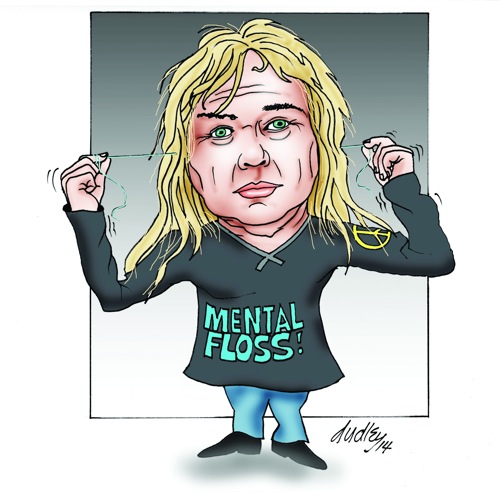
He still dreams of doing a comic book about life, film and cartooning and although he has not thought of the day he plans to stop drawing, he says that if that day should come, he would most probably bow out with a self portrait.
He has taken his cartooning beyond The Namibian’s pages, working on projects with the likes of Richard Pakleppa, producing a comic that educates workers on how to go about strikes, something which was necessary at the time as most of the workers could not read.
In an age of information overload, Sunrise is The Namibian’s morning briefing, delivered at 6h00 from Monday to Friday. It offers a curated rundown of the most important stories from the past 24 hours – occasionally with a light, witty touch. It’s an essential way to stay informed. Subscribe and join our newsletter community.

The Namibian uses AI tools to assist with improved quality, accuracy and efficiency, while maintaining editorial oversight and journalistic integrity.
Stay informed with The Namibian – your source for credible journalism. Get in-depth reporting and opinions for
only N$85 a month. Invest in journalism, invest in democracy –
Subscribe Now!