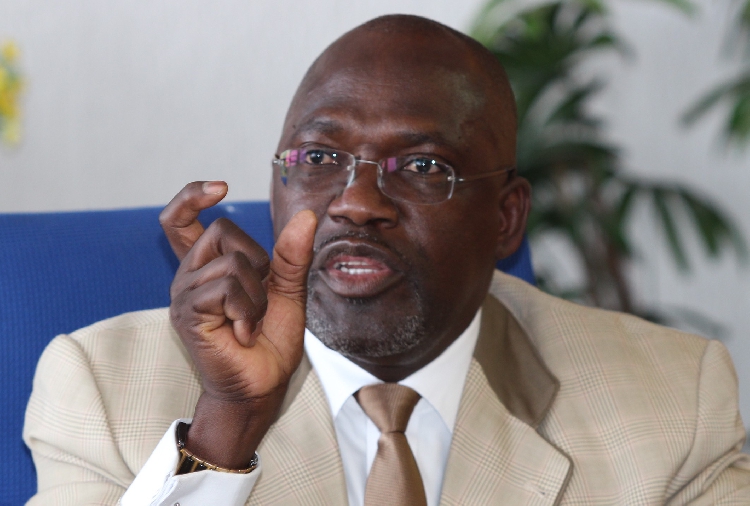
Chairperson of the parliamentary standing committee on natural resources Tjekero Tweya has recommended that uranium exploration in the Omaheke region must continue.
The Tweya led committee says there is no evidence that in-situ mining has contaminated water in that region.
The process was put on hold for three years following concerns from environmentalists.
In-situ leaching (ISL), also known as solution mining or in-situ recovery (ISR), involves leaving ore where it is in the ground, and recovering the minerals from it by dissolving them and pumping the solution to the surface, where the minerals can be recovered.
Russian company Rosatom (through its subsidiary Headspring Investments) has proposed extracting uranium near Leonardville using ISL in the Stampriet Transboundary Aquifer System, but has been facing environmental concerns and a halt of exploration activities.
In 2022, the Ministry of Agriculture, Water and Land Reform suspended two multi-hole drilling permits that had been issued to Headspring Investments and refused another for more boreholes, primarily because the strict conditions of the drilling permits had not been adhered to, but additionally over groundwater quality concerns.
In a joint committee on economics report on the exploration of ISL mining in the Omaheke region, Tweya told the parliament on Monday that allowing the exploration to continue was sensible, as there is no evidence of groundwater contamination.
He said the issues brought to the fore during consultative meetings were that exploration was put on hold due to boreholes not being drilled as per exploration permits, with some being left open to contamination, and exploration without permits for extra drilling.
“There is no evidence to suggest that the mining method used has contaminated water. Some 50% of exploration was carried out and nothing happened.
“Now, another 50% is needed for exploration. We are saying they should go ahead since there is no evidence,” he said.
Tweya further said there was no evidence of disease through contamination
He said the company should be allowed to finish the exploration phase, which is supported by both the Ministry of Mines and Energy and the environment commissioner through the Ministry of Environment, Forestry and Tourism.
Tweya said the water ministry, however, continues to resist mining.
The committee recommended the continuation of exploration activities in the absence of any evidence that the mining methodology has or will contaminate groundwater.
The committee said exploration should be allowed to go ahead without delaying the project.
It also recommended that the government appoint independent hydrologists, geologists and geochemists to review the proposed ISL when the second phase is reached.
Parliamentarian Phillipus Katamelo said if two ministries agree, one party should not stall the process for three years.