






JUST days before they leave for Rio de Janeiro, Namibia’s athletes have threatened to boycott the Paralympic Games unless their demands for bonuses are met.
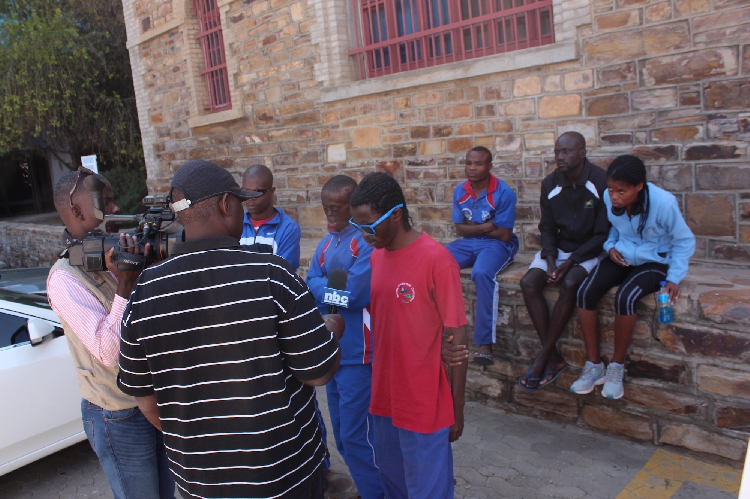
Several athletes, among them London Paralympic Games golden girl Johanna Benson, boycotted training yesterday ahead of Monday’s departure to Brazil due to a row over the absence of performance wages.
The athletes, who rank among the world’s leading track and field competitors, said they are tired of being treated as second-rate citizens, despite their continued success on the international stage for which they receive little to no recognition.
They want a uniform staggered package for performances, including allowances in Rio, which they are expected to negotiate with the sports ministry’s permanent secretary this morning, according to acting sports director Thomas Mabuku.
Mabuku met the athletes yesterday, where he promised to inform the permanent secretary about their unhappiness.
He told them to return this morning at 09h00 before proceeding to take selfies with the athletes.
Additionally, they want government to help them source employment after the Games.
“We want it in black and white,” stressed Benson. “We have had many meetings about this thing in the past, and have just been told ‘we are looking into it’, and nothing happens.
“Sometimes I feel like quitting. There’s very little motivation to be an athlete in Namibia,” she said.
Benson’s heroics in London four years ago appeared to have heralded a new dawn for the country’s athletes. However, once the euphoria had died down, normal service resumed.
“When you are at these types of events, people (officials) are enjoying their huge S&Ts while you have very little pocket money, and cannot buy anything for yourself,” she explained.
While Benson’s historic gold and bronze medal triumphs earned her a combined N$140 000 bonus; a house; diplomatic passport; and a street name, there was no reward for winning medals at successive International Paralympic Committee World Championships, the African Championships and All Africa Games thereafter.
“We feel left out. Nobody takes us seriously. We depend on sport for a living. Other countries motivate their athletes, but here we are just running for free,” said visually impaired sprinter Ananias Shikongo, one of three survivors from the London Games.
Along with Benson, Shikongo has inspired a new generation of para-athletes to emerge from the shadows, as evidenced by the team of nine world class competitors for Rio, four more than the London contingent.
“Do people know the hard work we put in? Do they know the way we are living? Some of us are staying in kambashus [shacks], and have to fetch water in 20-litre containers from community taps on our own. You are apparently a gold medallist, but you cannot even afford a bed,” the 30 year-old lamented.
“We are growing old and are going to retire soon, just to continue suffering. These things will continue happening to our juniors if we don’t stand up for ourselves now. We will not go to Rio if they don’t listen to us.”
The aggrieved athletes said their situation is made worse by the fact that they are all unemployed and deemed unemployable by prospective employers on account of their physical disabilities.
They demanded that the ministry of sports assists them to find substantive employment, similar to arrangements made for able- bodied athletes, many of whom have been placed in the national security forces.
“We depend on sport for a living because we do not have jobs. We have been running for years, but we have nothing. You come back home after being away for nearly a month, but you cannot even put anything on the table,” said Martin Aloysius, a sprinter and long jump specialist who is set for his second Games.
The athletes also brought to light poor preparations during their months of training camps for the Paralympic Games.
“We got N$500 each for four months for our preparations. How is this supposed to motivate athletes going to such a big competition? It is not easy to get there, but we are expected to perform and beat better prepared athletes with such poor conditions,” charged 23-year-old Moses Tobias, one of the country’s rising stars.
“When you win, it’s the country that gets the credit, and the ministers want to take pictures with you. We are tired of being told ‘thank you for the medal’. We do not eat medals. We are not small children, we have bills to pay and families to help,” he added.