






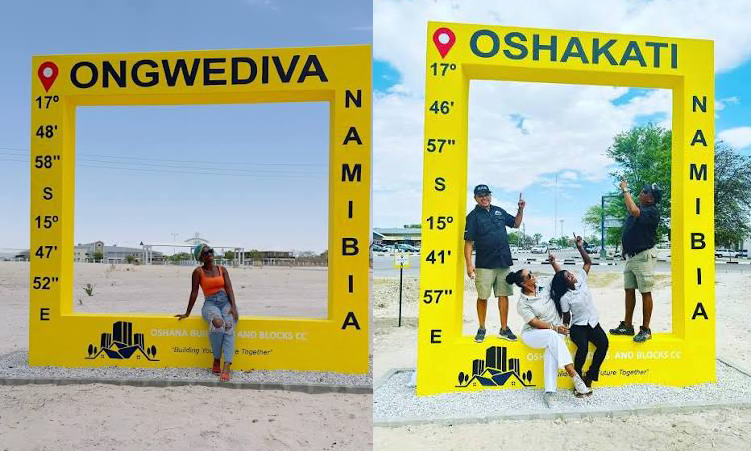
Proposal to merge northern towns sparks debate
A Proposal to dissolve the Ongwediva Town Council and incorporate it into the Oshakati Town Council has sparked debate over the future of local governance in northern Namibia.
In a statement shared with The Namibian yesterday, activist Tangy Tshilongo argues that Oshakati has grown into the Oshana region’s main commercial, administrative and economic hub, making separate local authorities increasingly unnecessary.
Tshilongo says he plans to formally submit his proposal to both councils and regional governor Hofni Iipinge.
He says placing the two neighbouring towns under a single municipal administration would improve service delivery, infrastructure planning and economic development.
“The future of our towns should be guided by efficiency, sustainable development and the well-being of all residents. Sometimes progress begins by asking difficult but necessary questions,” Tshilongo says.
Ongwediva was established under the Odendaal Plan, a 1960s South African apartheid policy of separate development that designated the settlement as a residential and educational centre for the then Owamboland.
It later became an independent town under the Local Authorities Act 1992 and attained full local authority status in July 1998.
Tshilongo says a unified municipality would improve coordination of services, strengthen integrated infrastructure planning, reduce administrative duplication, make better use of public resources and attract greater investment.
He stresses that the proposal was intended to encourage public policy debate rather than undermine Ongwediva’s identity.
Former Oshakati councillor Katrina Shimbulu supports the call, saying it makes no sense to have two town councils that close to each other.
“We need a master plan to address some issues.
In fact, I think both Oshakati, Ongwediva and Ondangwa must all become one local authority with up to 50 councillors for the sake of capacity and service delivery,” she says.
Shimbulu says both towns face sewerage and drainage issues, especially during rainy seasons or when pump stations are not working.
She adds that if it is aligned accordingly, this can be addressed.
Ongwediva founding mayor Erastus Uutoni says he sees no immediate need for a merger, arguing that neighbouring town councils can effectively serve residents.
“Having town councils close to one another is one way of ensuring services are brought to the people by reducing the constituency into a smaller portion to better manage services as opposed to having to cater for a big constituency,” he says.
Uutoni says a visit to the Belgian city of Lommel during his tenure showed him how neighbouring municipalities could function successfully.
He notes that Ongwediva maintains a partnership with Lommel, with a street at Ongwediva named after the Belgian town.
He says smaller municipalities can focus resources on targeted development, although he acknowledges that a merger could be considered in the future if supported by the majority.
Ongwediva mayor Naemi Amutheni says: “If it was not from the legitimate body, which is the delimitation committee, I won’t comment sorry.”
Oshakati mayor Leonard Hango yesterday said the idea is thought-provoking, adding that it is doable if there is willingness.
“However, the Local Authority Act 23 of 1992, which is the legal framework that establishes local authorities, may not align with the proposal,” he said.
PULL UP YOUR SOCKS
Northern businessman Ben Zaaruka says although he had originally wished for the two local authorities to be one, the current structure is fine given how developed Ongwediva has become.
“[At] Oshakati, they simply don’t develop despite it being the first settlement before Ongwediva.
It is just like having two children, one is performing and one is not, so more funds will be given to the one performing.
Why should the government spend more money on a local authority that is not performing?” he asks.
He says to date, cattle are still roaming the streets of Oshakati but not Ongwediva.
“Oshakati must pull up its socks and follow the examples of Ongwediva,” he adds.
Former Ongwediva mayor Taarah Shalyefu also rejects the proposal, saying the existing arrangement has served both towns well.
He says the two councils have distinct development plans and industrial ambitions, warning that a merger could undermine years of progress.
“I do not think it is the right idea now.
It will only complicate matters. Over the past five years a lot has been achieved and it would not be wise to divert from our plan.
Ongwediva also serves other nearby villages,” Shalyefu says.
Public policy analyst Marius Kudumo says citizens should be free to put forward governance proposals, regardless of whether others agree with them.
Kudumo says many countries regularly review their constitutions and governance systems to determine whether they remain fit for purpose.
He says the debate should go beyond Ongwediva and assess whether Namibia’s broader regional and local government structures continue to meet development needs.
Any decision, he adds, should be evidence-based and aimed at improving development outcomes.
Kudumo also questions why parts of Namibia have more proclaimed local authorities than others.
“One issue that no one wants to talk about is why one part of Namibia has many proclaimed local authorities after independence, while others do not.
What are the criteria, and are there scientifically based explanations for what seems to be discrimination or an anomaly?” he asked.