


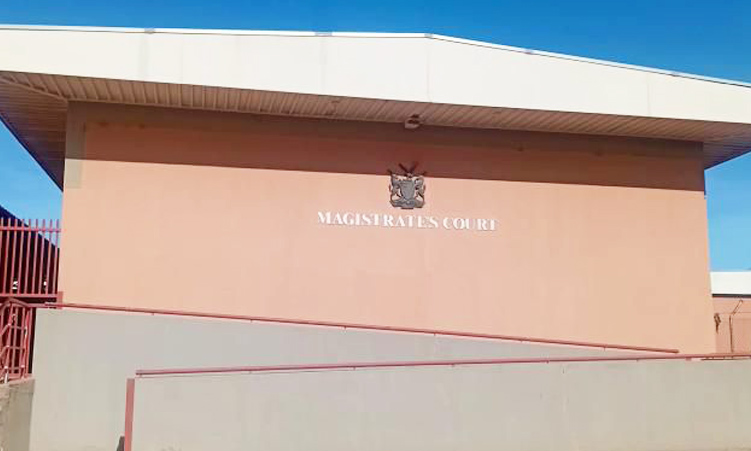
Court proceedings at Opuwo have been delayed because of a shortage of magistrates and interpreters, leaving accused individuals and victims waiting months for cases to be heard.
The absence of a permanent regional court has allegedly left one magistrate managing two court rolls at the town.
Natjirikasorua Tjirera, a lawyer based in the Kunene region, says the lack of interpreters, particularly for Otjiherero and Damara/Nama speakers, has compounded the problem.
“One magistrate has to deal with two court rolls. There is only one interpreter for Otjiherero and no interpreter at all for Damara/Nama,” he says.
Tjirera says this shortage has persisted despite repeated efforts to draw attention to it.
He says a recent social media post has prompted the judiciary to deploy two interpreters to Opuwo for one week, but only temporarily.
“Having an accused person being on trial for a long time amounts to a violation of the right to a fair trial.
Delays are not in the interest of justice either as witnesses may die. This compromises the delivery of justice,” he says.
He calls for urgent action, including the appointment of a second magistrate to the Opuwo Magistrate’s Court and the renovation of the other court.
“Justice delayed is justice denied. The lack of timely delivery of justice at Opuwo is worrying.
People and their tolerance are being abused by the judiciary,” Tjirera says.
Kunene governor Vipuakuje Muharukua says he’s currently out of the country and not aware of the situation.
“I shall make contact with the Ministry of Justice and Labour Relations to ascertain the nature of the situation. Further clarity will be provided once received,” he says.
“As a lawyer and person who has operated under the justice system, I am fully confident that our presiding officers will take the necessary precautionary measures to ensure the ends of justice are not defeated by the temporary situation,” he says.
Office of the Judiciary spokesperson Vikitoria Hango says the current judiciary structure poses challenges to ensure the interpretation of all indigenous languages across all courts at the same time.
“The distribution of interpreters is determined by geographical locations and the predominant language spoken in that region,” she says.
“When specific language interpreters are needed, a systematic process is in place to source these interpreters in advance.
The office has not identified any backlog of cases in the courts attributable solely to a shortage of interpreters,” she says.
In an age of information overload, Sunrise is The Namibian’s morning briefing, delivered at 6h00 from Monday to Friday. It offers a curated rundown of the most important stories from the past 24 hours – occasionally with a light, witty touch. It’s an essential way to stay informed. Subscribe and join our newsletter community.

The Namibian uses AI tools to assist with improved quality, accuracy and efficiency, while maintaining editorial oversight and journalistic integrity.
Stay informed with The Namibian – your source for credible journalism. Get in-depth reporting and opinions for
only N$85 a month. Invest in journalism, invest in democracy –
Subscribe Now!