




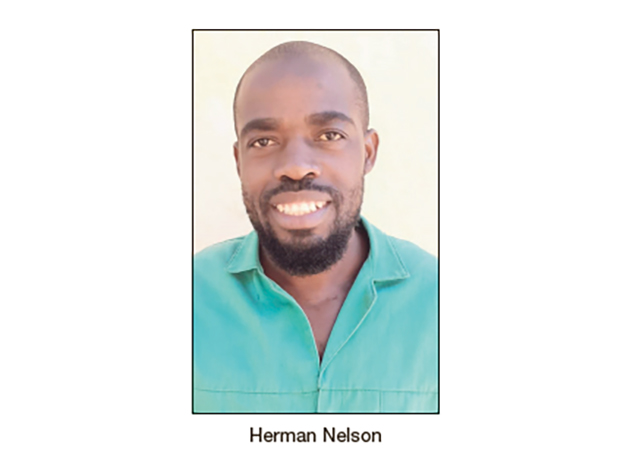
HERMAN NELSONWHILE THE government and relevant authorities worked so hard to establish the School of Veterinary Medicine in Namibia, the legislation surrounding the profession appears to be protecting the monopoly within the profession.
The Veterinary and Veterinary Para-Professions Act No. 1 of 2013 was passed to establish the first School of Veterinary Medicine in Namibia.
It is, however, saddening to realise that despite the efforts to increase the access to veterinary services, the law prevents the graduates from practising the profession without having a registered facility – which I will refer to as a capital hindrance to access the market.
To contextualise that, it means the graduates have to either be employed by a private practitioner, the state or have to build a clinic before they can practise.
Unless the government is trying to prevent registered veterinarians from providing services to their clients, the implication of that clause in the act is not understood or put into context.
Otherwise, the state will have to employ all the graduates. This surely defeats the purpose of improving veterinary services delivery to the clients.
Our patients do not live under roofed facilities except the companion animals (dogs, cats and horses) therefore we have to embrace the norm of taking the services to where our patients are through community engagements.
It should also be noted that a veterinarian does not need a physical facility to offer services to the patients and that is the reason veterinarians go out in the field because they are clinical people.
They need to see and understand the cases. How many people are able to take their animals to the veterinary facility for treatment or for whatever the need might be?
Look at the current registered facilities. How many of these facilities can be used for all species of animals that require veterinary services.
At least some state veterinary services offices have interspecies facility and so does Neudamm, however, they do offer multi-species veterinary services. It is therefore not clear why a physical facility is made a requirement for a registered veterinarian to practise.
Unless we are protecting the current market and preventing accessibility to the graduates, some of these clauses in the act are hindering service delivery.
We are clearly not pulling together, as some people want to monopolise the market as if it is an infant.
The past six months were the most traumatic, as there was a lot of footrot in small livestock due to good rainfall, verminosis in nearly all animals (pigs, goats, sheep and dogs) plus infectious coryza in poultry, but one [graduates] cannot assist these patients without owning a registered facility.
It is therefore necessary that the lawmakers, the relevant ministry and other authorities look at some of the implications in the law and act in the interest of promoting access to the veterinary services countrywide.
It is a fact that the veterinarian especially in the Northern Communal Areas of Namibia are covering very large areas and their service delivery to the communities is further made difficult by improper infrastructure (roads) and inaccessibility of most areas.
* Herman Nelson is one of the 17 veterinarians who graduated from the University of Namibia this year.