




This information was obtained from the First Capital Economic Profile of Opuwo, which was issued in September.
According to the report, the Kunene region has the eighth highest percentage of individuals suffering from chronic diseases, with a prevalence of 11,8%.
“Health facilities at Opuwo consist of one district hospital and 20 clinics around the town. In addition, there is also a private hospital, a private dentist practice, and a pharmacy at the town,” the report reads.
It says the state hospital has a capacity of 100 beds, 20 maternity wards, 26 male wards and 28 female wards, with nine doctors, 33 registered nurses, and 21 enrolled nurses.
“This study estimates 10% (3 655) of the population to be users of private medical facilities,” the report says.
There are 34 primary schools at Opuwo, among which 17 are mobile primary units, and three are private schools.
During the 2022 academic year, there were a total number of 32 947 pupils in the Kunene region.
According to the report, the cost of educating a pupil in the Kunene region is N$4 119, second after the Omaheke region, where this costs N$4 820.
This cost is calculated by dividing the total operational budget for the region by the number of pupils.
The report says Cosdec is the only institution of higher learning at Opuwo.
It offers two courses, namely hospitality and office administration.
“There are currently 38 students enrolled for hospitality, and 70 for office administration. There is capacity to enrol and train more people, but it is limited due to the lack of accommodation,” the report reads.
In addition to Cosdec, the Namibia University of Science and Technology has a distance-learning facility at Opuwo.
The facility enables distance students to submit assignments and seek academic advice on their studies.
Namibia’s literacy rate is 87%, the Kunene region has a literacy rate of 61%, and Opuwo one of 70%.
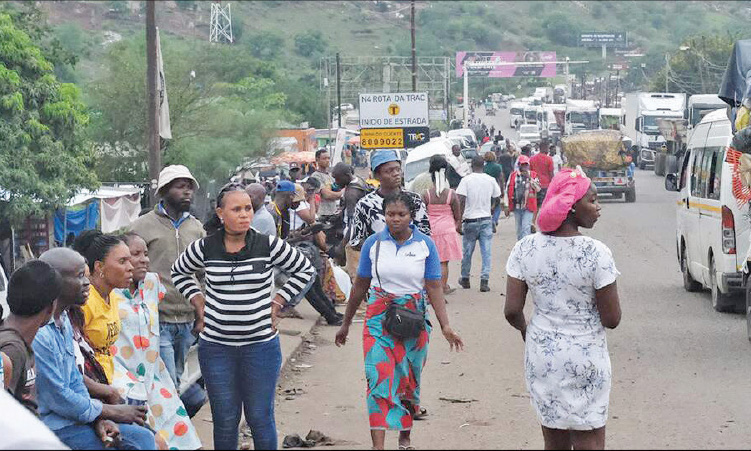
Opuwo is estimated to accommodate 5 500 households and a population of 36 559 by the end of 2022.
The report estimates that 52% of households depend on salaries and wages, 6% on cash remittances, and 5% on businesses.
First Capital research analyst Clarinda Kavezuva says Opuwo is the sixth town on which an economic profile has been done.
“We have done Keetmanshoop, Mariental, Omaruru, Outapi, and Rundu in the past. We as First Capital Namibia, through rigorous economic analysis, aim to generate knowledge and insight into the workings and performance of Namibia’s national, regional, and local authority economies,” she says.
She says Opuwo has great potential – especially in the mining and agricultural industries.
Kavezuva says the report was also compiled to market Opuwo, and attract investors in the country and beyond to unleash the town’s full potential.
Kunene health director Thomas Shapumba says he was not aware of the research, and therefore declined to comment on the report.
Kavezuva, however, says: “I am not sure why the health director of the Kunene region is not aware of this information in terms of the health statistics we received from the Opuwo district senior doctor and the head matron. I assume they did not inform their director.”