The Namibian Broadcasting Corporation (NBC) recently announced it would add a weekly Ju/’Hoansi TV news bulletin to its schedule of indigenous languages.
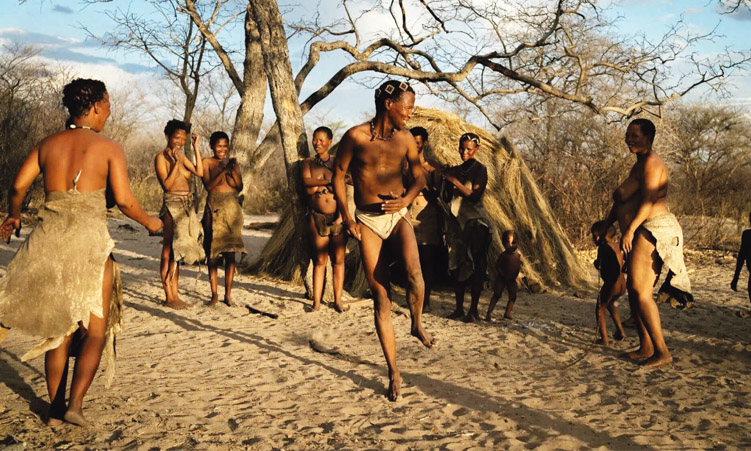
Ju/’Hoansi is one of the San languages spoken in Namibia. Although that initiative needs to be highly appreciated, it also leaves a lot of unanswered questions.
To start with, NBC introduced news broadcasts in other indigenous languages on 2 October 2000.
Why did it take more than 25 years to introduce a Ju/’Hoansi TV news bulletin?
Secondly, apart from Ju/’Hoansi, there are about four other San languages and dialects in Namibia, including the Hai||om, Kung, Khwe, and Naro.
Ju/’Hoansi is the most widely spoken San language with a written alphabet, and obviously NBC’s decision was informed by that.
However, the bottom line is that some of these San language groups do not understand each other at all, and more often than not, they would communicate either in Afrikaans or in one of the dominant indigenous languages in that particular region, such as Otjiherero, Orukwangari, Silozi, etc.
Most Namibians are under the impression that the San people are a homogenous group that speaks one language. This is a very sad state of affairs which you would not feel, unless you are a San person.
The introduction of an NBC TV news bulletin in Ju/’Hoansi, much as that is appreciated, should not be regarded as a favour to the San community.
This is a cultural right that is stipulated in Article 19 of the Namibian Constitution, that reads as follows: “Every person shall be entitled to enjoy, practise, profess, maintain and promote any culture, language, tradition or religion, subject to the terms of this Constitution and further subject to the condition that the rights protected by this Article do not impinge upon the rights of others or the national interest.”
The only proviso here is that the cultural rights of any ethnic group should not be promoted at the expense of the rights of other groups or at the expense of national interest.
I think for the reader to appreciate my concern for the late introduction of Ju/’Hoansi on NBC TV, we need to put ‘the San question’ into proper perspective.
The San people represent Namibia’s most historically displaced and socio-economically disadvantaged indigenous population.
Representing roughly 1.5% to 2% of the national population, the San rank lowest among all language groups in Namibia across almost every major socio-economic and human development index metric.
Their marginalisation started way back during the pre-independence era during which they were the most marginalised of all the marginalised groups in the country.
As someone who grew up in colonial Namibia, I remember very well that the San people who were working for other Africans were, for the most part, paid food rations instead of money – and the type and size of the food ration was determined by the ‘employer’.
The San people are looked down upon by other groups, and more often than not, they are at the receiving end of derogatory ethnic jokes.
It is only fair to appreciate some of the structured initiatives that have been undertaken by the government and some civil society organisations over the years to address the plight of the San people.
These are, for example, the Division of Marginalised Communities in the Office of the Vice President: This division manages national intervention programmes specifically targeting San, Ovatue, and Ovatjimba communities, focusing on educational support, such as school fees, food assistance, and land acquisition for resettlement.
Communal Conservancies: Projects like the Nyae Nyae Conservancy have provided a framework for the Ju/’Hoansi to generate income through sustainable trophy hunting, ecotourism, and community-managed resources.
Non-government organisation support and advocacy: Organisations such as the Working Group of Indigenous Minorities in Southern Africa historically, alongside local legal clinics like the Legal Assistance Centre, advocate for indigenous land rights, mother-tongue education programmes, and legal protections against labour exploitation.
I am not Mr Know-it-all on the San question, because such an approach would be paternalistic.
‘Paternalism’ is when you think that you know more about another group than they know about themselves.
Most Western literature about Africa is embedded in paternalism, which I totally oppose, and I can therefore not practise what I oppose regarding the San question.
When Barack Obama was sworn in as the first African-American United States (US) president in 2009, the late civil rights leader Jesse Jackson (remembering where they had come from as a black race in the US) publicly shed tears of joy and disbelief, because he could not believe that this was happening in his lifetime.
May we create an inclusive society in Namibia, so that one day when we have to swear in the first San president, members of that community do not have to shed tears of disbelief.
- Uaripi Tjihenuna is a commissioner of elections in Namibia. The views expressed here are his own.