



Sub-Saharan Africa’s largest oil producers are also among the poorest countries on the continent.
The reasons are not hard to discern: decades of rent-seeking by political elites and their associates have siphoned off oil revenues that could have been invested in public services, welfare grants, and infrastructure.
Many of these practices took root under authoritarian and military regimes, where oversight institutions were weak, captured, or entirely absent.
Even as countries like Angola and Nigeria have made strides toward democracy, they continue to struggle with deep-rooted corruption that undermines development and fosters inequality.
In these countries, oil wealth has become a curse rather than a blessing – funding lavish lifestyles for a small elite while the majority remain trapped in poverty.
Public infrastructure remains underdeveloped, health and education services are chronically underfunded, and job opportunities are limited.
The gap between rich and poor widens as oil profits disappear into private hands or offshore accounts.
Being a democracy of 35 years’ standing, with a free press and an active civil society, Namibia is different.
We also have the advantage of entering the oil era late, with the opportunity to learn from the failures of others. The lessons are plain to see, yet there is a troubling reluctance to act on them.
So far, the political will to tackle corruption effectively has been lacking. But there are signs of a shift under the new administration.
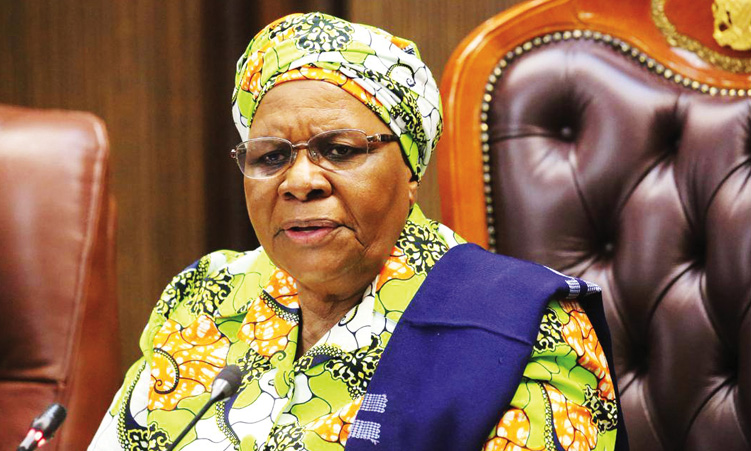
President Netumbo Nandi-Ndaitwah has taken a firm public stance against corruption, even going so far as to call it an act of treason.
INFLECTION POINT
The Fishrot scandal laid bare how opaque systems can be manipulated for personal gain by those in positions of power, in collusion with their business cronies.
It stands as a stark warning – emphasising the urgent need for strong governance frameworks in the oil and gas sector to prevent a repeat of such abuses.
The scandal didn’t just reveal individual wrongdoing; it exposed systemic vulnerabilities in how state resources are managed and how elite networks can operate with impunity for years.
One of the most effective steps Namibia can take to demonstrate its commitment to transparency is to join the Extractive Industries Transparency Initiative (Eiti).
The Eiti promotes open and accountable management of oil, gas, and mineral resources.
By adhering to Eiti standards, Namibia would commit to disclosing critical information about contracts, licences, production volumes, revenue collection, and how those revenues are allocated and spent.
This transparency would not only deter corruption but also build trust – both among citizens, who deserve to know how public resources are being used, and investors, who seek stable and well-governed environments.
Joining Eiti should go hand in hand with the effective implementation of the Access to Information Act, which mandates proactive publication of government licences, contracts, and permits.
The law’s implementation must not be further delayed or watered down. It should become a key pillar in Namibia’s transparency agenda, ensuring that vital information is accessible, timely, and usable.
BEWARE BAD ACTORS
One of the most urgent priorities is to keep corrupt actors – foreign or Namibian – out of oil and gas.
The Office of the President must be very careful about who it uses as advisors as some of these people are known bad actors who have been involved in corruption and anti-democratic practices across the continent.
Their appearance in Namibia’s oil and gas sector would severely undermine public trust.
Local content policies are another area where vigilance is needed.
These policies are designed to ensure that Namibians benefit directly from the oil and gas sector through employment, business opportunities, and skills development.
On paper, they are essential tools for building an inclusive petroleum economy. In practice, however, they can be easily manipulated.
There are credible concerns that local content procurement plans could be abused to benefit politically connected individuals and companies with no relevant experience or capacity.
To mitigate this risk, it is essential to establish clear and enforceable procurement rules, transparent reporting requirements, and mandatory disclosure of beneficial ownership – the real individuals behind companies.
A public registry of suppliers involved in the oil sector should be maintained, with regular audits and public reporting.
To manage the wealth generated from the oil and gas sector prudently and transparently, Namibia established the Welwitschia Fund in 2022 – a sovereign wealth fund intended to safeguard revenues for future generations and stabilize the economy in times of volatility.
However, legislation governing the fund is still lacking.
A comprehensive law setting clear guidelines for the fund’s operation, investment policies, withdrawal rules, and oversight mechanisms needs to be tabled in Parliament without delay.
The governance structure of the fund must include independent, qualified professionals, and its operations should be audited annually with findings made publicly available.
EMPOWERING CITIZENS
An informed and engaged citizenry is vital for holding the government and companies accountable.
Civil society organisations, the media, and the broader public must have access to information and the capacity to analyse and act on it.
Educational initiatives and public awareness campaigns can play a significant role in building this capacity – helping people understand how the oil sector works, what rights they have, and how to demand good governance.
Digital platforms can be used to make information accessible and to create channels for citizen feedback.
Partnerships between government, civil society, and the private sector should be fostered to promote inclusive dialogue.
This is a make-or-break moment for Namibia.
The long-term benefits of the emerging upstream petroleum sector will depend on our capacity to prevent corruption, embed transparency, and empower citizens to demand accountability.
If we fail to act decisively now, we risk repeating the mistakes of countries whose oil wealth enriched the few and impoverished the many.
*Graham Hopwood is the executive director of the Institute for Public Policy Research (IPPR). The IPPR is part of the newly launched Eco-Dialogue project which promotes public dialogue, transparency, and accountability around Namibia’s energy sector through community outreach, research, and policy advocacy.
In an age of information overload, Sunrise is The Namibian’s morning briefing, delivered at 6h00 from Monday to Friday. It offers a curated rundown of the most important stories from the past 24 hours – occasionally with a light, witty touch. It’s an essential way to stay informed. Subscribe and join our newsletter community.

The Namibian uses AI tools to assist with improved quality, accuracy and efficiency, while maintaining editorial oversight and journalistic integrity.
Stay informed with The Namibian – your source for credible journalism. Get in-depth reporting and opinions for
only N$85 a month. Invest in journalism, invest in democracy –
Subscribe Now!