“LET’S fight AIDS together!”
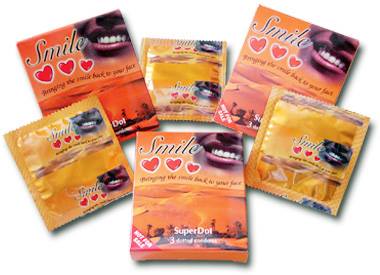
This was the slogan enthusiastic health officials repeated with pride as they unwrapped the first locally produced condom in Windhoek on 16 February 2006. It was a new dawn in Namibia’s fight against the pandemic. The officials had strategically chosen a suitable name for the condom brand: “Smile”.
“Let’s fight AIDS together, and let’s bring the smile back to our faces by using Smile every time,” then deputy minister of health and social services Petrina Haingura told an applauding audience.
Following the groundbreaking launch, the orange-and-red branded condom was seen at countless local healthcare facilities, clubs and shebeens all over the country.
FADING SMILE
Now, 15 years later, ‘Smile’ condoms have disappeared from the shelves.
When The Namibian arrived at the Commodity Exchange factory along Gold Street in Windhoek’s Prosperita industrial area on Thursday, we were greeted by a sign displaying a faded Smile condom.
There was no life at the premises of what was once the only condom factory in the country, with the capacity to supply both the local and export market.
According to media reports, the factory once employed 30 Namibians, including two people with hearing impairments.
About 70% of these workers were women. The Smile brand has also disappeared from government clinics and hospitals, where it was distributed for free.
A nurse at Okuryangava Clinic says Smile condoms are no longer available.
In its place at healthcare centres are Night Rider condoms, manufactured in India. This brand is heavily rationed, suggesting there may not be enough to go around.
“This is encouraging people to engage in risky sexual behaviour,” the nurse says.
BARS RUN SHORT
A bar owner from Ombili, Nakatana Shilongo, says he used to get a box of condoms at the Katutura Clinic to distribute to patrons at his bar, but the last time he went for supplies, he was asked for proof that he owned the bar, and was sent away with only a handful of Night Rider condoms.
“How do I bring my bar certificate just to prove that I am doing a free community service?” Shilongo asks.
A number of non-governmental organisations providing HIV-AIDS and reproductive health services feel the discontinuation of Smile condoms has had an adverse impact on their activities.
The executive director of the Namibia Networks of AIDS Service Organisations (Nanaso), Sandie Tjaronda, says the shortage of condoms has reversed the gains the nation has made in the fight against HIV-AIDS.
“We had the Smile brand, and now we have transitioned to the new brand. The impact of Covid-19 and protocols, including the limitation of movement of people, have affected people’s ability to access these commodities,” he says.
‘LOGISTICAL NIGHTMARES’
Supply has been slow because of logistical nightmares created in the procurement and distribution of commodities, Tjaronda says.
“When the policy was introduced, everyone, including NGOs, could access the commodities [Smile condoms] and distribute them on behalf of the government, but this has changed with people now required to register for accountability purposes when they get condoms for distribution.
“There is a dire need to distribute these condoms to people who cannot afford buying them at pharmacies in order to close the tap for new infections, because the cost of ARVs is very steep.”
Tjaronda says during Covid-19 lockdowns, teenage pregnancies increased because people could not access condoms.
“Of the 3 000 schoolgirls who fell pregnant during lockdown, how many got infected in the process?”
He says Covid-19 regulaitons and limitations have also had an effect on non-communicable diseases, such as asthma, hypertension, and diabetes.
Agatha Kuthedze, the Namibia Planned Parenthood Association (Nappa) programmes director, says the shortage of condoms is affecting the country’s health status – especially that of young people, as they are the most sexually active group.
“We have seen countrywide that young people were falling pregnant, because we could not provide them with condoms,” she says.
Kuthedze says Nappa has a mandate to complement the Ministry of Health and Social Services in matters of reproductive health.
“When Covid-19 struck, we were not prepared for it, and the resources we had for our normal programmes were diverted to more pressing issues to fight Covid.
In an age of information overload, Sunrise is The Namibian’s morning briefing, delivered at 6h00 from Monday to Friday. It offers a curated rundown of the most important stories from the past 24 hours – occasionally with a light, witty touch. It’s an essential way to stay informed. Subscribe and join our newsletter community.

The Namibian uses AI tools to assist with improved quality, accuracy and efficiency, while maintaining editorial oversight and journalistic integrity.
Stay informed with The Namibian – your source for credible journalism. Get in-depth reporting and opinions for
only N$85 a month. Invest in journalism, invest in democracy –
Subscribe Now!