




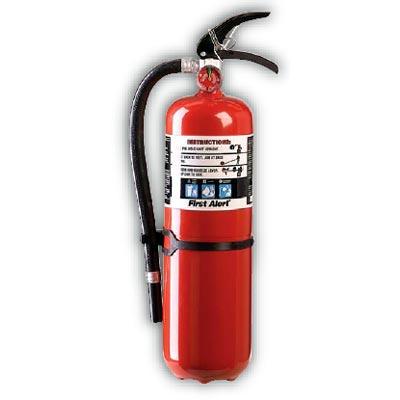
We hear of fires around the city, often in Katutura’s informal settlements. Surely some fires are inevitable but often big fires are a result of small fires that could have been put out earlier.
Fire extinguishers are often ignored by many. You pass by them all the time as you walk the hallways at work or school, and hopefully at home too. But no matter how many times you’ve seen them in your day-to-day life, you have probably given little thought as to how you actually use one, let alone what they are used for. Maybe it never crossed your mind, or maybe you assumed it’s simple and thus not something you need to learn.
Well, it’s true that using a fire extinguisher is not rocket science by any stretch, but there are a few basics you need to be aware of – and probably aren’t. From recent fire outbreaks, it is evident that many of our households do not even even have fire extinguishers. If one out of ten houses have one, the knowledge gap comes in as many do not know how to use it. Fires double in size every 60 seconds, so you don’t want to be fumbling around in an emergency situation, reading over the instruction manual as a small flame on the stove grows into an inferno.
The Right Fire Extinguisher for the Right Fire
Fire extinguishers come in a wide variety of types – each one designed to put out a different kind of fire. Classification systems have been developed to help users know what sort of extinguisher they’re working with. The following are the different classifications one should consider to get for their household or workplace.
• Class A – Ordinary solid
combustibles like wood, cloth, and
paper products.
• Class B – Flammable liquids and
gases.
• Class C – Electrical fires. (Do not
use water to put out this kind of fire
– you could get electrocuted!)
• Class D – Flammable metals.
• Class K – Oils and grease fires.
(Never use water on a grease fire –
it will cause the flames to explode
and spread.)
Most fire extinguishers for homes and public spaces are classified as Class ABC extinguishers, meaning they are suitable for putting out wood and paper fires, flammable liquid fires, and electrical fires. ABC extinguishers use the dry chemical monoammonium phosphate as the extinguishing agent. Get yourself the biggest one you can comfortably handle to maximise its discharge pressure, time, and range.
Where to Put a Fire Extinguisher in Your House
Some countries require that you have an extinguisher by law, but even if ours doesn’t, they’re an essential safety item. A fire extinguisher can keep a small incident from turning into a dangerous emergency.
You should, at minimum, have one ABC extinguisher per home. It’s best to have them in or near rooms where fires are most likely to break out – the garage and most especially the kitchen.
Store extinguishers where your kids can’t get to them, but they’re still easy to access – you don’t want to be looking around and digging through a closet when every second is crucial. Don’t place them near stoves and heating appliances, or behind curtains and drapes – places where fires may start and quickly spread; if you can’t reach the extinguisher because the thing that’s on fire is right by it, you’re in trouble. The best location for your fire extinguisher is mounted near a door – your escape routes.
How to Use a Fire Extinguisher
Fire extinguishers are designed to put out fires in the incipient stage. That’s fireman talk for when the fire is just getting started. When it gets past the beginning stage, a fire becomes too large to fight with a portable extinguisher. To know if the fire is still in the incipient stage, just give the flame the once over to see if it’s taller than you. If it is, your fire extinguisher will likely be no match for the flames. In this case, call the right people to handle the fire.
• Remember, extinguishers are
you’re facing a grease fire, a simple
A extinguisher won’t put it out.
• Check the gauge on the extinguisher
In an age of information overload, Sunrise is The Namibian’s morning briefing, delivered at 6h00 from Monday to Friday. It offers a curated rundown of the most important stories from the past 24 hours – occasionally with a light, witty touch. It’s an essential way to stay informed. Subscribe and join our newsletter community.

The Namibian uses AI tools to assist with improved quality, accuracy and efficiency, while maintaining editorial oversight and journalistic integrity.
Stay informed with The Namibian – your source for credible journalism. Get in-depth reporting and opinions for
only N$85 a month. Invest in journalism, invest in democracy –
Subscribe Now!