





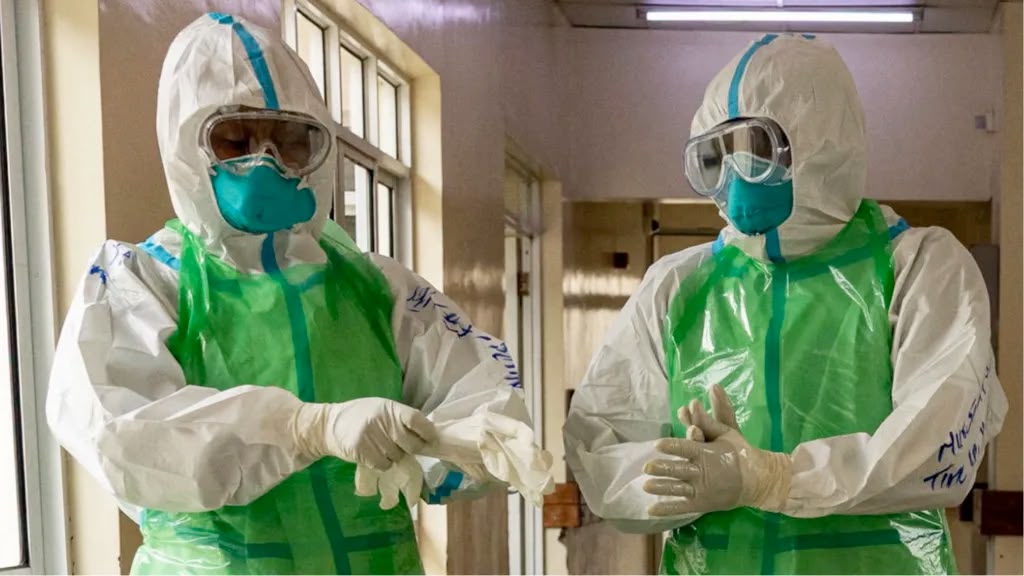
Nigeria has recorded a case of Ebola in a female patient who travelled from Uganda in East Africa to Abuja, capital of the West African state.
Health minister Muhammad Pate says the diagnosis had been confirmed by laboratory tests.
The patient, who health sources have told the BBC is not Nigerian and is the wife of a diplomat, is in isolation and receiving medical care after being admitted to a hospital in Abuja.
She developed symptoms on Wednesday, 7 October, four days after arriving in the country, according to the World Health Organisation (WHO).
Health authorities have begun contact-tracing to prevent further spread, with 44 close contacts of the woman identified.
Nigeria, the first West African state to report a case linked to the current Ebola crisis in East Africa, successfully stopped a previous outbreak in 2014.
Uganda’s ministry of health has stressed there are currently no confirmed active Ebola cases in the country.
Ebola is a rare but deadly disease caused by a virus. As the disease progresses, vomiting and diarrhoea develop and it can lead to organ failure. Some, but not all, patients develop internal and external bleeding.
The disease spreads from one person to another by contact with infected bodily fluids such as blood or vomit.
The outbreak in Democratic Republic of Congo, which began in May, has claimed at least 4 600 lives, with more than 9 500 cases recorded, the European Centre for Disease Prevention and Control reports.
It was caused by the Bundibugyo species of Ebola, which is relatively rare, with no approved vaccine or treatment – though trials are under way.
Shortly after the outbreak was announced, it was also reported in Uganda, where at least two people died. Uganda declared itself free of the disease in August after its last patient was discharged.
Following the latest case in Nigeria, Uganda’s health ministry said preliminary information indicated that the patient had transited through Uganda without symptoms.
In a statement on X, Uganda’s director general of health services Charles Olaro says the woman had travelled to eastern Democratic Republic of the Congo for business before passing through Uganda in early October.
He said her symptoms had only developed after arriving in Nigeria.
The incubation period for Ebola ranges from two to 21 days, meaning those exposed to the virus may not become ill for several weeks.
“The location of exposure remains under investigation. The government of Nigeria is yet to provide detailed information on her travel itinerary and clinical history which will guide further investigations and any necessary contact tracing,” Olaro said.
“We urge the public to remain calm, vigilant and to practice regular handwashing and sanitising.”
The disease has also spread to Kenya, which has reported at least nine infections.
On Monday, the US advised its citizens to reconsider travel to Kenya because of health risks and raised its travel advisory level for the country.
Since the outbreak, Nigeria has stepped up disease surveillance, with the Nigeria Centre for Disease Control issuing public health advice to travellers.
The agency says travellers from countries with active or relevant Ebola transmission may be required to complete a health declaration form. Those arriving from other countries are currently exempt.
It has also urged travellers to remain vigilant and seek medical attention promptly if they develop symptoms of Ebola.